Nenjuku Needhi (Tamil with English Subtitles)
- Director: Arunraja Kamaraj
- Writers: Anubhav Sinha
- Stars:
- Udhayanidhi Stalin
- Aari Arujunan
- Tanya Ravichandran
- Shivani Rajasekhar
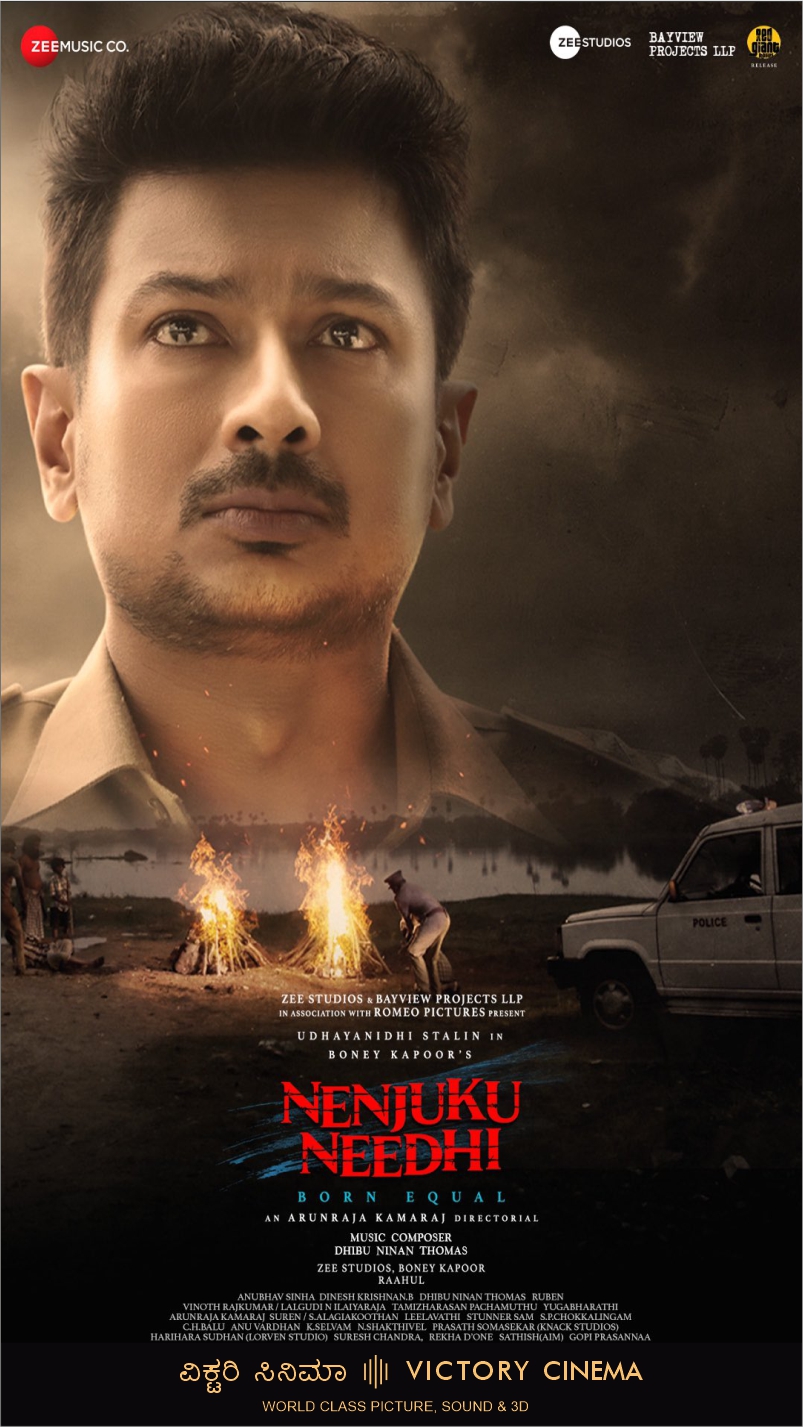
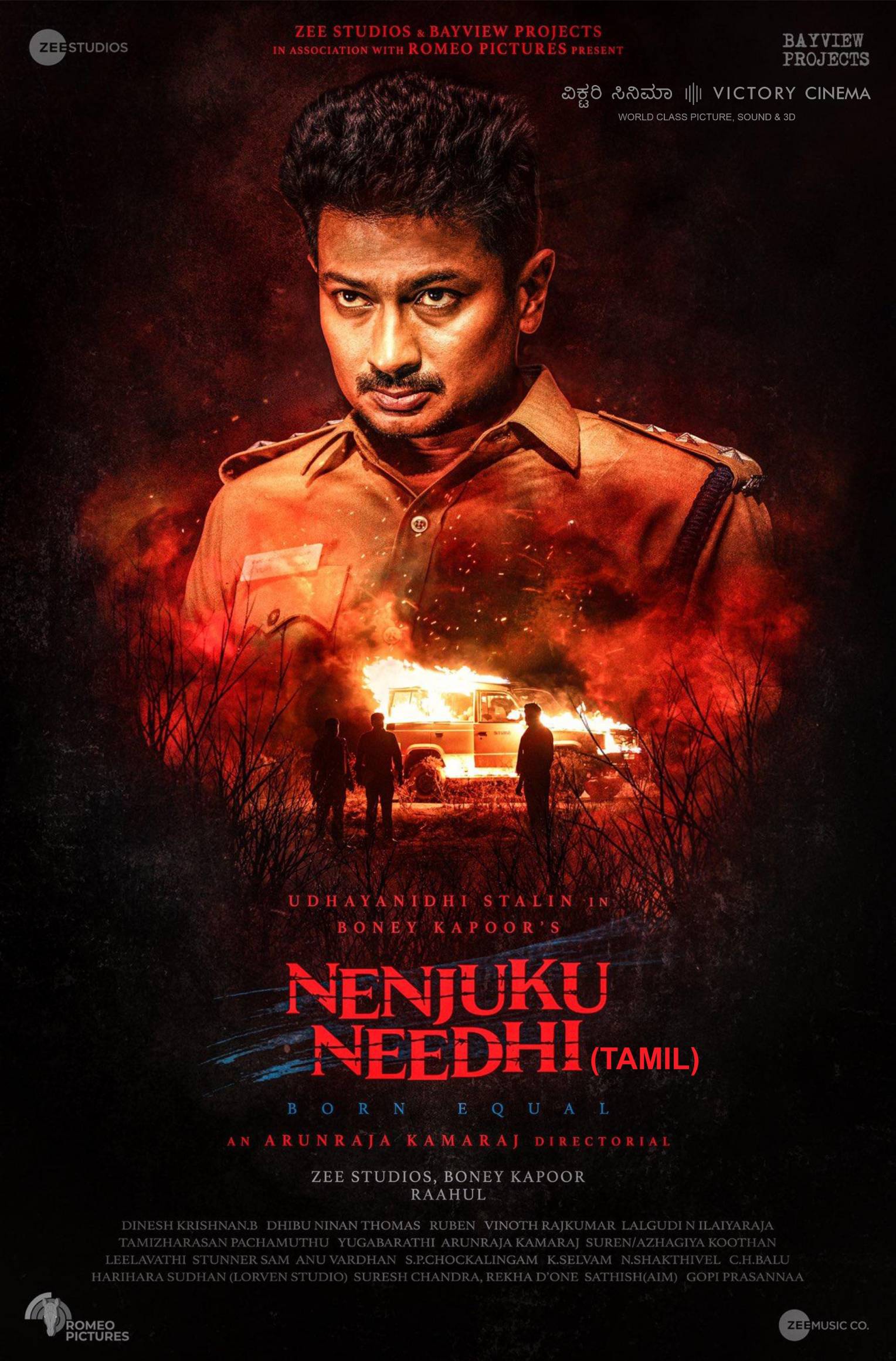
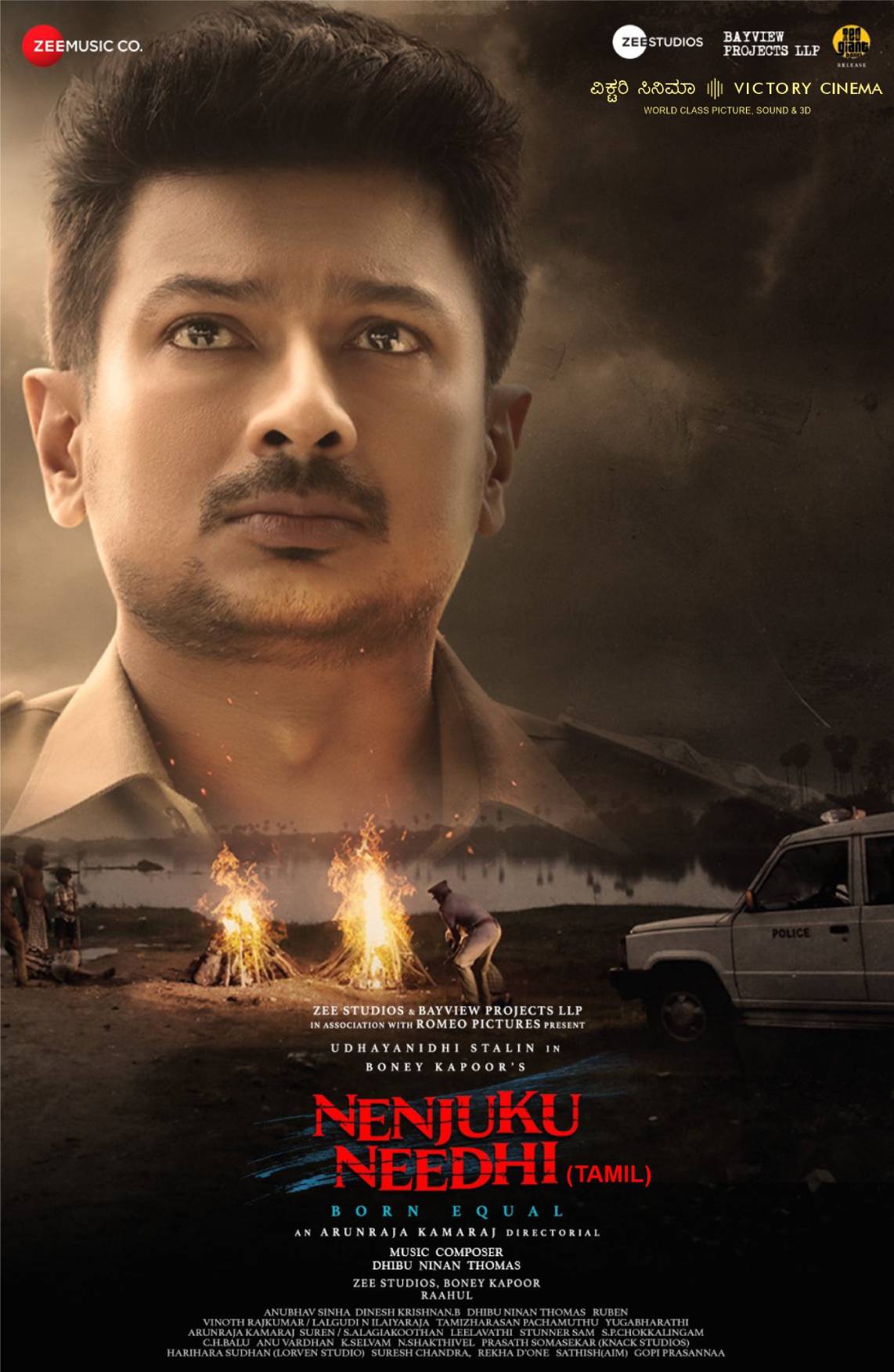
Nenjuku Needhi at Victory Cinema Nenjuku Needhi is a powerful Tamil crime drama centred on justice, equality and the courage required to challenge deeply rooted discrimination. Udhayanidhi Stalin stars as Vijayaraghavan, an upright IPS officer transferred from the city to a rural district in Tamil Nadu. His new posting initially appears quiet, but he soon discovers a society divided by caste, privilege and customs that many people have accepted without question. When three young women employed in a local factory disappear, the case exposes disturbing truths hidden beneath the apparent calm of the village. Two of the women are found dead, while the third remains missing. Vijayaraghavan begins an investigation that places him against prejudice, institutional indifference, political pressure and people determined to close the case before the truth can emerge. Victory Cinema presents Nenjuku Needhi in Tamil with English subtitles for audiences from across Bengaluru and beyond. Directed by Arunraja Kamaraj and produced by Boney Kapoor, the film combines a compelling police investigation with an urgent examination of caste inequality and the constitutional promise that every citizen is equal. Vijayaraghavan enters an unfamiliar world Vijayaraghavan is educated, disciplined and committed to performing his duty honestly. However, his posting introduces him to realities that cannot be understood only through books, laws or official reports. Discrimination is woven into everyday behaviour, social relationships, employment and the functioning of local institutions. The officer gradually understands that even ordinary actions are shaped by caste divisions. People are judged by their birth, communities are kept apart, and certain voices are considered less important than others. Those who benefit from this arrangement see no reason for it to change, while those who suffer under it have learned that speaking out can carry dangerous consequences. Udhayanidhi Stalin brings restraint and determination to Vijayaraghavan. He is not presented as an invincible action hero who can solve every problem through physical strength. His greatest weapons are persistence, moral clarity and a refusal to accept convenient explanations. The investigation forces him to question the people around him, the procedures followed by his own department and the social assumptions he may previously have overlooked. The deeper he travels into the case, the clearer it becomes that finding the missing woman and identifying those responsible will require him to confront an entire structure of silence. A case that cannot be dismissed The disappearance of the three young women becomes the central mystery of Nenjuku Needhi. Their lives and suffering risk being reduced to paperwork because they belong to a socially oppressed community. Some officials appear eager to accept the easiest explanation, while powerful people want the matter resolved without a serious inquiry. Vijayaraghavan refuses to treat the case as unimportant. He recognises that justice cannot depend on a victim’s caste, occupation, wealth or social influence. The investigation therefore becomes more than the search for individual offenders. It becomes a test of whether the system is willing to protect citizens who have historically been denied equal treatment. The rural setting adds intensity to the mystery. Roads, fields, factories, police stations and village settlements become part of a landscape in which everyone appears to know something, yet few are willing to speak openly. Fear, loyalty and prejudice complicate each new lead. The search for the missing woman creates urgency throughout the story. Every delay reduces the possibility of finding her safely, and every false statement protects those responsible. Vijayaraghavan must separate facts from assumptions while resisting pressure from people who would prefer the investigation to disappear. Udhayanidhi Stalin in a serious police role Nenjuku Needhi presents Udhayanidhi Stalin in a composed and socially conscious role. Vijayaraghavan’s authority comes not from dramatic displays of aggression but from his determination to ask uncomfortable questions. He understands that wearing the police uniform carries a responsibility to uphold the law equally. When his colleagues repeat discriminatory beliefs or treat certain communities as naturally inferior, he challenges both their language and their conduct. The character’s journey also acknowledges that awareness is not automatic. Vijayaraghavan enters the district as an outsider and gradually recognises the scale of the inequality surrounding him. Listening to the people affected by discrimination becomes essential to understanding the case. His interactions with officers, villagers, political figures and activists reveal different attitudes towards caste. Some openly defend the existing hierarchy, others remain silent for their own safety, and a few are willing to risk themselves in the pursuit of justice. This creates a role that depends on observation, dialogue and internal conflict as much as investigation. Udhayanidhi Stalin’s controlled performance supports the film’s serious tone and allows the social questions to remain at the centre of the narrative. An important supporting ensemble Aari Arujunan, Tanya Ravichandran, Shivani Rajashekar, Suresh Chakravarthy, Ilavarasu, Mayilsamy, Saravanan, Abdool Lee and other members of the supporting cast populate the world around Vijayaraghavan. These characters represent different positions within the village and the wider system. Some help the investigation, some obstruct it, and others reveal how social divisions affect everyday relationships. Their experiences show that caste prejudice is not an isolated act committed by one villain. It survives through repeated behaviour, institutional acceptance and the unwillingness of people to challenge injustice. Tanya Ravichandran’s presence contributes to the film’s emotional dimension, while Aari Arujunan plays an important role within the conflict surrounding the case. The wider ensemble ensures that the story is not limited to the perspective of the investigating officer. The young women at the centre of the case are not merely clues in a mystery. Their circumstances direct attention towards the vulnerability of workers and communities whose complaints can be ignored by those in authority. Arunraja Kamaraj’s adaptation Nenjuku Needhi is the Tamil adaptation of the Hindi film Article 15. Director Arunraja Kamaraj relocates the story to Tamil Nadu and shapes its characters, dialogue and social environment around the state’s own realities. The title carries a strong association with justice and conscience. It reflects the idea that fairness must arise not only from written law but also from an individual’s willingness to recognise the dignity of another person. Arunraja Kamaraj, who previously directed Kanaa, approaches Nenjuku Needhi as both an investigative drama and a social conversation. The film uses the suspense surrounding the missing women to draw audiences into questions about equality, constitutional rights and the continued existence of untouchability and caste-based exclusion. The narrative does not treat discrimination as a distant historical subject. It presents it as something visible in language, employment, living spaces and official behaviour. The investigation gives the story momentum, but its larger purpose lies in asking why equal rights remain inaccessible to many citizens. Music and technical presentation Dhibu Ninan Thomas composed the music and background score for Nenjuku Needhi. The score supports the film’s atmosphere of tension, sorrow and determination without turning the serious subject into conventional spectacle. Cinematographer Dinesh B. Krishnan captures the rural landscape with an appropriately restrained visual style. The locations create a sense of isolation around the investigation, while the contrast between open spaces and hidden crimes reinforces the story’s unease. Editor Ruben shapes the mystery around discoveries, interrogations and confrontations. The approximately 135-minute runtime gives the film room to establish its setting, introduce the social divisions surrounding the case and follow Vijayaraghavan’s search for evidence. The film received a U/A certificate and contains serious themes, violence, threat and disturbing circumstances connected to the investigation. Parents may wish to consider the intensity and social subject when booking for younger viewers. Tamil with English subtitles Victory Cinema presents Nenjuku Needhi in its original Tamil language with English subtitles. The subtitles allow Bengaluru’s diverse audience to follow the investigation, legal discussions and socially significant dialogue while preserving the original performances. This presentation is particularly valuable for viewers interested in Tamil cinema and socially relevant stories but who may not understand every line of Tamil. The original voices retain the emotional force, regional setting and rhythm of the dialogue, while the English subtitles provide clarity. The film’s language is important because many of its confrontations involve the words people use to describe caste, status and equality. Subtitles help ensure that the meaning of those exchanges remains accessible to a wider audience. A socially important theatrical experience Nenjuku Needhi was scheduled for theatrical release on May 20, 2022. Its combination of a police investigation, a socially urgent subject and Udhayanidhi Stalin’s central performance made it a significant Tamil release. Victory Cinema welcomes audiences from all parts of Bengaluru to experience films that entertain, challenge and encourage conversation. Ranked #1 on Google for movie theatres in Bengaluru, Victory Cinema is a destination for movie lovers seeking passionate theatrical presentation and access to important films in their original languages. Watching Nenjuku Needhi with an audience gives its questions greater collective force. The investigation creates tension, but the film also asks viewers to examine the attitudes and structures that permit injustice to continue. Its message extends beyond the individuals on screen and encourages discussion after the film ends. Booking directly through victorycinema.in allows audiences to check Nenjuku Needhi showtimes, select preferred seats and complete the booking without booking fees. Stand with justice Nenjuku Needhi follows an officer who chooses not to look away when the system attempts to silence vulnerable people. Vijayaraghavan’s investigation becomes a struggle against prejudice, influence and indifference, driven by the belief that the law must protect every citizen equally. Watch Nenjuku Needhi in Tamil with English subtitles at Victory Cinema, Bengaluru. Check showtimes and book tickets directly on victorycinema.in without booking fees. Experience a gripping investigation and a powerful call for equality, conscience and justice on the big screen.