Tu Jhoothi Main Makkaar (Hindi with English Subtitles)
- Director: Luv Ranjan
- Writers: Luv Ranjan
- Stars:
- Ranbir Kapoor
- Shraddha Kapoor
- Anubhav Singh Bassi
- Dimple Kapadia
Tu Jhoothi Main Makkaar at Victory Cinema
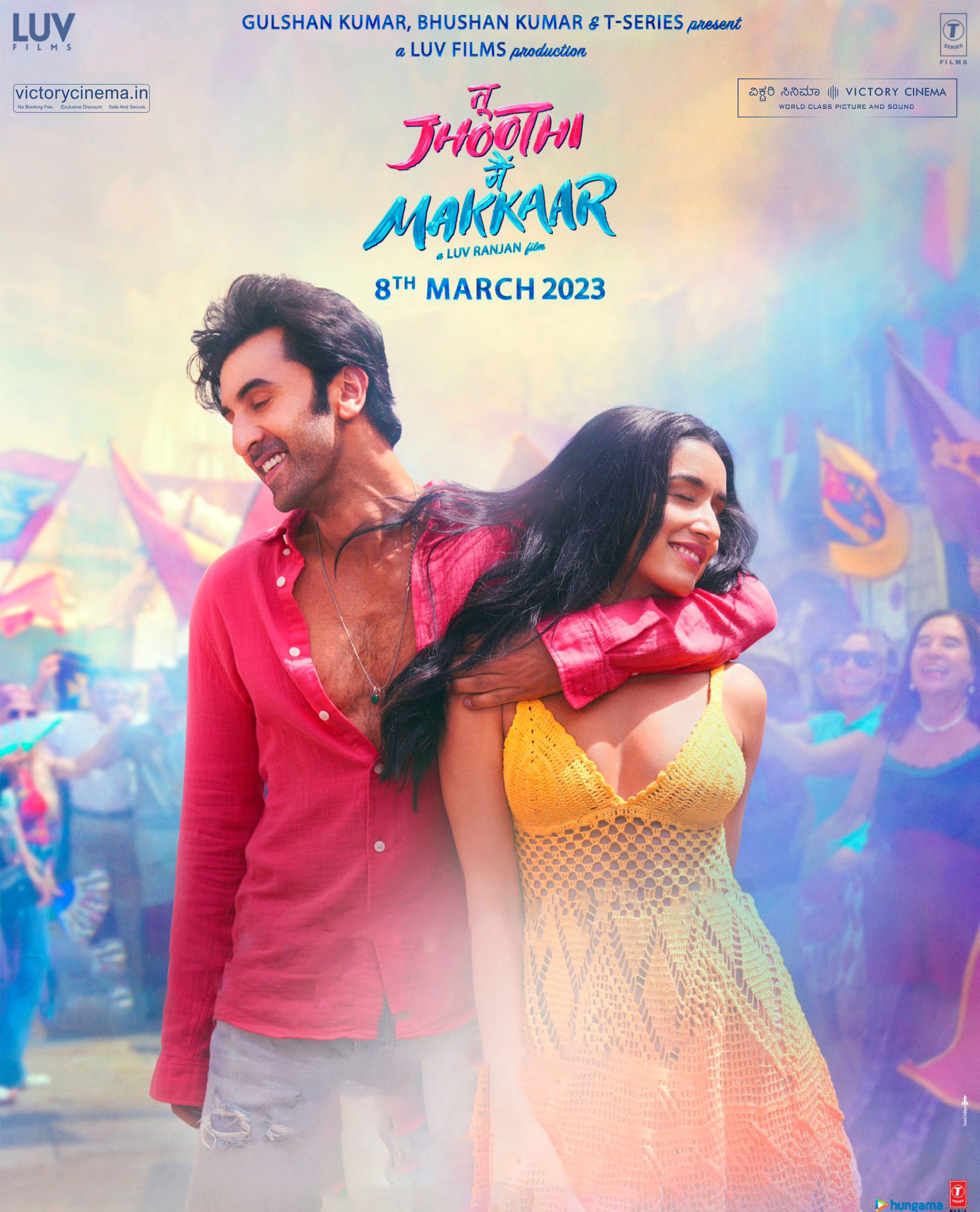
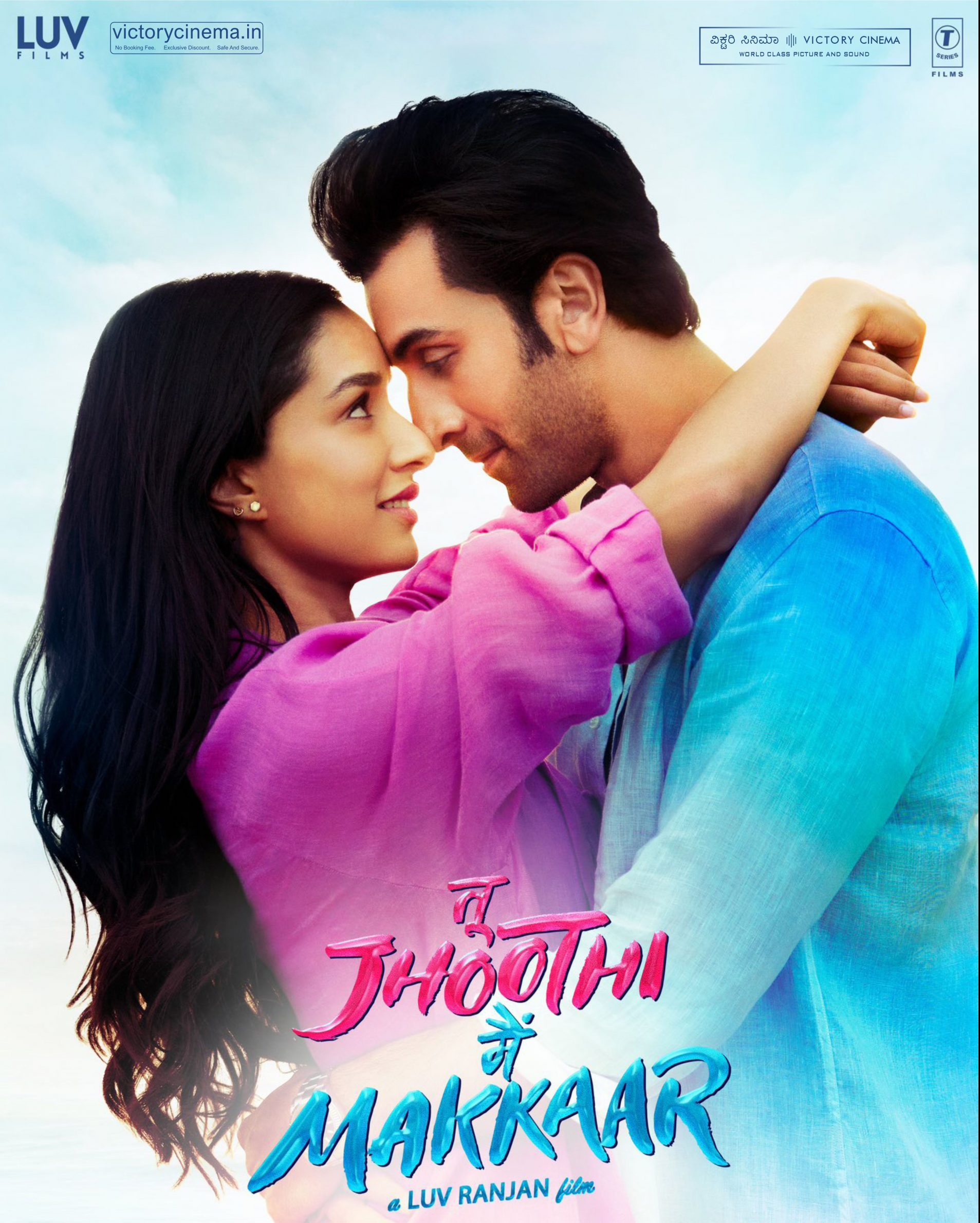
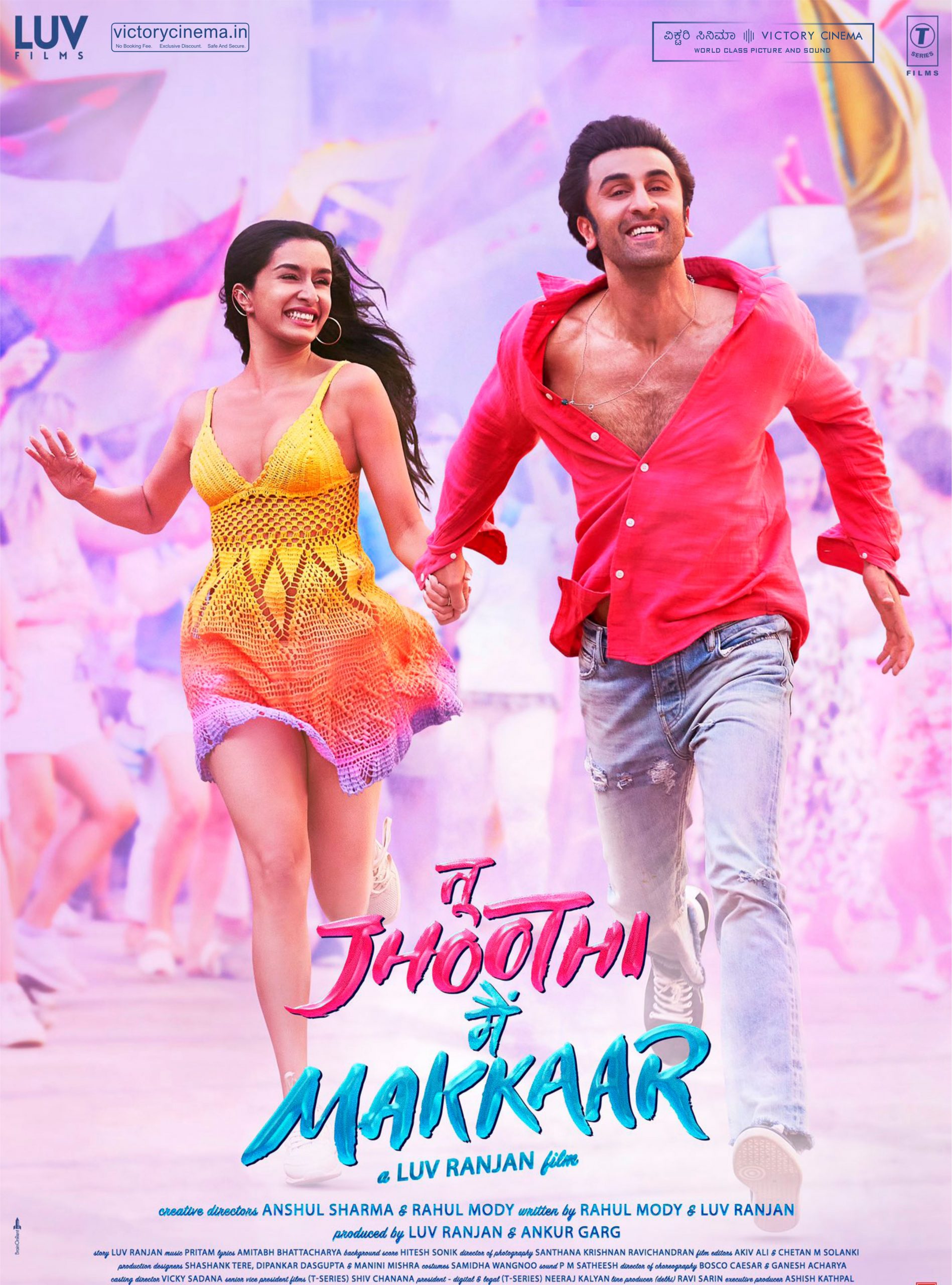
Tu Jhoothi Main Makkaar brings Ranbir Kapoor and Shraddha Kapoor together in a Hindi romantic comedy about attraction, independence and the negotiations behind modern relationships. Mickey appears confident in love because he secretly helps unhappy couples end relationships without confrontation. Tinni appears equally self-assured and unwilling to surrender her freedom. Their meeting during a friend’s bachelor trip creates immediate chemistry, playful competition and the possibility of a future. Victory Cinema presents the film in Hindi with English subtitles for Bengaluru audiences seeking romance, comedy, music and family entertainment on the big screen during the Holi festive season in March 2023.
Ranbir Kapoor as Mickey
Ranbir Kapoor plays Rohan Arora, known as Mickey, a charming man from a wealthy Delhi family. Behind his relaxed personality, Mickey and his friend Manu secretly operate a breakup consultancy. Their service helps clients escape relationships by creating circumstances in which the other partner appears responsible for ending them. Mickey believes he understands emotional behaviour and can predict how people respond to jealousy, insecurity and disappointment. His confidence is tested when love enters his life. The strategist who has advised others about separation must confront feelings that cannot be controlled through clever plans, rehearsed conversations or calculated emotional distance.
Shraddha Kapoor as Tinni
Shraddha Kapoor plays Nisha Malhotra, known as Tinni, an independent woman who values space, professional ambition and the freedom to shape her future. She is warm, witty and capable of matching Mickey’s confidence without becoming impressed by his charm. Their attraction grows through travel, conversation and teasing during Manu’s bachelor celebration in Spain. Tinni enjoys romance but remains cautious about everything marriage may demand from her. She does not reject love; she fears losing herself inside expectations that often follow commitment. Her conflict gives the film a contemporary question: can partnership remain joyful without requiring one person to surrender individuality?
A battle of romantic wits
Mickey and Tinni begin as confident players who believe they can recognise every romantic trick. Their flirtation becomes a battle of timing, humour and emotional intelligence, with each trying to understand whether the other is sincere. What begins casually develops into affection that survives their return to India. Families meet, marriage appears possible and their relationship moves towards a future neither expected during the holiday. Yet the speed that creates excitement also prevents important concerns from being discussed openly. The film uses their chemistry to explore how people can fall deeply in love while carrying different assumptions about home, marriage and independence.
Anubhav Singh Bassi as Manu
Anubhav Singh Bassi plays Manu Dabas, Mickey’s best friend, business partner and comic companion. Manu’s bachelor party provides the occasion bringing Mickey and Tinni together, while his relationship with Kinchi offers another perspective on commitment. He knows Mickey’s secret work and assists with plans designed to engineer clean breakups. Their friendship creates humour through rapid conversations, exaggerated confidence and schemes that become harder to manage once Mickey is personally involved. Manu can offer advice, but he recognises that his friend is no longer dealing with a client’s problem. Mickey’s emotions make every professional decision increasingly risky and unpredictable.
Mickey’s lively family
Dimple Kapadia plays Mickey’s energetic mother, while Boney Kapoor appears as his quieter father. Their household is affectionate, crowded and involved in every member’s life. Hasleen Kaur, Monica Chaudhary, Inayat Verma and other performers create the extended family atmosphere surrounding Mickey. For him, family participation feels natural and comforting. For Tinni, the same closeness raises concerns about privacy and autonomy after marriage. The film does not treat the family only as an obstacle; its warmth is one of Mickey’s strongest emotional foundations. Conflict arises because love for family and the desire for an independent household can both be legitimate.
The breakup consultant becomes the client
The breakup-consultant premise gives Tu Jhoothi Main Makkaar its central comic mechanism. Tinni decides that she cannot proceed comfortably towards marriage, but wants Mickey to reject her so he will not be emotionally destroyed by direct refusal. Without knowing his identity, she contacts the professional service operated by Mickey and Manu. Mickey accepts the assignment before realising that the anonymous client is his girlfriend. He now hears Tinni’s doubts while pretending to help her leave him. The situation turns romance into strategy, forcing both characters to conceal truth while studying every reaction, message and apparent mistake in their relationship.
Directed by Luv Ranjan
Luv Ranjan directs the film from a screenplay written with Rahul Mody. Their story combines glamorous romance, family comedy and an emotional debate about whether marriage requires integration into a partner’s household. The film’s humour often comes from characters speaking with confidence about subjects they do not fully understand. Long conversations allow Mickey and Tinni to explain, challenge and misinterpret one another before emotion disrupts their logic. The official production describes the film as a battle of wits between romantic players. That idea shapes the narrative, but the deeper contest concerns whether honesty can replace manipulation before their affection is permanently damaged.
Music by Pritam
Pritam composes the songs, with lyrics by Amitabh Bhattacharya, giving the film a soundtrack that moves between romance, celebration and heartbreak. Tere Pyaar Mein captures the intensity of Mickey and Tinni’s attraction through Arijit Singh and Nikhita Gandhi’s vocals. Pyaar Hota Kayi Baar Hai presents playful advice about recovering from failed romance. Show Me The Thumka turns a family wedding into an energetic dance showcase featuring Ranbir Kapoor and Shraddha Kapoor. O Bedardeya brings emotional weight when strategy gives way to pain. Hitesh Sonik’s background score supports transitions from sparkling comedy towards uncertainty, separation, reflection and eventual reconciliation.
Colourful romance for the big screen
The film’s visual world moves from sunny Spanish locations to stylish Delhi homes, wedding celebrations, offices and lively family spaces. Cinematographer Santhana Krishnan Ravichandran gives the romance colour and movement, while editors Akiv Ali and Chetan M. Solanki shape the shifts between travel, courtship, comic planning and emotional confrontation. Costumes, dance choreography and production design create the bright scale expected from a Holi release. On the cinema screen, the European landscapes, wedding songs and crowded household scenes gain energy through large projection and shared audience reactions. The visual polish supports a story that remains centred on conversations and emotional choices.
Hindi with English subtitles
Victory Cinema presents Tu Jhoothi Main Makkaar in its original Hindi language with English subtitles. Audiences can enjoy the voices, comic timing and emotional performances of Ranbir Kapoor, Shraddha Kapoor, Anubhav Singh Bassi, Dimple Kapadia and the supporting cast while following every important exchange. Subtitles are especially useful during rapid jokes, breakup consultations, family arguments and emotionally layered conversations where one sentence may conceal another intention. The film carries a U/A certificate and runs for approximately two hours and thirty-nine minutes. Its combination of romance, suggestive humour, family conflict and emotional intensity may be considered by parents booking for younger viewers.
Watch Tu Jhoothi Main Makkaar at Victory Cinema
Tu Jhoothi Main Makkaar offers Bengaluru audiences a festive Hindi romantic comedy built around a fresh lead pairing, popular music and a relatable conflict between companionship and independence. Mickey and Tinni must discover whether love can survive once cleverness becomes dishonesty and family expectations replace holiday romance. Their journey promises laughter, dancing, misunderstandings and emotional confrontation before either can decide what a shared future should look like. Watch Tu Jhoothi Main Makkaar in Hindi with English subtitles at Victory Cinema. Check showtimes, choose preferred seats and book directly on victorycinema.in without booking fees for a big-screen celebration of love and family together.