Ranganayaka (Kannada with English Subtitles)
- Director: Guruprasad
- Writers: Guruprasad
- Stars:
- Jaggesh
- Guruprasad
- Yogaraj Bhat and Chaithra Kotoor
- Rachita Mahalakshmi
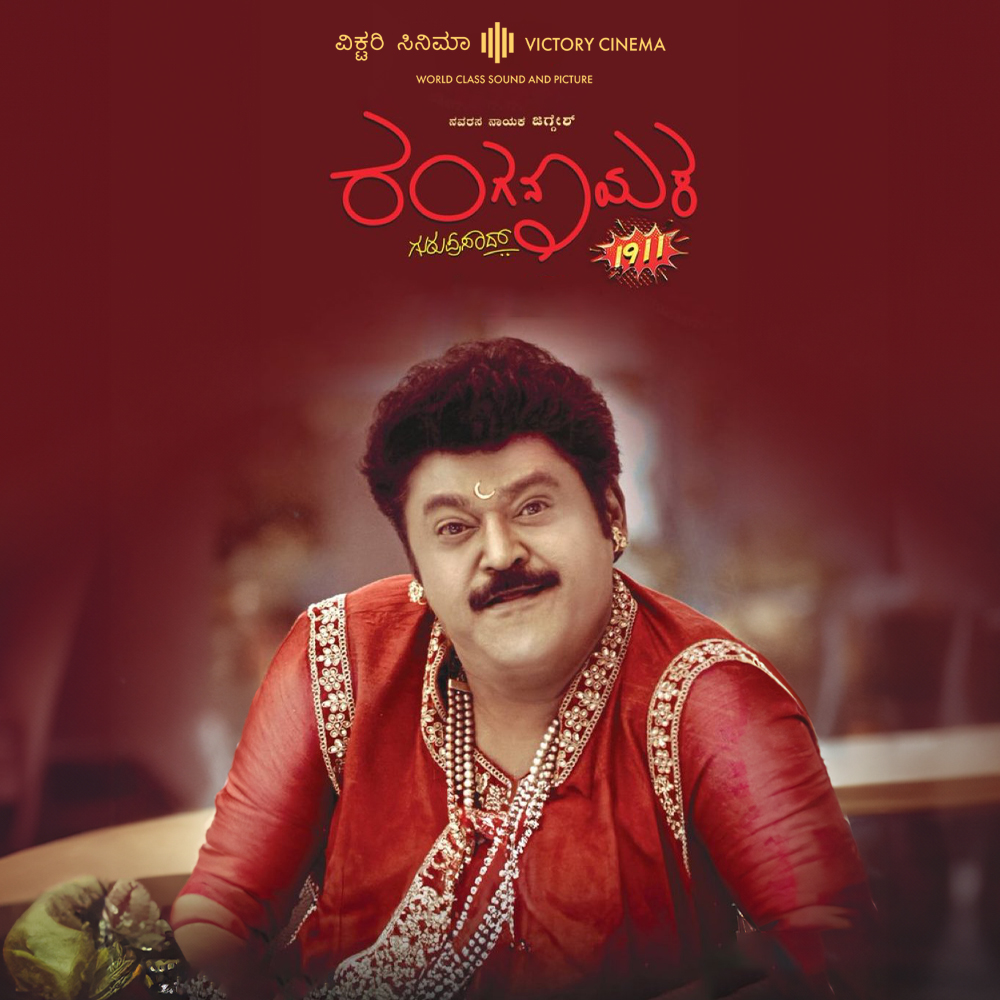
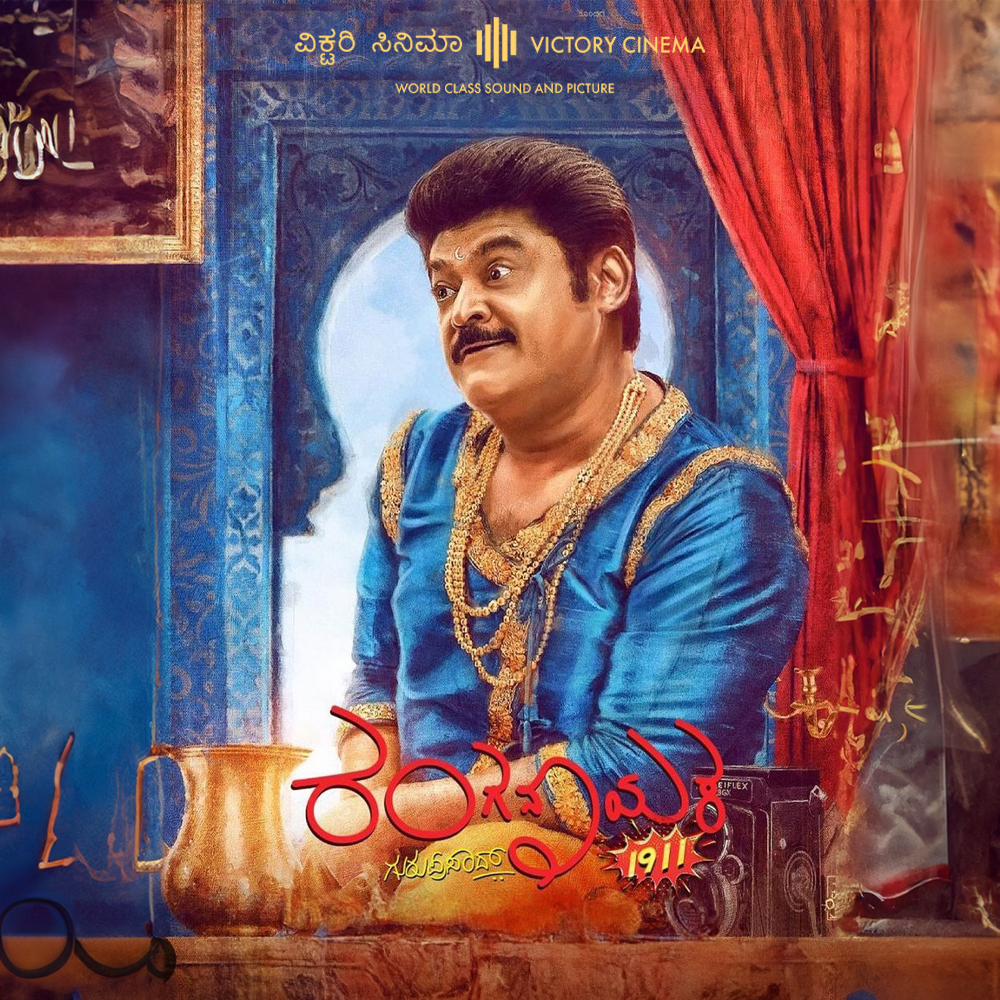
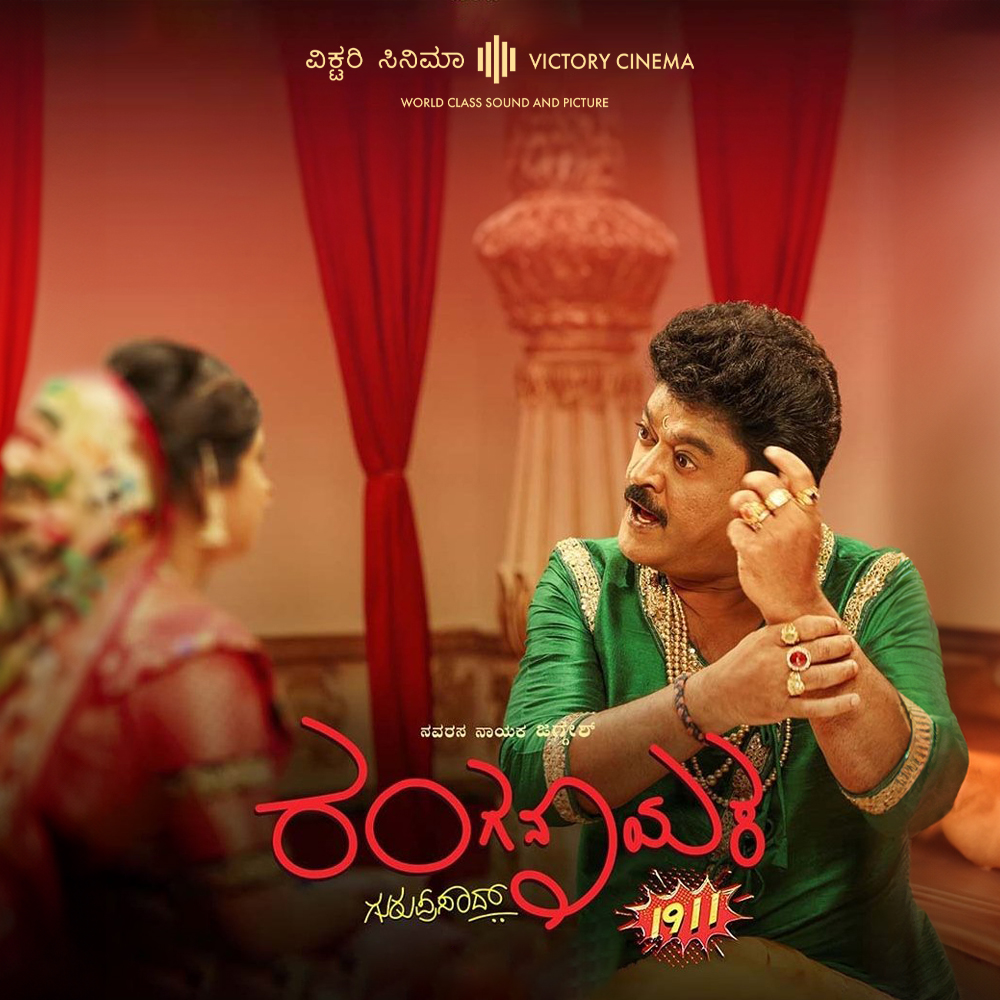
Ranganayaka at Victory Cinema Ranganayaka reunites actor Jaggesh and writer-director Guruprasad for a Kannada comedy drama that moves between the modern film industry and a colourful imagined past. Their new collaboration arrives fifteen years after Eddelu Manjunatha, following the pair’s earlier work together on Mata. The film releases theatrically on 8 March 2024 as a blend of period storytelling, political satire and Guruprasad’s dialogue-driven humour. Jaggesh plays the title character, while Guruprasad appears as a version of himself within the contemporary portion of the story. Rachitha Mahalakshmi makes her Kannada feature-film debut opposite Jaggesh, with Chaithra Kottur, Yogaraj Bhat, Avinash and other familiar performers joining the ensemble. A. R. Vikhyath produces the film under Vikhyath Chithra Productions, with Zee Studios associated with its distribution. Victory Cinema presents Ranganayaka in Kannada with English subtitles for audiences from across Bengaluru. Check the latest showtimes, select your preferred seats and book directly on victorycinema.in without booking fees. A filmmaker faces the state of cinema The contemporary story follows Guruprasad as an idealistic but frustrated filmmaker disturbed by what he sees happening around the film industry. He is invited to participate in a television programme that uses hypnosis to uncover hidden memories and personal truths. The experiment takes the narrative away from an ordinary studio conversation and into an extravagant past-life world shaped by cinema, history and imagination. This structure gives Guruprasad space to comment on filmmaking while simultaneously turning himself into part of the comedy. The director is not observing events from outside the frame. His onscreen character becomes the gateway through which the audience enters another time and encounters the extraordinary personality of Ranganayaka. The television setting also supports satire about entertainment, ratings, public attention and the pressure placed upon filmmakers. A programme designed to reveal secrets unexpectedly opens the door to an entire cinematic universe. A journey into the world of 1911 Ranganayaka travels into an imagined version of 1911, a period before Kannada sound cinema had taken shape in the form familiar to later audiences. Guruprasad described the film before release as an attempt to transport viewers into a bygone era while combining traditional imagery with contemporary storytelling. The period setting is approached through fantasy, humour and the unrestricted logic of a dream. Jaggesh explained that the film enters an ordinary person’s dream world, where behaviour, language and imagination are not limited by conventional rules. This allows the creative team to combine old-fashioned costumes, theatrical performance and references to the origins of cinema with modern observations about society. Rather than presenting 1911 as a strict historical reconstruction, the film promises a comic interpretation shaped by Guruprasad’s distinctive voice. The journey into the past also asks what Kannada cinema might look like when imagined before its recognised institutional beginning. That playful premise gives the story room to celebrate artistic ambition while making fun of ego, politics and the obstacles surrounding creative work. Jaggesh as Ranganayaka Jaggesh plays Ranganayaka, the central figure within the period narrative. The role places his comic personality inside an unfamiliar era filled with elaborate clothing, unusual customs and people attempting to understand the possibilities of moving images. The character offers Jaggesh opportunities for verbal comedy, expressive reactions and multiple appearances shaped by the film’s dreamlike construction. Pre-release material highlighted that he would be seen in varied get-ups, reflecting the film’s movement through history, imagination and performance. Jaggesh’s partnership with Guruprasad is closely associated with dialogue-heavy comedy in which humour emerges from character, argument and social observation. Ranganayaka brings that combination back while giving it a larger period canvas. The actor described comedy as increasingly rare in contemporary cinema and presented Ranganayaka as a project designed to bring laughter through a story that does not fit easily into one conventional category. Ranganayaka may be surrounded by royal imagery and ambitious plans, but the humour comes from recognisable human behaviour. Pride, confusion, artistic ambition and the desire for recognition remain familiar regardless of the century in which the characters appear. Guruprasad returns as writer, director and performer Guruprasad writes and directs Ranganayaka while also taking a substantial onscreen role. His films are known for relying on language, debate and characters who express uncomfortable observations through comedy. For this project, he described his intention as delivering something unique to Kannada audiences rather than repeating an established commercial formula. The 1911 setting allows him to unite a historical appearance with ideas that remain relevant to present-day cinema and politics. Guruprasad’s character begins as a filmmaker reacting to the contemporary industry. Once hypnosis takes effect, the narrative transforms his concerns into a period adventure. The division between director and creation consequently becomes blurred: he is both the person telling the story and a character trapped inside its unusual logic. The film can therefore function as comedy, self-reflection and a tribute to the enduring desire to make cinema. The creative process itself becomes part of the entertainment, with filmmakers, actors and audiences all becoming possible subjects of satire. Rachitha Mahalakshmi enters Kannada cinema Rachitha Mahalakshmi appears as Mahalakshmi and makes her Kannada feature-film debut with Ranganayaka. Though originally from Karnataka, she established herself principally through Tamil television before receiving the opportunity to work with Guruprasad and Jaggesh. Her character belongs to the film’s period world and is presented through traditional attire and expressive performance. Rachitha spoke before release about enjoying older cinematic styles and the opportunity to embody a woman from another era. Working opposite Jaggesh places her within scenes where timing and reaction are important. His ability to introduce additional comic lines during performance required her to remain alert while preserving the personality of Mahalakshmi. The romantic portions bring colour and melody into a story filled with satire. Mahalakshmi’s relationship with Ranganayaka also helps establish the emotional and cultural atmosphere of the imagined period. Chaithra Kottur and an unusual mother-son relationship Chaithra Kottur appears in the distinctive role of Ranganayaka’s mother. Guruprasad deliberately cast a younger performer to recreate the type of strongly characterised mother roles associated with the black-and-white era of Kannada cinema. The casting itself becomes part of the film’s playful treatment of age, performance and cinematic convention. In a dream world, the usual rules determining who may portray a parent or child can be rearranged for humour and dramatic effect. The mother-son relationship is expected to contain several dimensions rather than functioning merely as a background connection. Chaithra Kottur described the role as an opportunity to move beyond her previous limitations and reveal another side of her performance. Her presence strengthens the film’s imitation and reinterpretation of earlier Kannada screen traditions, when performers often took on characters far removed from their actual ages. Political satire and Kannada cinema Ranganayaka was promoted as a political satire as well as a period drama. Its historical appearance allows contemporary behaviour to be examined from a comic distance. Power, influence, artistic freedom and public opinion can be discussed through characters who appear to belong to another century. The film also looks towards Kannada cinema itself. Its imagined attempt to create an early Kannada movie becomes a way of celebrating the language and the people who built the industry, while also questioning how cinema is produced, promoted and received. Guruprasad’s humour often arises when idealism meets practical reality. An artist may speak passionately about culture but still require money, performers and public attention. Political figures may praise art while attempting to control it. Audiences may demand originality while rewarding familiarity. Ranganayaka brings these contradictions together within a period fantasy. The result promises comedy that can be enjoyed for its characters and wordplay while also inviting reflection on the continuing relationship between cinema, society and power. Familiar Kannada personalities Yogaraj Bhat appears in the ensemble, adding another recognised Kannada filmmaker to a movie already centred upon directors and the process of cinema. Avinash, Srinivas Prabhu, Vageesh R. Katti and several supporting performers contribute to the contemporary and period portions of the narrative. Their presence supports a film where theatrical personalities, filmmakers, historical characters and imagined figures exist within the same broad comic world. The ensemble format allows scenes to be driven by conversation and contrasting viewpoints. Each new character can challenge Ranganayaka’s ambitions or add another obstacle to the attempt to create cinema in an age unprepared for it. For Kannada movie enthusiasts, the appearances and references also offer the pleasure of recognising artists connected to different areas of the industry. Anoop Seelin’s music J. Anoop Seelin composes the film’s music, continuing his association with Guruprasad’s style of storytelling. The soundtrack includes “Gaali Tangaali Kannada Mathade” and “Enna Manadarasi,” with lyrics credited to Sharadasutha. “Gaali Tangaali Kannada Mathade” celebrates the Kannada language and features visual representations of celebrated Kannada film personalities. Anoop Seelin and Muniraju perform the song, which was presented before release as a musical tribute to the spirit and identity of Kannada cinema. “Enna Manadarasi” is a retro-styled romantic number featuring Jaggesh and Rachitha Mahalakshmi. Anoop Seelin and Indu Nagaraj provide the vocals, while the traditional presentation supports the film’s period setting. The songs allow the movie to move between satire and celebration. While the screenplay examines the difficulties surrounding cinema, the music expresses affection for Kannada language, performers and storytelling traditions. Technical team and theatrical presentation Samrat Ashok Gautham handles the cinematography, Umesh R. B. serves as editor, Imran Sardhariya choreographs the songs and Vasantharaj Kulkarni leads the art direction. The film’s certified running time is approximately 121 minutes. The period portions require visual design capable of suggesting another era while preserving the exaggerated quality of a dream. Costumes, sets and props therefore become part of the comedy rather than functioning only as decoration. The cinematography must distinguish the contemporary television environment from the imagined world of 1911. Editing connects these spaces while maintaining the rhythm required for Guruprasad’s dialogue and Jaggesh’s comic performance. The songs, period imagery and theatrical ensemble are designed for a communal cinema experience where laughter and references to Kannada culture can be shared with an audience. Kannada with English subtitles Victory Cinema presents Ranganayaka in its original Kannada-language version with English subtitles. The subtitles help audiences follow Guruprasad’s dialogue, Jaggesh’s rapid comic exchanges, political observations and period expressions while preserving the original voices and performances. They are especially valuable in a film where humour depends upon language, wordplay and unexpected changes in conversation. Viewers who understand conversational Kannada only partly can remain connected to the story without missing important references. The subtitled presentation also makes the film accessible to Bengaluru audiences from different linguistic backgrounds who are interested in Kannada comedy, satire and cinema history. A Kannada comedy for Bengaluru audiences Ranganayaka is created for viewers who enjoy Jaggesh’s comic personality, Guruprasad’s dialogue-driven filmmaking and stories that comment upon society through humour. The movie reunites a recognised actor-director combination while placing them within a new narrative structure. A contemporary filmmaker enters a hypnosis programme, discovers an extraordinary past and encounters a world where making cinema becomes an adventure filled with romance, politics and comic obstacles. Victory Cinema welcomes Kannada movie lovers from every part of Bengaluru to experience Ranganayaka on the big screen. Check the latest showtimes, select your seats and book tickets directly on victorycinema.in without booking fees. Enter Ranganayaka’s dream world A filmmaker’s frustration with contemporary cinema unexpectedly opens the door to 1911, where Ranganayaka dreams of performance, recognition and creating something never previously imagined. History, fantasy and satire come together as Jaggesh and Guruprasad return to the screen with their distinctive style of Kannada comedy. Watch Ranganayaka in Kannada with English subtitles at Victory Cinema, Bengaluru. Join Jaggesh, Guruprasad, Rachitha Mahalakshmi and the ensemble for a period comedy filled with cinema, language, music, political observations and dreamlike imagination.