Kingdom of the Planet of the Apes (English with English Subtitles)
- Director: Wes Ball
- Writers: Josh Friedman
- Stars:
- Owen Teague
- Freya Allan
- Kevin Durand
- Peter Macon
- William H. Macy
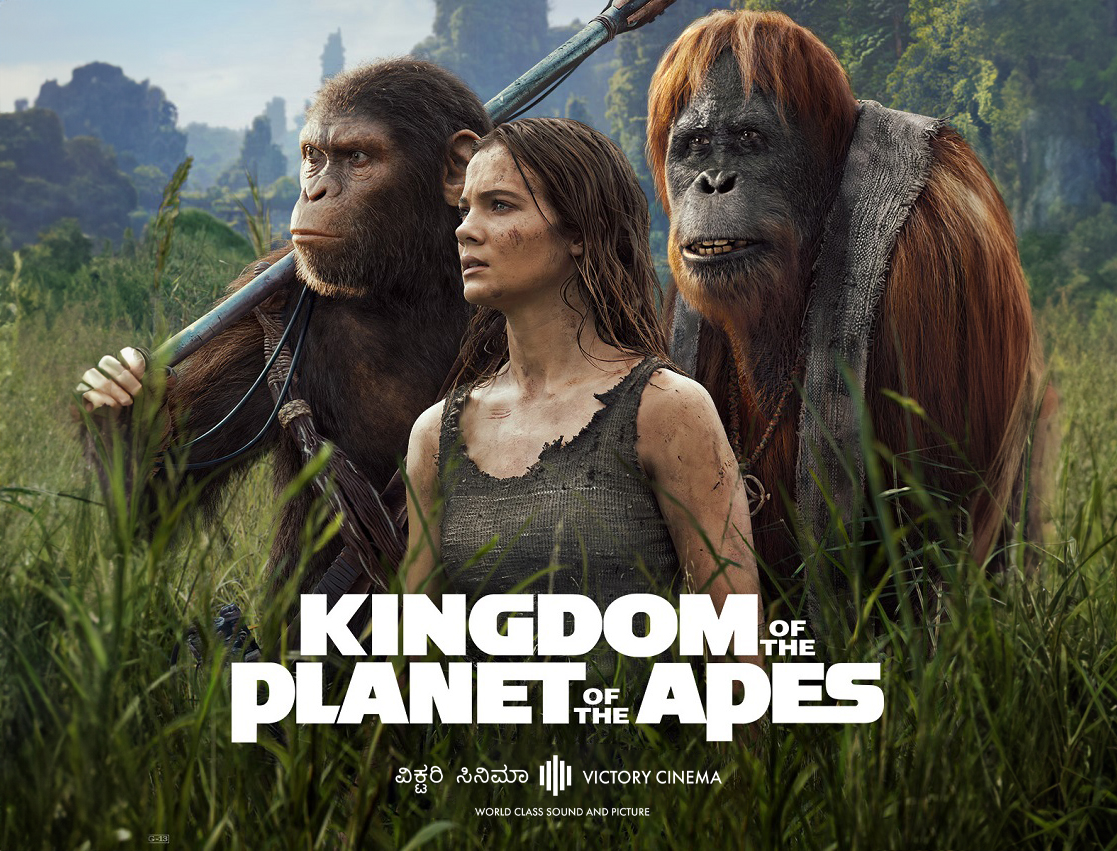
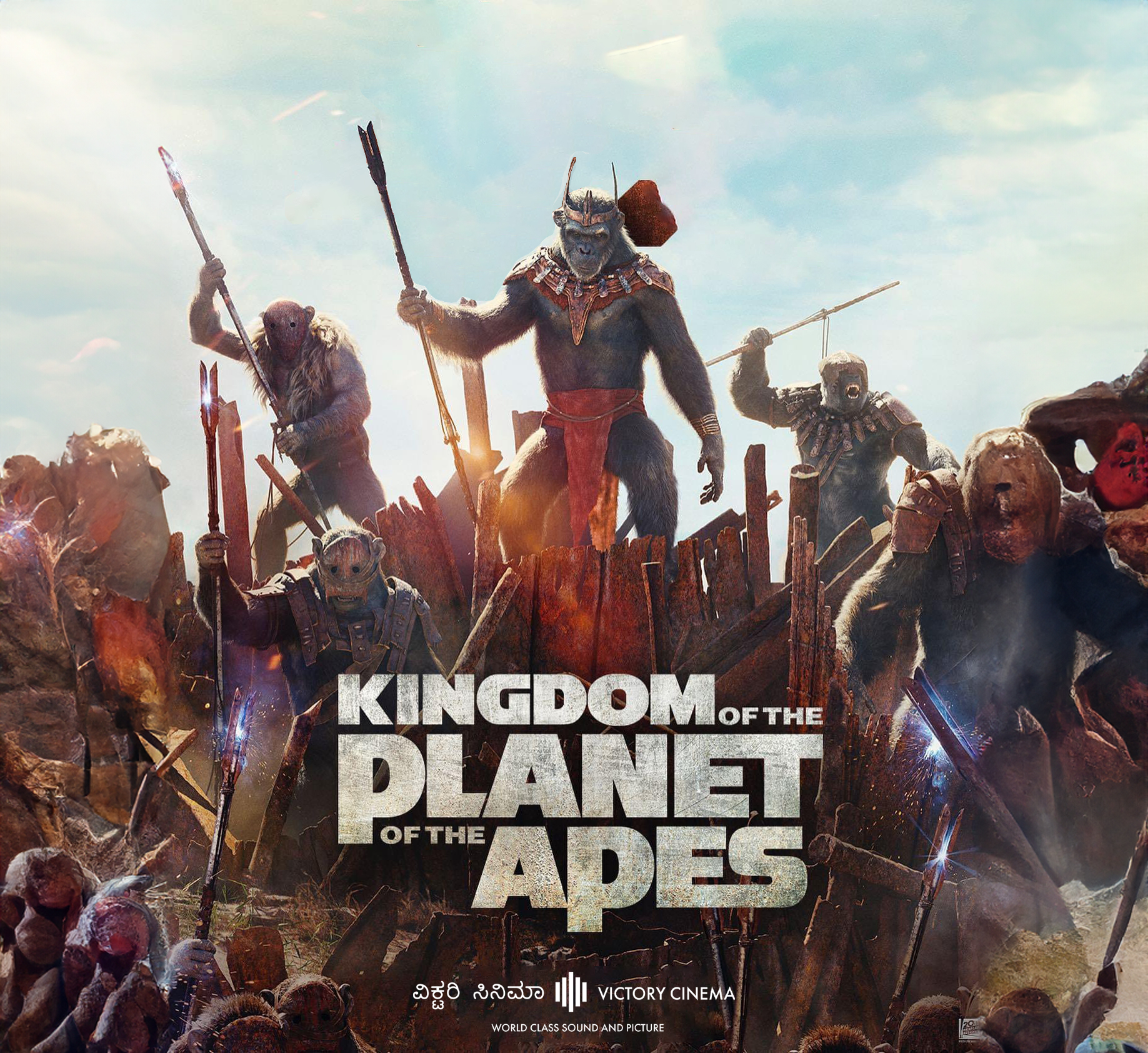
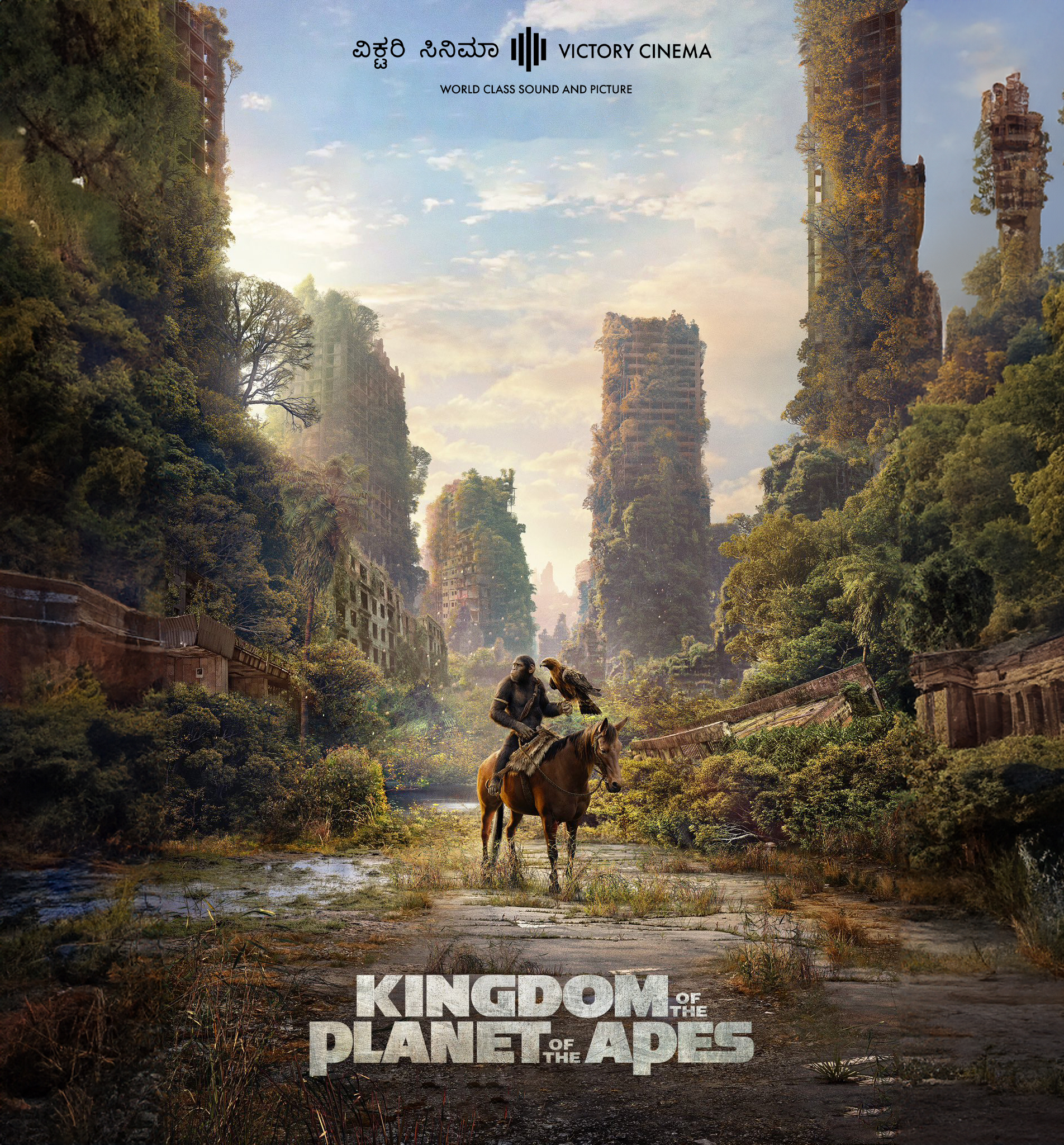
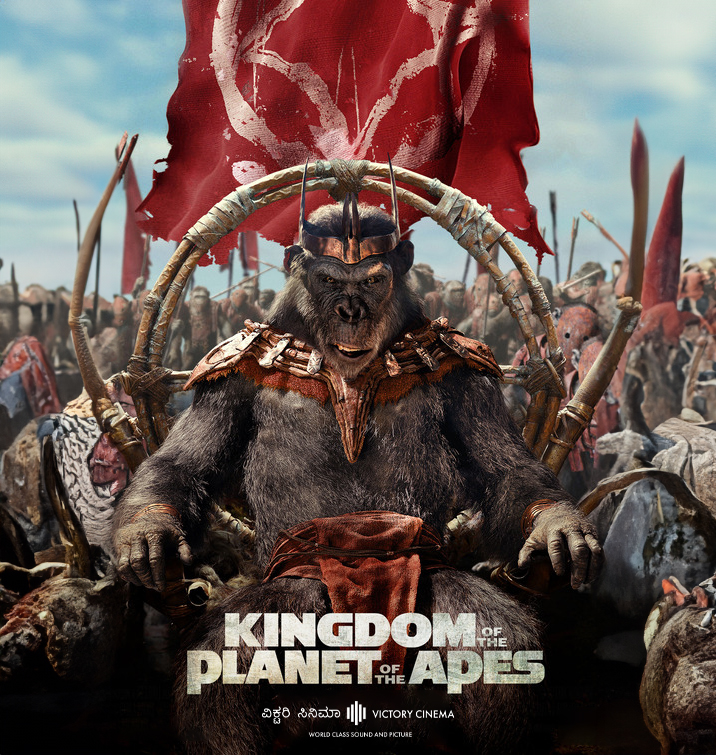
Kingdom of the Planet of the Apes at Victory Cinema Kingdom of the Planet of the Apes begins a new era in the celebrated science-fiction franchise, transporting audiences several generations beyond the reign of Caesar. Apes are now the dominant species, living in communities that have developed their own beliefs, customs and interpretations of history, while humans survive largely in the shadows of a world once built by them. At the centre of the story is Noa, a young ape whose sheltered life is destroyed when a powerful expanding kingdom attacks his clan. His journey to recover the people taken from him leads across ruined cities, forests, rivers and the remnants of human civilisation. Along the way, he must decide which teachings deserve to survive and what kind of future apes and humans should build. Directed by Wes Ball, the film opens theatrically on 10 May 2024. 20th Century Studios lists it as a 145-minute action, adventure and science-fiction film starring Owen Teague, Freya Allan, Kevin Durand, Peter Macon and William H. Macy. Victory Cinema presents Kingdom of the Planet of the Apes in English with English subtitles for science-fiction and adventure audiences from across Bengaluru. Check showtimes, choose your preferred seats and book directly on victorycinema.in without booking fees. A world many generations after Caesar Caesar’s struggle changed the relationship between apes and humans, but the new film takes place so far beyond his lifetime that his experiences have begun passing into legend. Different ape communities understand his legacy in different ways. Some know almost nothing about him. Others preserve fragments of his teachings, while ambitious leaders reshape his name to support their own authority. Wes Ball describes the film as both a continuation of the recent Caesar trilogy and a bridge towards the distant world associated with the original 1968 Planet of the Apes. Rather than following another fully established leader, the story introduces a younger character who discovers the wider world alongside the audience. This long passage of time gives the filmmakers freedom to create new cultures. Apes no longer belong to one united community. They have formed separate clans with different skills, traditions and ideas about humanity. The ruined human world remains visible around them. Skyscrapers disappear beneath forests, ships lie abandoned near coastlines and technology survives without the knowledge once required to operate it. These remnants are both historical mysteries and potential sources of power. Owen Teague as Noa Owen Teague performs Noa, a young chimpanzee growing up within the Eagle Clan. Noa’s community has built its identity around a close relationship with golden eagles. Its members climb dangerous heights to collect eggs, raise the birds and establish bonds that form part of their coming-of-age traditions. Noa begins the story thinking primarily about his family, his friends and the expectations attached to becoming an adult within his clan. He has not travelled widely and does not yet understand the conflicts developing between distant ape societies. The attack upon his home forces him into circumstances for which no ceremony could prepare him. Separated from familiar territory, Noa must follow the trail of those who captured his community and learn how to survive outside everything he knows. The official promotional material identifies Owen Teague as Noa and presents him alongside Lydia Peckham’s Soona and Travis Jeffery’s Anaya, his companions within the Eagle Clan. Neil Sandilands appears as Koro, Noa’s father and clan leader. Noa’s courage develops gradually. He is not introduced as an experienced commander or warrior. His strength grows through observation, loss, difficult decisions and the recognition that rescuing his clan may require questioning the history he has inherited. Raka preserves Caesar’s true teachings Peter Macon plays Raka, an orangutan who becomes Noa’s guide and travelling companion. Raka belongs to a tradition that remembers Caesar as a leader who sought unity, dignity and peace among apes. He carries symbols connected to that legacy and attempts to preserve its original meaning in a world where memory has become uncertain. Through Raka, Noa learns that the civilisation surrounding him has a deeper history than he understood. The ruins were built by humans, apes once lived under human control and Caesar’s teachings were developed during a struggle very different from the one now facing Noa. Raka provides knowledge, compassion and occasional humour, but he is not simply a source of historical information. His conduct demonstrates the values he believes Caesar represented. The contrast between Raka and Proximus Caesar becomes central to the film. Both invoke Caesar’s name, yet they understand leadership in completely different ways. Raka treats Caesar’s legacy as a responsibility; Proximus uses it as an instrument of control. 20th Century Studios’ official material identifies Peter Macon as Raka and describes the wider narrative as a young ape’s journey through a new empire that will make him reconsider everything he knows about the past. Freya Allan as the mysterious Mae Freya Allan plays Mae, a young human who begins following Noa and Raka during their journey. Most apes consider humans primitive creatures living beyond organised society. Mae’s behaviour, however, suggests intelligence, awareness and motives that she does not immediately reveal. Her presence challenges Noa’s assumptions. Everything he has been taught encourages him to view humans as creatures belonging to a defeated past, but Mae does not fit that simple understanding. Raka responds to her with greater curiosity and compassion, creating the possibility of cooperation between species. Noa remains cautious because Mae appears to know more about the ruined world and the expanding ape kingdom than she initially admits. The alliance is therefore shaped by necessity rather than uncomplicated trust. Noa needs information that may help him find his clan, while Mae has her own reasons for travelling towards the territory controlled by Proximus. The official character campaign identifies Freya Allan’s human character as Mae, while still photography also reflects the temporary name Nova given to her by the apes. Their relationship places the future of both species inside a personal question: can two individuals cooperate when history has taught each side to fear what the other might become? Kevin Durand as Proximus Caesar Kevin Durand performs Proximus Caesar, the ambitious leader building a kingdom through conquest, forced labour and the power of a carefully constructed legend. Proximus presents himself as the successor to Caesar, but the society he creates is based upon domination. He gathers apes from different clans, absorbs them into his empire and searches for access to human technology hidden inside a fortified structure. His interest in the past is practical. Where Raka studies history to preserve wisdom, Proximus studies it to obtain weapons, knowledge and authority. The name Caesar gives Proximus legitimacy among apes who may know only incomplete stories about the original leader. By controlling those stories, he can persuade followers that expansion and obedience fulfil a sacred inheritance. 20th Century Studios describes the central antagonist as a tyrannical ape leader building an empire. The studio’s official character material identifies Kevin Durand as Proximus Caesar. Proximus represents the danger created when history becomes separated from truth. His kingdom is physically impressive, but its strength depends upon fear and the exploitation of clans such as Noa’s. The struggle over lost human technology The ruined human civilisation is filled with objects that apes recognise as powerful without always understanding how they work. Proximus believes that gaining access to preserved human technology could accelerate ape development and make his kingdom impossible to challenge. The locked structure near his settlement consequently becomes more than an old building. It represents knowledge capable of changing the balance of power. Noa approaches the human past differently. He is interested in whatever may help him rescue his clan, but his experiences with Raka and Mae encourage him to consider whether every rediscovered tool should be used. Mae also understands that the remains of human civilisation could determine whether humans remain scattered survivors or regain some influence over the planet. The resulting conflict is not simply apes against humans. Individual apes disagree about Caesar, leadership and technology, while humans make different choices about cooperation and survival. This moral complexity continues the franchise’s tradition of asking audiences to examine civilisation from an unfamiliar perspective. Ball has described Planet of the Apes as a series that uses ape characters to reflect human behaviour and questions about power, identity and society. Performance capture and the actors behind the apes Kingdom of the Planet of the Apes continues the performance-capture approach that gave the preceding films their emotional realism. The actors portraying apes perform the characters’ movements, expressions and dialogue. Their work is then transformed through visual effects while preserving the emotional choices made during filming. This method allows Noa to appear unmistakably non-human while still communicating uncertainty, grief, curiosity and determination through subtle facial and physical performance. Kevin Durand gives Proximus a commanding theatrical energy, Peter Macon brings gentleness and wisdom to Raka, and Owen Teague makes Noa’s transformation visible through posture and movement as well as dialogue. The Walt Disney Company’s pre-release feature on the film confirms that performance capture remains one of the franchise’s defining techniques. It also highlights the creation of a post-apocalyptic world containing forest-covered skyscrapers, decaying human structures and ships washed onto shore. The combination of location photography and digital artistry creates a world that feels inhabited rather than designed merely as a visual-effects demonstration. Wes Ball begins a new chapter Wes Ball directs Kingdom of the Planet of the Apes after helming the Maze Runner film series. Ball approaches the project as a large adventure that can welcome new audiences while respecting the emotional and thematic foundation of the Caesar trilogy. The film does not attempt to replace Caesar with an identical hero. Noa belongs to another generation, has different experiences and begins without Caesar’s historical knowledge. That distance allows the story to explore how legends change. Caesar’s words have survived, but their meanings depend upon the people repeating them. The official credits list Josh Friedman, Rick Jaffa, Amanda Silver and Patrick Aison as writers. Wes Ball, Joe Hartwick Jr., Rick Jaffa, Amanda Silver and Jason Reed serve as producers. The adventure combines intimate character moments with horseback journeys, climbing sequences, ruined landscapes, confrontations between clans and the scale of Proximus Caesar’s coastal kingdom. Ball describes the film as an experience created for the collective immersion of a cinema audience, with a visual world intended to feel enormous on the big screen. John Paesano’s orchestral score John Paesano composes the original score, continuing his creative collaboration with Wes Ball after the Maze Runner films. The soundtrack contains 29 pieces and runs for approximately one hour and fifty-four minutes. Tracks include “Discovery,” “The Climb,” “Maybe Echo,” “Eagle Clan,” “We Have Good Rain” and “A New Age.” It was released by 20th Century Studios on 10 May 2024. The music supports several contrasting aspects of the film. The Eagle Clan requires themes conveying community, ritual and the beauty of Noa’s home. His journey demands a broader adventure sound, while Proximus Caesar’s kingdom introduces power, danger and distorted grandeur. The score must also connect the film to the musical history of Planet of the Apes without making the new characters feel trapped by an earlier generation. In a theatre, Paesano’s percussion, orchestral scale and quieter emotional passages strengthen the experience of crossing a transformed planet with Noa. English with English subtitles Victory Cinema presents Kingdom of the Planet of the Apes in its original English-language version with English subtitles. Audiences can experience Owen Teague, Freya Allan, Kevin Durand, Peter Macon and William H. Macy’s original performances while clearly following every important line. The subtitles are particularly useful during ape dialogue delivered through performance capture, conversations taking place amid action and scenes containing unfamiliar clan names or references to the history of Caesar. They also support clarity during large-scale sequences involving water, horses, collapsing structures and groups of characters speaking in visually complex environments. The English-subtitled presentation makes the film welcoming to audiences who prefer written dialogue support without changing the actors’ original voices. A science-fiction adventure for Bengaluru Kingdom of the Planet of the Apes is created for audiences who enjoy immersive world-building, character-driven science fiction, survival adventures and stories about how history can be protected, forgotten or manipulated. Noa begins as a young ape concerned with completing a ceremony and earning his place within his clan. The destruction of his home forces him to cross a world far larger and more politically complex than he imagined. Raka gives him access to Caesar’s real teachings. Mae challenges his assumptions about humans. Proximus shows him how the same legacy can be transformed into a justification for conquest. The film’s 145-minute running time gives the journey space to move through several landscapes and relationships while developing the conflict between memory, technology and power. Victory Cinema welcomes Planet of the Apes fans and English movie audiences from every part of Bengaluru to experience this new chapter on the big screen. Check Kingdom of the Planet of the Apes showtimes, select your preferred seats and book directly on victorycinema.in without booking fees. The kingdom begins with Noa’s journey Noa leaves home determined to rescue his captured clan. What begins as a personal mission becomes a discovery of lost history, competing ape civilisations and a human whose knowledge could change the future. To defeat Proximus Caesar’s vision of power, Noa must understand what Caesar truly represented and decide which lessons belong in the new world. Watch Kingdom of the Planet of the Apes in English with English subtitles at Victory Cinema, Bengaluru. Experience a spectacular science-fiction adventure filled with performance-capture artistry, ruined human landscapes, ape kingdoms, moral conflict and the beginning of a bold new era.