Garudan (Tamil with English Subtitles)
- Director: R. S. Durai Senthilkumar
- Writers: Vetrimaaran
- Stars:
- Soori
- M. Sasikumar
- Unni Mukundan
- Roshini Haripriyan
- Samuthirakani
- Mime Gopi
- Rajendran
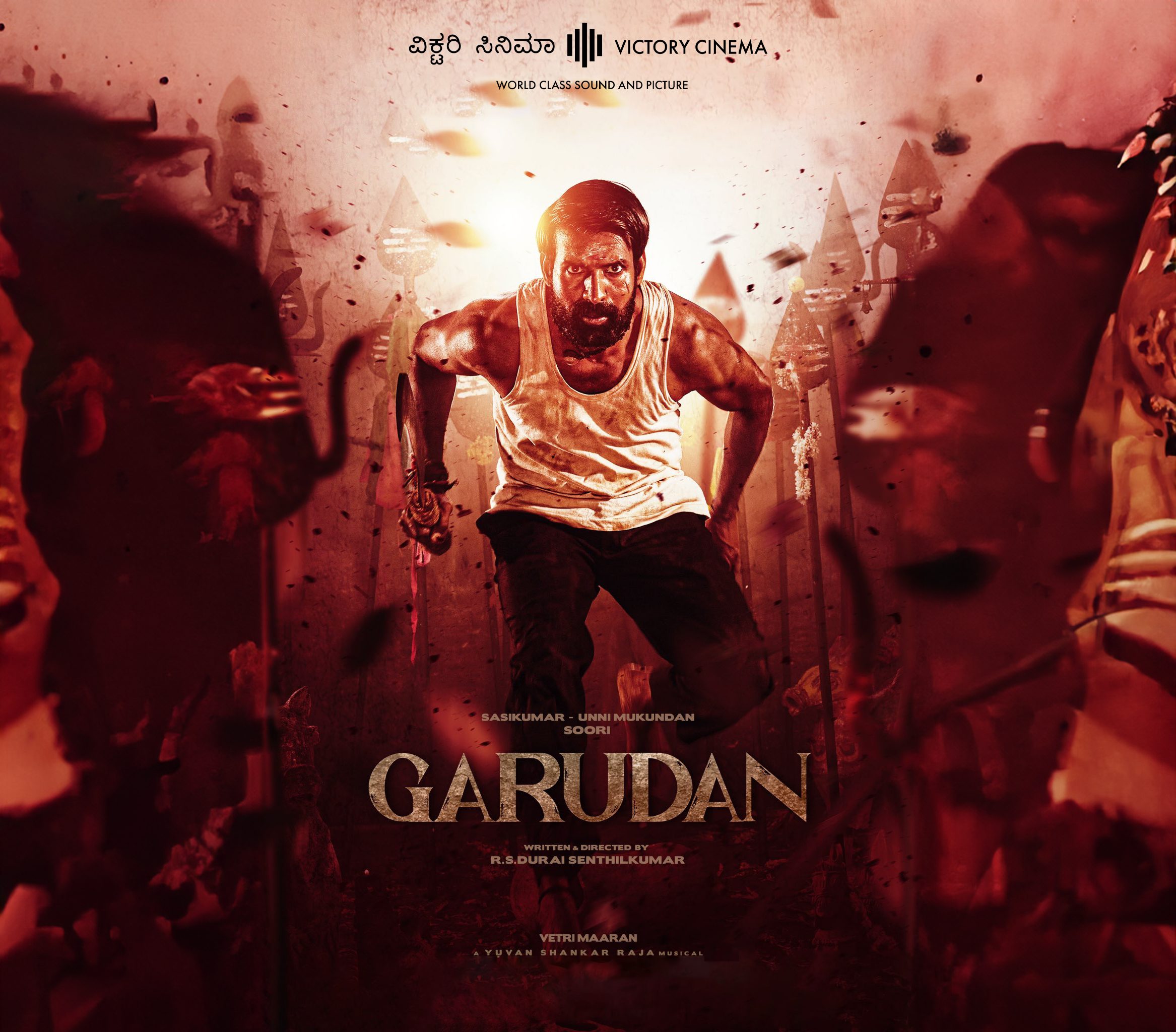
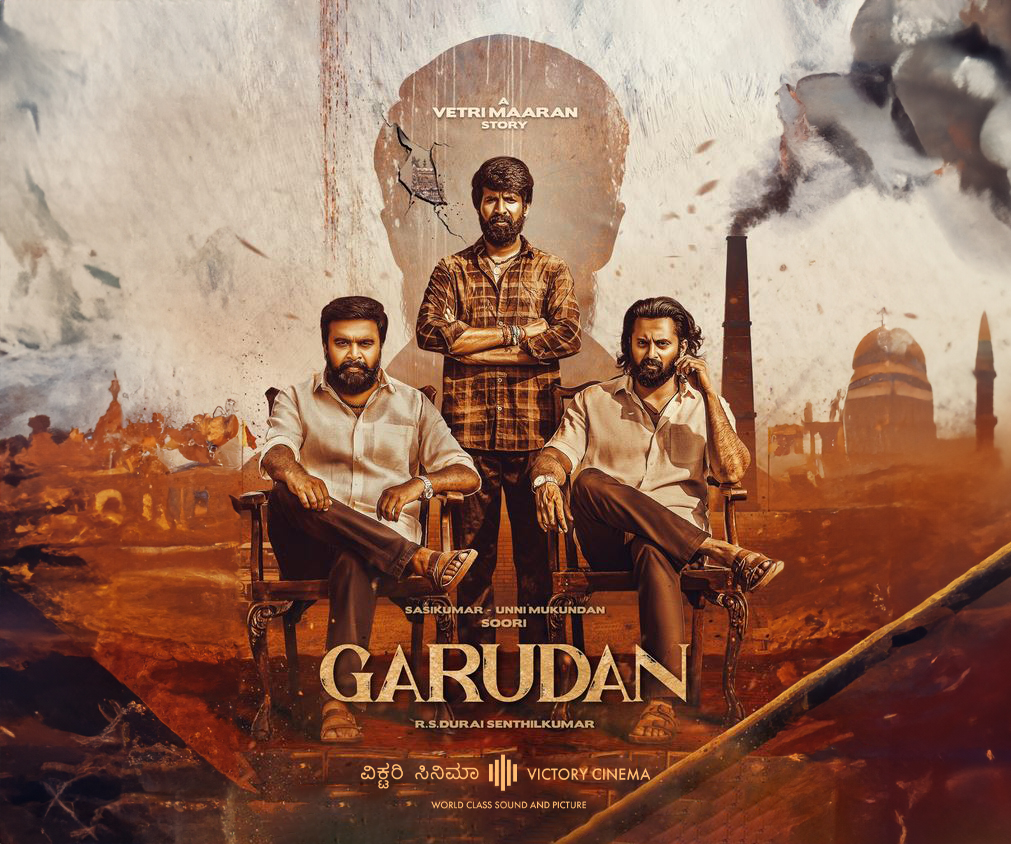
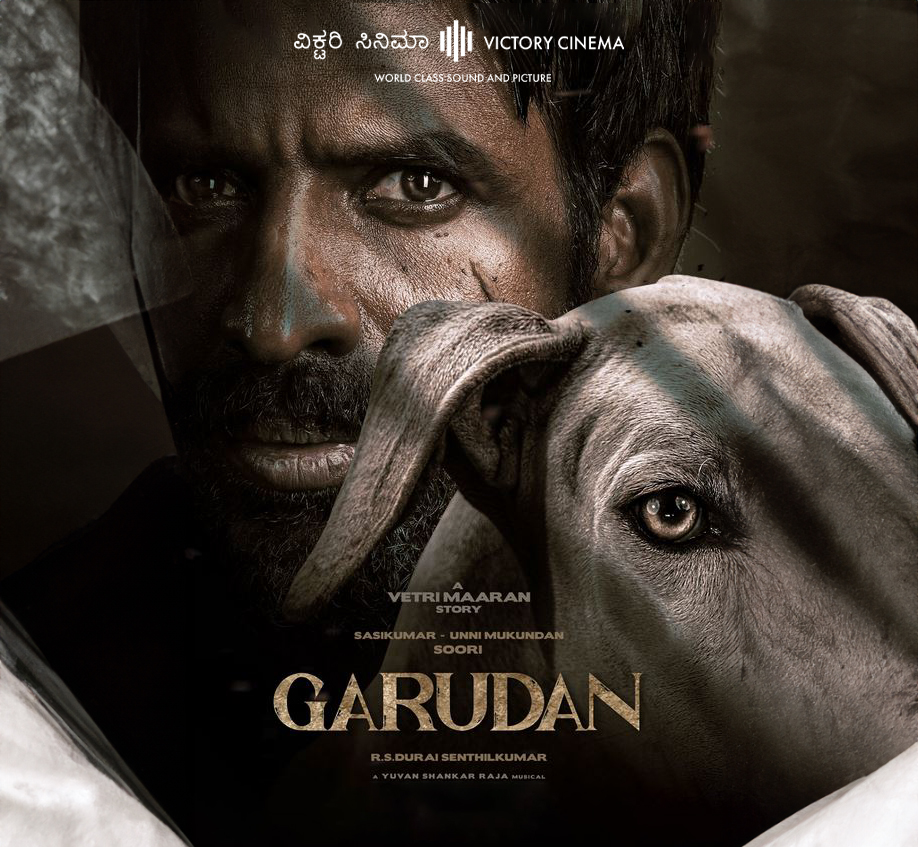
Garudan at Victory Cinema Garudan is an intense Tamil rural action drama built around friendship, loyalty, betrayal and a dispute over valuable temple property. Soori plays Sokkan, a fiercely devoted aide caught between Aadhi and Karuna, two influential childhood friends whose relationship begins changing when money, political pressure and private ambition enter their village. Written and directed by R. S. Durai Senthilkumar from a story associated with Vetrimaaran, Garudan stars Soori, M. Sasikumar and Unni Mukundan in its three central roles. Roshini Haripriyan, Sshivada, Revathi Sharma, Samuthirakani, Vadivukkarasi and Mime Gopi appear in the supporting ensemble. The film releases on 31 May 2024 as a 134-minute Tamil action drama with a U/A certificate. Victory Cinema presents Garudan in Tamil with English subtitles for movie lovers from across Bengaluru. Check the latest showtimes, select your preferred seats and book directly on victorycinema.in without booking fees. Sokkan lives through loyalty Sokkan grows up without the security of an ordinary family and finds belonging through Karuna’s household. That relationship shapes his identity so completely that serving and protecting Karuna becomes more than employment. It becomes Sokkan’s understanding of gratitude, honour and purpose. Soori presents Sokkan as a man who speaks less than the people around him but observes everything. His loyalty is immediately visible in the way he responds whenever Karuna appears threatened. He does not stop to calculate personal risk or ask whether intervention will benefit him. That devotion initially appears admirable. Sokkan remembers the kindness that brought him into the household and believes that loyalty must remain permanent, particularly when it was formed during childhood. Garudan places that belief under pressure. When friendship begins turning into rivalry and hidden motives become visible, Sokkan must decide whether loyalty means obeying one person under every circumstance or standing beside what is right. The film’s official international synopsis describes him as the trusted confidant of Aadhi and Karuna whose allegiance is transformed through betrayal and survival. Aadhi and Karuna: friendship at the centre M. Sasikumar plays Aadhi, while Unni Mukundan portrays Karuna. The two men have shared a close friendship since childhood and have grown into figures of influence within their village. Their friendship is not presented as casual companionship. They share history, family connections, public responsibilities and a position within the local community. People around them expect that the two will continue standing together during every dispute. Aadhi carries the grounded authority associated with Sasikumar’s rural characters. He values relationships, community standing and the responsibilities attached to the village temple. His decisions may be forceful, but they are connected to an understanding of collective duty. Karuna possesses pride, charisma and the emotional complexity of someone who believes life has not given him the position he deserves. As external forces begin exploiting that dissatisfaction, friendship becomes increasingly vulnerable to suspicion and ambition. The conflict is powerful because Aadhi and Karuna are not strangers who suddenly become enemies. The audience first understands the strength of their bond, making every later disagreement feel like a fracture within an extended family. A temple property attracts political interest The principal external conflict concerns land belonging to a village temple. Its value attracts the attention of a powerful minister and people prepared to manipulate local relationships to obtain control over it. BookMyShow’s theatrical synopsis describes the film as the story of how innocent people are affected when a minister seeks land belonging to a temple. The property dispute gives the film stakes beyond personal rivalry. The temple and its assets belong to a community, carrying religious, historical and social importance. Gaining control requires more than purchasing land openly; it involves influencing trustees, documents and people connected to the administration. Political power enters the village indirectly. Rather than appearing only through public speeches or official orders, it works by identifying existing resentments and encouraging individuals to place private benefit above longstanding relationships. Sokkan, Aadhi and Karuna consequently become part of a conflict larger than any one of them. Their personal loyalties can determine whether community property remains protected or falls into the hands of people seeking profit and influence. Soori in a forceful action role Garudan continues Soori’s movement into performance-driven lead roles while retaining the natural humour and emotional accessibility that made him familiar to Tamil audiences. Sokkan is not designed as a conventional hero who announces his arrival through wealth, status or elaborate dialogue. He begins as a trusted aide whose importance may be underestimated by those around him. His physical strength emerges when someone he values is endangered, but the emotional conflict is more difficult than any fight. Sokkan knows how to defend Karuna from an attacker; he is less prepared for the possibility that the person he protects may no longer deserve unquestioning devotion. The official trailer presents Soori in intense confrontations alongside Sasikumar and Unni Mukundan, emphasising village relationships, temple politics and violent consequences rather than treating the story as a simple hero-versus-villain narrative. Soori’s performance must therefore carry restraint, gratitude, anger and moral awakening. Sokkan’s transformation gives Garudan its emotional direction. Sasikumar brings rural authority M. Sasikumar’s Aadhi belongs naturally within the village environment. His screen presence supports a character whose influence comes from relationships, courage and an ability to stand firmly during conflict. Aadhi values his bond with Karuna but must also recognise when friendship begins threatening wider responsibilities. This places him in an uncomfortable position: protecting the village may require challenging someone he has trusted throughout his life. The role allows Sasikumar to combine warmth with physical intensity. Aadhi can participate in family conversations and community decisions before becoming a formidable presence during confrontations. His scenes with Soori carry particular weight because Sokkan is emotionally aligned with Karuna. Even when Aadhi treats Sokkan with respect, the aide’s first loyalty remains elsewhere. That imbalance creates suspense. Aadhi may understand Sokkan’s goodness while also knowing that loyalty can make a decent person protect the wrong decision. Unni Mukundan as Karuna Unni Mukundan plays Karuna in a role shaped by pride, affection and the temptation of power. Karuna is not introduced as an obvious outsider to the community. He belongs to the central friendship, shares its history and has received Sokkan’s complete devotion. His choices therefore affect people who trust him deeply. The role becomes compelling because ambition does not erase every recognisable emotion. Karuna can value friendship while feeling overshadowed, appreciate loyalty while using it and care for Sokkan while expecting obedience. Unni Mukundan’s physical presence makes Karuna convincing within the action environment, while his controlled performance supports the character’s gradual movement into moral uncertainty. Garudan marks a prominent Tamil role for the Malayalam actor, placing him opposite performers strongly associated with Tamil rural dramas. The principal cast and their central relationship were highlighted throughout the official trailer and theatrical campaign. Women within the family conflict Sshivada, Revathi Sharma and Roshini Haripriyan play important characters connected to the three men and the families surrounding them. Sshivada appears as Katyayini, Aadhi’s wife, bringing emotional clarity and family responsibility into the conflict. Her character understands that decisions involving land, honour and friendship affect spouses and children who may have no control over the rivalry. Revathi Sharma plays Vinnarasi, whose relationship with Sokkan reveals a quieter side of a man usually defined through service and physical loyalty. Roshini Haripriyan appears as Angayarkanni, connected to Karuna’s household and the ambitions developing around him. Garudan marked a significant feature-film role for Roshini within an ensemble led by Soori, Sasikumar and Unni Mukundan. Vadivukkarasi contributes generational authority as the elder associated with the family and temple administration. Her presence reinforces the idea that the temple responsibility predates the younger men and must be protected beyond their immediate desires. Samuthirakani and the wider power structure Samuthirakani appears as a police officer drawn into the tensions surrounding the village. Mime Gopi, R. V. Udayakumar and other experienced performers expand the political and institutional world around the central trio. The police cannot remain separate once political influence, violence and temple property begin intersecting. Officers must decide whether they will enforce the law independently or respond to pressure from people holding greater authority. Samuthirakani’s presence adds moral weight to that aspect of the story. His character observes how influence can distort official action while ordinary villagers face the consequences. The supporting ensemble ensures that Garudan does not reduce its conflict to three men fighting in isolation. Families, officials, trustees and political intermediaries all participate in the environment that tests Sokkan’s conscience. R. S. Durai Senthilkumar’s rural action drama R. S. Durai Senthilkumar writes and directs Garudan, building the screenplay around a story credited during the promotional campaign to Vetrimaaran. The collaboration brings together Durai Senthilkumar’s interest in commercially engaging conflict and Vetrimaaran’s association with morally complex stories involving land, class, power and loyalty. The film does not present rural life as a decorative background. Agricultural spaces, temple administration, family honour and village influence determine how the characters think and what they risk losing. Grass Root Film Company and Lark Studios produce the film, with Vetrimaaran and K. Kumar named as producers in available official listings. The title Garudan evokes the powerful bird associated with watchfulness, speed and fierce protection. Those qualities reflect Sokkan, who spends much of his life guarding another person before being forced to examine what truly deserves protection. Action shaped by emotion Mahesh Mathew directs the action sequences, while the film’s confrontations are designed to emerge from personal and community tensions rather than appearing as unrelated spectacle. Sokkan’s fights carry the force of his loyalty. Aadhi’s action reflects his authority and refusal to surrender community responsibility. Karuna’s violence grows from pride, ambition and the fear of losing control. Temple festivals, village roads, brick kilns and open rural spaces provide visually distinct settings for the action. Crowds and family members remain close to the confrontations, ensuring that violence produces immediate emotional consequences. The trailer emphasises sickles, physical combat and explosive disputes while preserving uncertainty about who Sokkan will ultimately support. Arthur A. Wilson’s cinematography Arthur A. Wilson handles the cinematography, while Pradeep E. Ragav serves as editor and G. Durairaj leads the production design. The rural landscape gives the film visual scale without separating beauty from hardship. Hills, dry land, village streets, temple spaces and work environments establish a community shaped by both tradition and economic pressure. The cinematography distinguishes public friendship from private suspicion. Aadhi and Karuna may stand together before the village, while framing and reactions reveal the emotional distance gradually forming between them. Editing becomes particularly important as political plans, family conversations and Sokkan’s developing doubts begin converging. The audience must understand the competing loyalties without being shown every secret too early. Yuvan Shankar Raja’s music Yuvan Shankar Raja composes the songs and background score, giving Garudan a musical identity that moves between rural celebration, romance, grief and forceful action. The seven-song soundtrack was released by Think Music on 21 May 2024. It includes tracks such as “Kombu Vacha,” “Panjavarna Kiliye,” “Aeroplanil Yeri,” “Soru Thantha,” “Ottha Pada Veriyattam” and “Iruthiyai Nee.” “Soru Thantha,” sung by Ananthu with lyrics by Ekadesi, reflects loyalty and gratitude—ideas central to Sokkan’s relationship with the people who gave him a home. “Iruthiyai Nee,” sung by Chinmayi Sripada with lyrics by Uma Devi, brings a more emotional quality to the album. Yuvan’s background score strengthens the village confrontations and Sokkan’s emotional transformation. Percussion and recurring themes give the action weight while quieter passages preserve the humanity beneath the violence. Tamil with English subtitles Victory Cinema presents Garudan in its original Tamil-language version with English subtitles. Audiences can experience Soori, Sasikumar, Unni Mukundan, Sshivada, Revathi Sharma, Roshini Haripriyan and Samuthirakani’s original performances while following every important conversation clearly. The subtitles are particularly useful during rapid village arguments, political discussions and emotionally charged exchanges involving loyalty, temple administration and family honour. They make the film accessible to Bengaluru viewers from different linguistic backgrounds while preserving the dialect, rhythm and emotional force of the Tamil performances. A powerful Tamil action drama for Bengaluru Garudan is created for audiences who enjoy rural action films, morally complicated friendships and stories in which loyalty becomes both a virtue and a dangerous weakness. Soori leads the drama through Sokkan’s inner conflict. Sasikumar brings authority and emotional strength to Aadhi, while Unni Mukundan gives Karuna pride, intensity and unpredictability. R. S. Durai Senthilkumar’s direction, Vetrimaaran’s story foundation, Arthur A. Wilson’s cinematography and Yuvan Shankar Raja’s music combine to create a theatrical drama rooted in family, land and village power. Victory Cinema welcomes Tamil movie lovers from every part of Bengaluru to experience Garudan on the big screen. Ranked #1 on Google for movie theatres in Bengaluru, Victory Cinema offers a lively destination for major Tamil releases. Check Garudan showtimes, select your preferred seats and book directly on victorycinema.in without booking fees. When loyalty faces the truth Sokkan has spent his life believing that gratitude requires permanent loyalty to Karuna. Aadhi and Karuna’s friendship once appeared unbreakable, but valuable temple land, political manipulation and private ambition begin changing every relationship around them. When protection and justice move in opposite directions, Sokkan must decide whether loyalty belongs to one man, to the family that accepted him or to the truth he can no longer ignore. Watch Garudan in Tamil with English subtitles at Victory Cinema, Bengaluru. Experience Soori, M. Sasikumar and Unni Mukundan in a gripping rural action drama filled with friendship, betrayal, family emotion, temple politics and Yuvan Shankar Raja’s powerful music.