Indian (Tamil with English Subtitles)
- Director: S. Shankar
- Writers: S. Shankar
- Stars:
- Kamal Haasan
- Manisha Koirala
- Urmila Matondkar
- Sukanya
- Manorama
- Goundamani
- Senthil
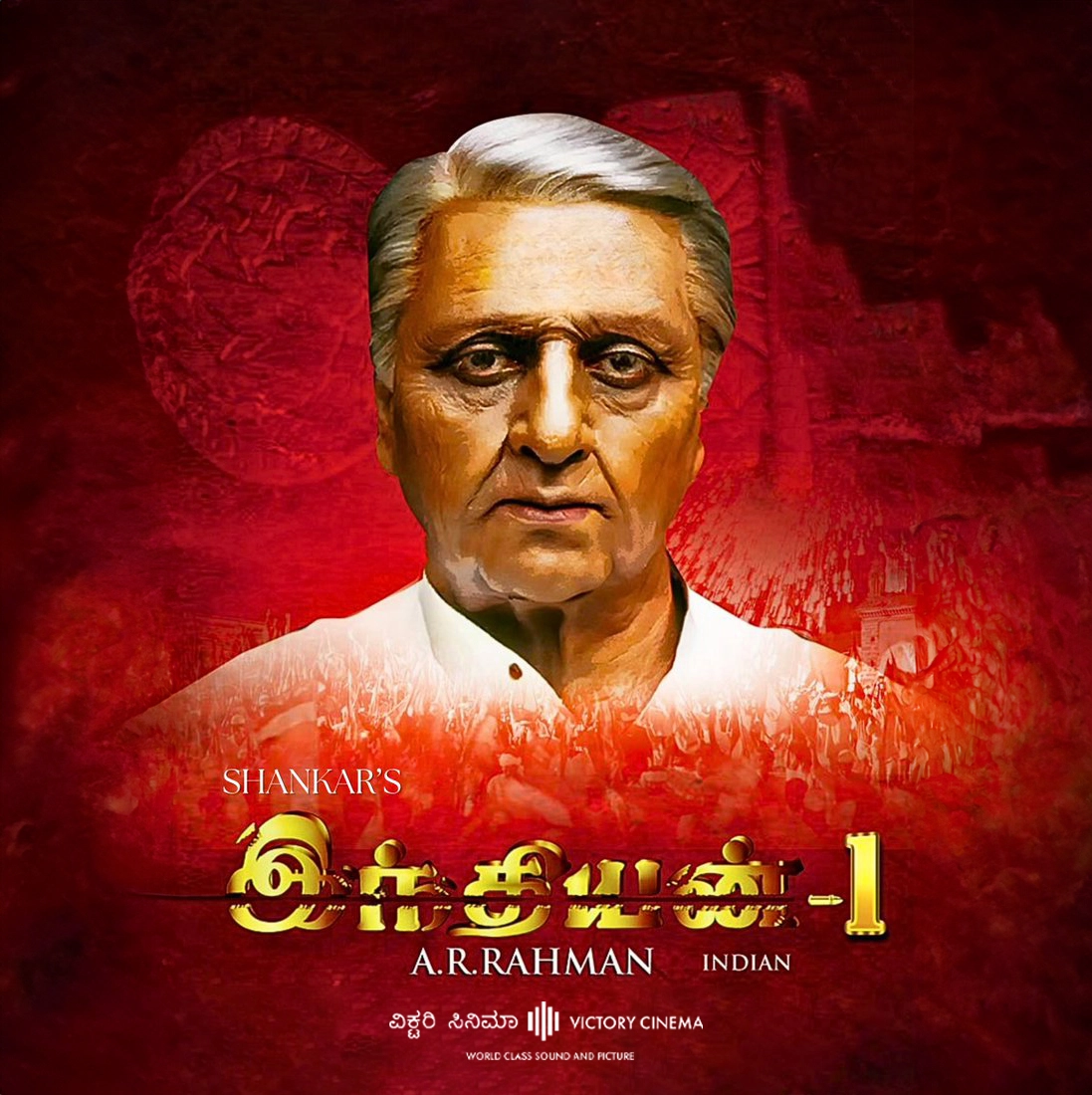
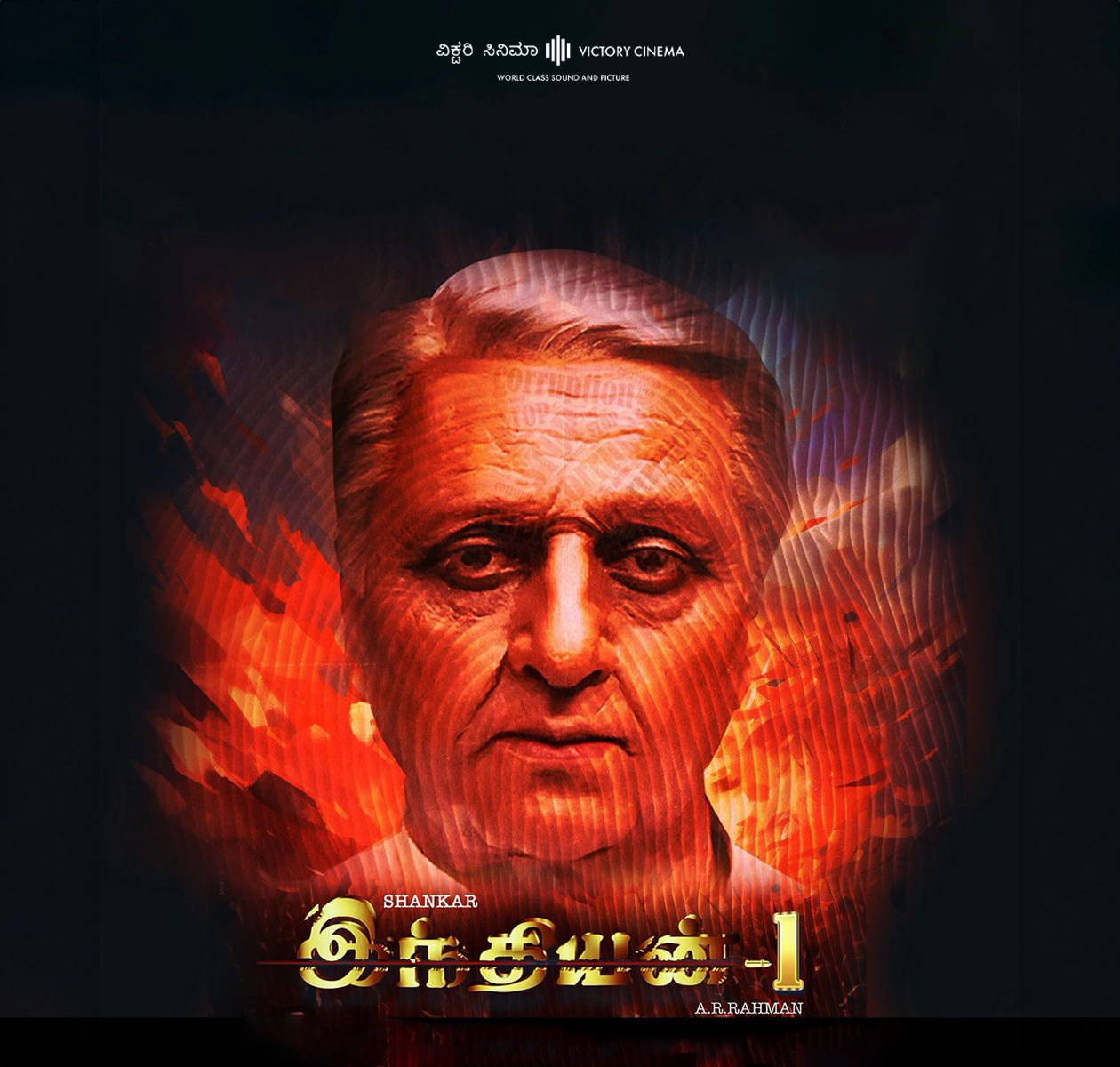
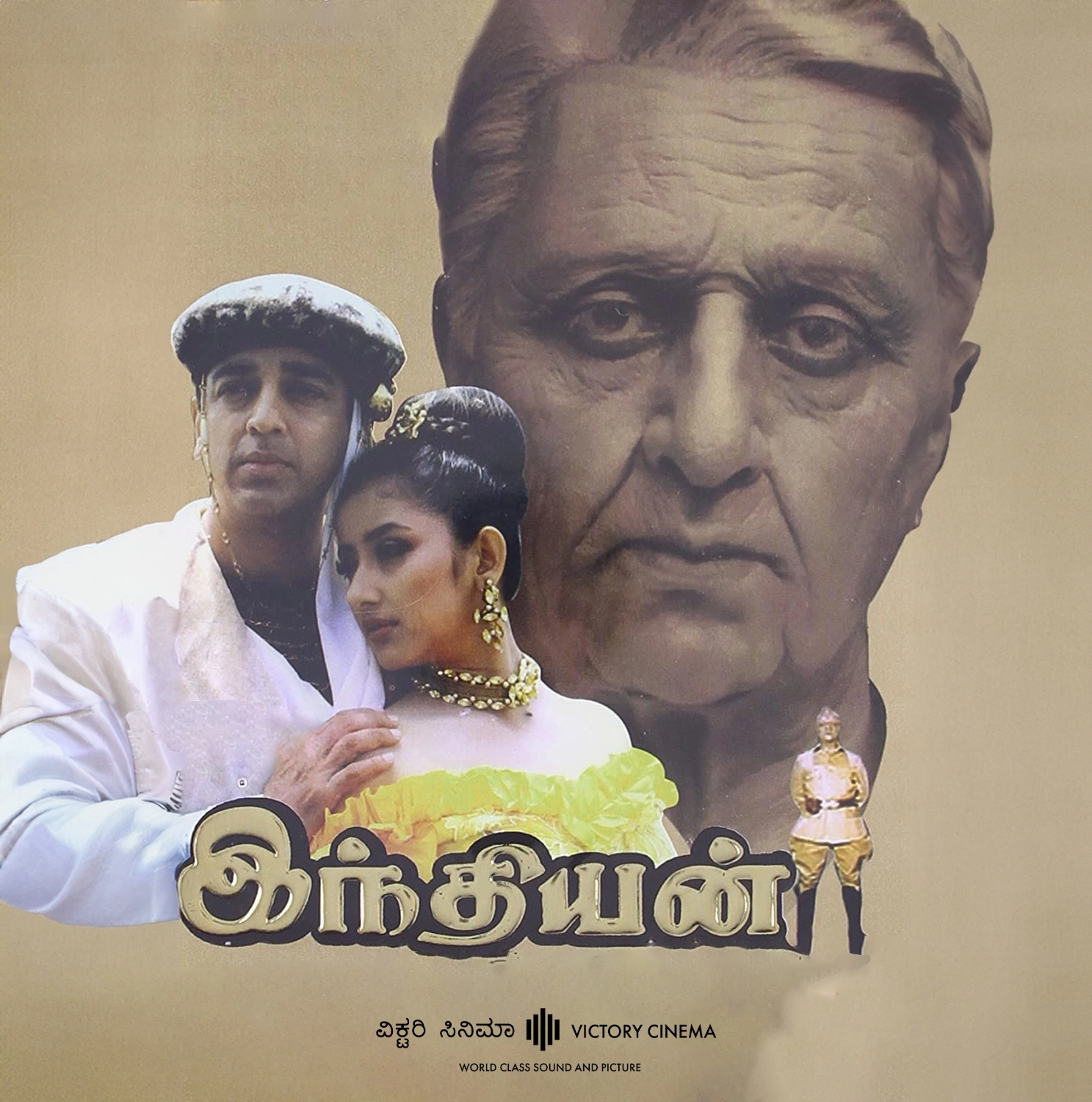
Indian at Victory Cinema Indian is an ambitious Tamil vigilante action drama in which one of the nation’s former freedom fighters turns his attention towards a new enemy: the corruption spreading through the country whose independence he once risked his life to secure. Kamal Haasan delivers two contrasting performances as Senapathy, an ageing veteran of the freedom struggle, and Chandrabose, commonly known as Chandru, his younger and morally uncertain son. Their parallel journeys allow director Shankar to transform a large social issue into an intensely personal conflict between two generations of the same family. Written and directed by Shankar, with dialogue by Sujatha, Indian was released on 9 May 1996. The film was produced by A. M. Rathnam under Sri Surya Movies and features Manisha Koirala, Urmila Matondkar, Sukanya, Nedumudi Venu, Goundamani, Senthil, Manorama and Kasthuri in important roles. Available listings place its running time at approximately 185 minutes. Victory Cinema presents Indian in Tamil with English subtitles for Kamal Haasan fans and movie lovers from across Bengaluru. Check showtimes, choose your preferred seats and book directly on victorycinema.in without booking fees. Senapathy fought for independence Senapathy belongs to the generation that experienced colonial rule directly. As a young man, he joins the struggle against British authority and places personal safety behind the possibility of national freedom. His past is revealed through expansive period sequences showing the courage, suffering and sacrifices associated with the independence movement. These memories explain why he views corruption with such personal anger. To Senapathy, freedom was not an abstract political achievement. It was purchased through imprisonment, danger and the loss endured by countless people. Kamal Haasan’s older character therefore sees bribery as a betrayal of those sacrifices. Government offices, hospitals, transport departments and public institutions were meant to serve citizens after independence. When officials use those institutions for private enrichment, Senapathy believes they dishonour the country he helped liberate. The film identifies him as a former freedom fighter who begins targeting corrupt officials and bureaucrats when he concludes that ordinary complaints and warnings are incapable of reforming them. Kamal Haasan as Senapathy Senapathy’s age does not make him physically helpless. He possesses knowledge of varma kalai, a traditional martial discipline centred upon vulnerable points in the human body. This skill allows him to overpower opponents through precision rather than speed alone. His attacks can appear controlled and almost clinical, reinforcing the idea that his campaign is governed by a severe personal code rather than uncontrolled rage. Kamal Haasan’s transformation into Senapathy is supported by extensive prosthetic makeup. The character’s face, posture, voice and movement distinguish him completely from Chandru, ensuring that the double role feels like the meeting of two separate generations rather than a simple costume change. The production engaged specialised makeup artists for the ageing design, while Kamal Haasan also trained in varma kalai for the role. The older character’s appearance was partly modelled upon the actor’s father. Senapathy is presented as disciplined, intelligent and frighteningly certain of his purpose. His uncompromising methods raise the central moral question of the film: can a righteous objective justify a person taking punishment and judgement into his own hands? Chandru learns to live through the system Kamal Haasan’s second character, Chandru, belongs to a very different India. Chandru has not experienced colonial rule or the sacrifices that shaped his father’s values. He is a young man attempting to obtain a secure government position and improve his circumstances within a system where bribery has become normalised. Instead of confronting corruption, Chandru learns how to benefit from it. Alongside his friend Subbiah, played by Goundamani, he helps people navigate government offices by arranging unofficial payments and personal favours. His conduct is not initially presented with the frightening seriousness surrounding Senapathy’s campaign. Chandru is lively, humorous and ambitious. He treats bribery as a practical method of getting work completed rather than as a moral collapse. The contrast between father and son gives Indian its dramatic force. Senapathy sees every bribe as an attack upon national integrity. Chandru sees the same transaction as the unavoidable price of surviving and progressing in modern society. Manisha Koirala as Aishwarya Manisha Koirala plays Aishwarya, Chandru’s romantic interest and an important presence within his younger, more colourful world. Aishwarya knows Chandru as an energetic man filled with plans for employment, marriage and a comfortable future. Their relationship provides romance and humour while revealing how Chandru imagines the life he hopes to build. She is also close enough to recognise that his methods are not always honest. The compromises he considers harmless can affect the trust required for a meaningful relationship. Manisha Koirala’s role gives the film emotional warmth between its darker passages involving corruption and punishment. Her pairing with Kamal Haasan is supported by A. R. Rahman’s romantic music and sequences staged on a notably expansive visual scale. The cast and production credits identify Manisha Koirala among the principal performers alongside Kamal Haasan, Urmila Matondkar and Sukanya. Urmila Matondkar as Sapna Urmila Matondkar plays Sapna, the daughter of a wealthy businessman and another spirited presence in Chandru’s life. Sapna’s glamorous personality and confident interactions add comic tension to the romantic portions. Her attention can complicate Chandru’s relationship with Aishwarya and place him in situations where his charm creates more problems than solutions. The character also contributes to the film’s colourful contemporary setting. While Senapathy’s story is associated with national sacrifice, discipline and institutional corruption, Chandru’s world contains romance, popular culture, advertisements and the aspirations of urban youth. Shankar uses that contrast to prevent Indian from remaining within one visual or emotional register. The narrative can move from an intense confrontation with a corrupt official into comedy or a large musical sequence before returning to the developing conflict between father and son. Sukanya as Amrithavalli Sukanya plays Amrithavalli, Senapathy’s wife and companion through the memories of his younger life. Amrithavalli’s presence connects the political history of the freedom struggle with the private sacrifices made by families. She experiences the emotional consequences of Senapathy’s dedication and understands the values that continue guiding him decades later. The flashback portions allow audiences to see Senapathy before age, grief and disappointment hardened his methods. He is not introduced simply as an elderly vigilante. He was once a young man in love, forming a family while participating in a dangerous national movement. Sukanya’s performance gives the historical passages tenderness and reminds viewers that Senapathy’s present-day campaign grows from a life containing affection and loss as well as ideology. The film’s credited cast places Sukanya opposite Kamal Haasan in the older generation’s family story. Nedumudi Venu as Krishnaswamy Nedumudi Venu plays CBI officer Krishnaswamy, the investigator attempting to identify and capture the person targeting corrupt officials. Krishnaswamy provides the institutional response to Senapathy. Even when victims may be guilty of serious misconduct, the authorities cannot permit an individual to decide who deserves to die. The officer must study the unusual methods used in the attacks, connect apparently separate cases and understand the history of the man he is pursuing. Nedumudi Venu brings calm intelligence and authority to the investigation. His character is not required to admire corruption in order to oppose vigilantism. He represents the argument that justice must operate through law, evidence and accountable institutions. The pursuit creates a tense intellectual contest. Senapathy understands how officials think and move, while Krishnaswamy gradually learns how the freedom fighter’s past and martial knowledge explain the pattern of the crimes. Goundamani and Senthil bring humour Goundamani plays Subbiah, Chandru’s friend and partner in navigating the everyday machinery of bribery and government influence. Their comic exchanges show corruption at its most ordinary level. Forms are delayed, applications are redirected and minor officials expect unofficial payments before performing duties already assigned to them. Senthil and Manorama add further comic personality to the ensemble, giving the film moments of laughter amid its serious social argument. The humour serves an important purpose. It demonstrates how bribery can become so familiar that citizens joke about it rather than react with outrage. Chandru and Subbiah understand the system well enough to profit from its delays, but their casual attitude makes them part of the problem Senapathy wants to destroy. Indian therefore moves between broad entertainment and political anger without treating the two as unrelated. Comedy shows how corruption becomes culturally normal; the vigilante storyline reveals the devastating consequences of accepting that normality. A father and son on opposing paths The central conflict becomes increasingly powerful because Senapathy and Chandru are not merely symbols of different political ideas. They are father and son. Senapathy’s principles demand complete accountability. Chandru expects family affection to provide understanding and protection even when his choices become questionable. Their relationship forces both men to confront the limits of their beliefs. Can Senapathy remain absolutely impartial when wrongdoing reaches his own household? Can Chandru continue dismissing corruption as harmless once its consequences move beyond paperwork and money? The film builds towards a moral confrontation in which patriotism, parental love and personal responsibility can no longer be separated. Kamal Haasan’s dual performance enables the conflict to unfold through sharply different body language and vocal styles. The viewer sees one actor embody both the uncompromising standard and the compromised generation being judged by it. Shankar’s large-scale social drama Indian continues Shankar’s interest in combining socially charged subjects with the scale and visual ambition of mainstream commercial cinema. The story attacks bribery across several public institutions rather than limiting the issue to one villain. Corruption is presented as a network sustained by officials, intermediaries and citizens who accept illegal payments as an ordinary part of getting work done. Shankar and dialogue writer Sujatha convert this theme into confrontations designed for a broad audience. Senapathy’s speeches express anger towards institutions that have forgotten their public purpose, while Chandru’s scenes reveal why younger people may consider compromise easier than resistance. The director supports these ideas with action, romance, comedy, historical flashbacks and elaborate songs. Indian is therefore designed as both a social drama and a major theatrical entertainer. Shankar is credited with the story, screenplay and direction, Sujatha with dialogue, and A. M. Rathnam with production under Sri Surya Movies. Jeeva’s cinematography and Thotta Tharani’s design Jeeva handles the cinematography, while Thotta Tharani leads the art direction. B. Lenin and V. T. Vijayan serve as editors. The technical presentation moves between contemporary offices, urban streets, government spaces and historical sequences associated with the freedom struggle. The flashbacks require a convincing period atmosphere involving costumes, crowds, political activity and locations that separate Senapathy’s youth from Chandru’s modern world. The musical sequences expand the film further through international locations, large sets, dancers and carefully coordinated visual design. The changing environments reflect Shankar’s intention to present a serious social subject without sacrificing cinematic spectacle. Editing is especially important because the narrative moves between two versions of Kamal Haasan, the ongoing investigation and events from Senapathy’s past. Each transition must clarify how history is influencing the present-day conflict. A. R. Rahman’s memorable soundtrack A. R. Rahman composes five songs for the Tamil soundtrack: “Akkadannu Naanga Udai Potta,” “Maaya Machindhra,” “Kappal Yeari Poyachu,” “Pachai Kiligal” and “Telephone Manipol.” The album was released in 1996, with lyrics by Vaali and Vairamuthu. “Telephone Manipol” brings a playful romantic sound to Chandru and Aishwarya’s relationship, while “Maaya Machindhra” combines stylised choreography with an imaginative visual setting. “Pachai Kiligal” provides a warmer family melody, and “Kappal Yeari Poyachu” belongs to the historical world of sacrifice and freedom. “Akkadannu Naanga Udai Potta” adds youthful rhythm and colour to the contemporary sections. Rahman’s background score gives Senapathy a musical identity filled with tension and purpose. The songs and score help Indian move between romance, comedy, patriotism and action while retaining the emotional contrast between its two generations. Tamil with English subtitles Victory Cinema presents Indian in its original Tamil-language version with English subtitles. Audiences can experience Kamal Haasan’s contrasting performances, Manisha Koirala and Urmila Matondkar’s original dialogue, Sukanya’s emotional scenes and the comic timing of Goundamani, Senthil and Manorama while clearly following every important exchange. The subtitles are particularly useful during political speeches, investigative discussions, historical passages and scenes involving administrative terminology. They make the film accessible to Bengaluru viewers from different linguistic backgrounds while preserving Sujatha’s Tamil dialogue, the humour of the supporting cast and the force of Senapathy’s arguments. A major Tamil action drama for Bengaluru Indian is created for audiences who enjoy Kamal Haasan’s transformative performances, Shankar’s large-scale direction, A. R. Rahman’s music and stories that combine social questions with action and emotion. Senapathy is a freedom fighter unable to accept that independence has been weakened by bribery. Chandru is a young man who has learned to treat the same corruption as an ordinary tool for advancement. Their conflict asks whether patriotism belongs only to moments of war and political struggle, or whether it must also guide everyday conduct inside offices, hospitals and public services. Victory Cinema welcomes Kamal Haasan fans and Tamil movie lovers from every part of Bengaluru to experience Indian on the big screen. Check Indian showtimes, choose your preferred seats and book directly on victorycinema.in without booking fees. One nation, two ideas of responsibility Senapathy believes that the freedom he fought for becomes meaningless when officials sell their duties to the highest bidder. Chandru believes that surviving within a corrupt system requires adjustment, influence and compromise. When their paths finally meet, the conflict is no longer only between a vigilante and the authorities. It becomes a confrontation between a father’s uncompromising principles and a son’s belief that personal ambition can excuse moral failure. Watch Indian in Tamil with English subtitles at Victory Cinema, Bengaluru. Experience Kamal Haasan’s remarkable dual performance, Shankar’s ambitious social drama, A. R. Rahman’s celebrated music and a powerful cinematic examination of corruption, patriotism, justice and family.