Maharaja (Tamil with English Subtitles)
- Director: Nithilan Swaminathan,
- Writers: Nithilan Swaminathan
- Stars:
- Vijay Sethupathi
- Anurag Kashyap
- Vijay Sethupathi
- Abhirami
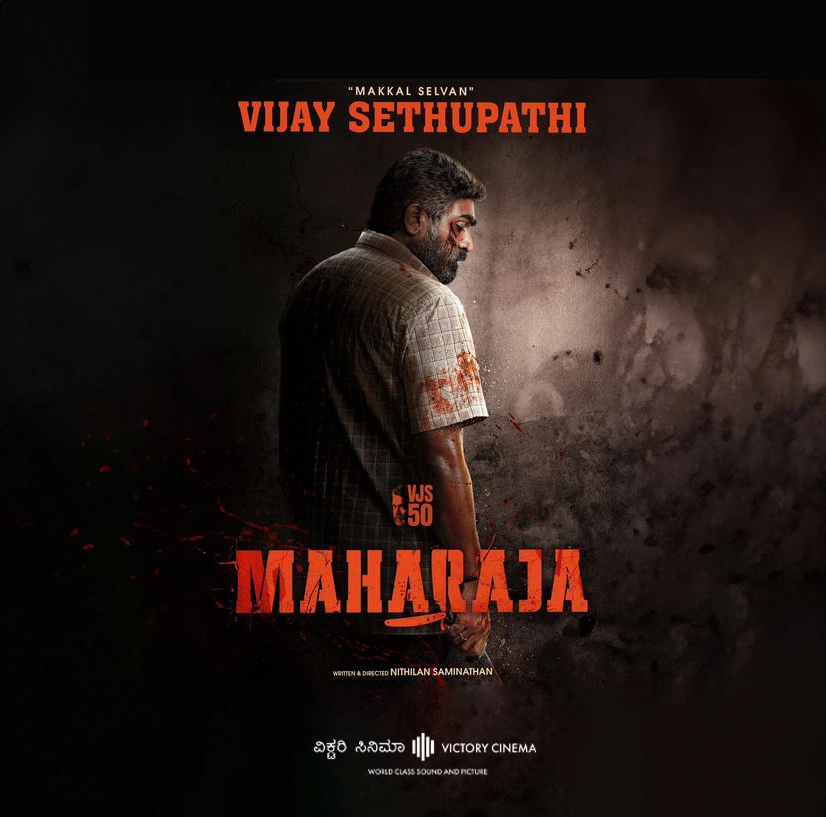
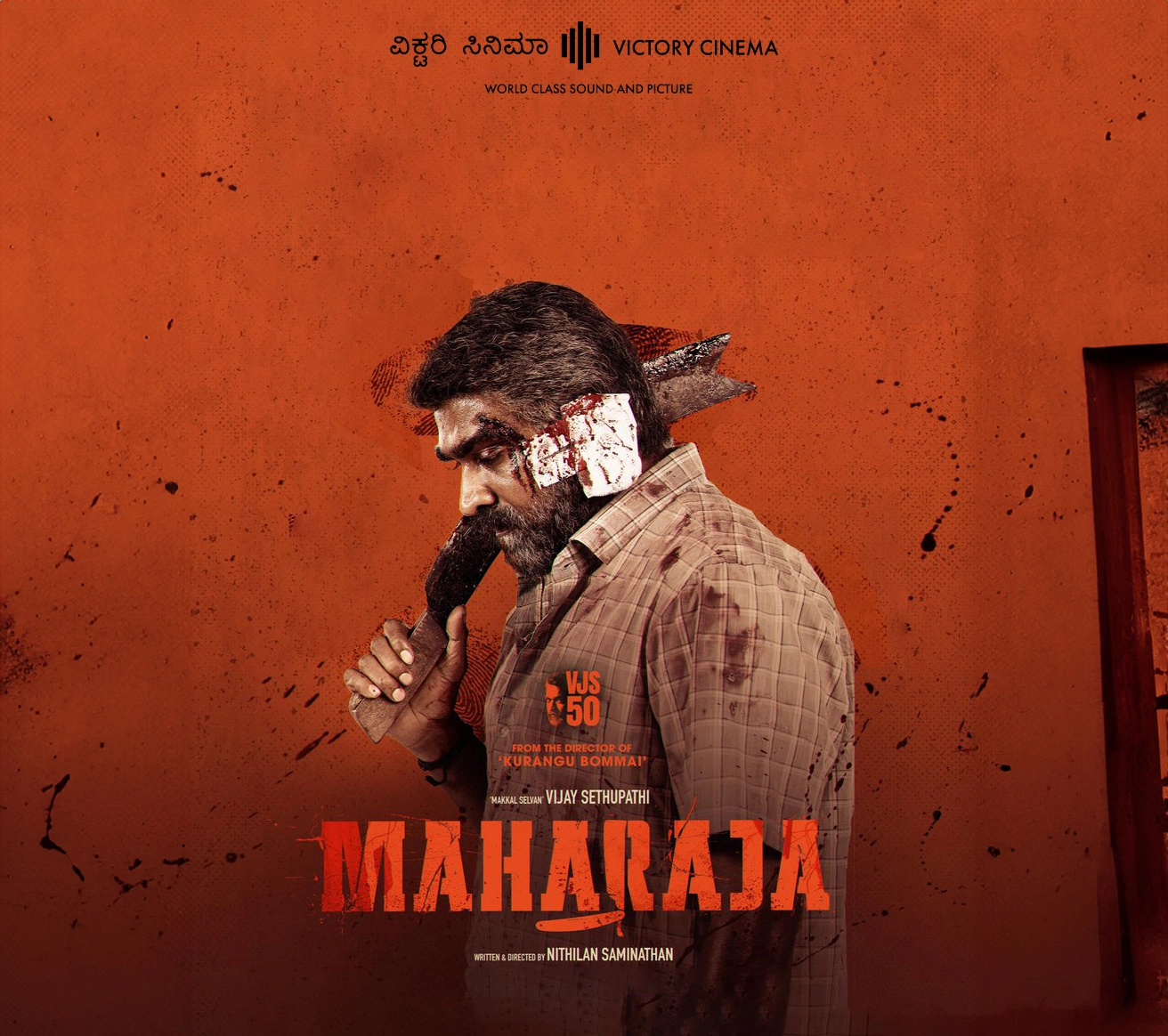
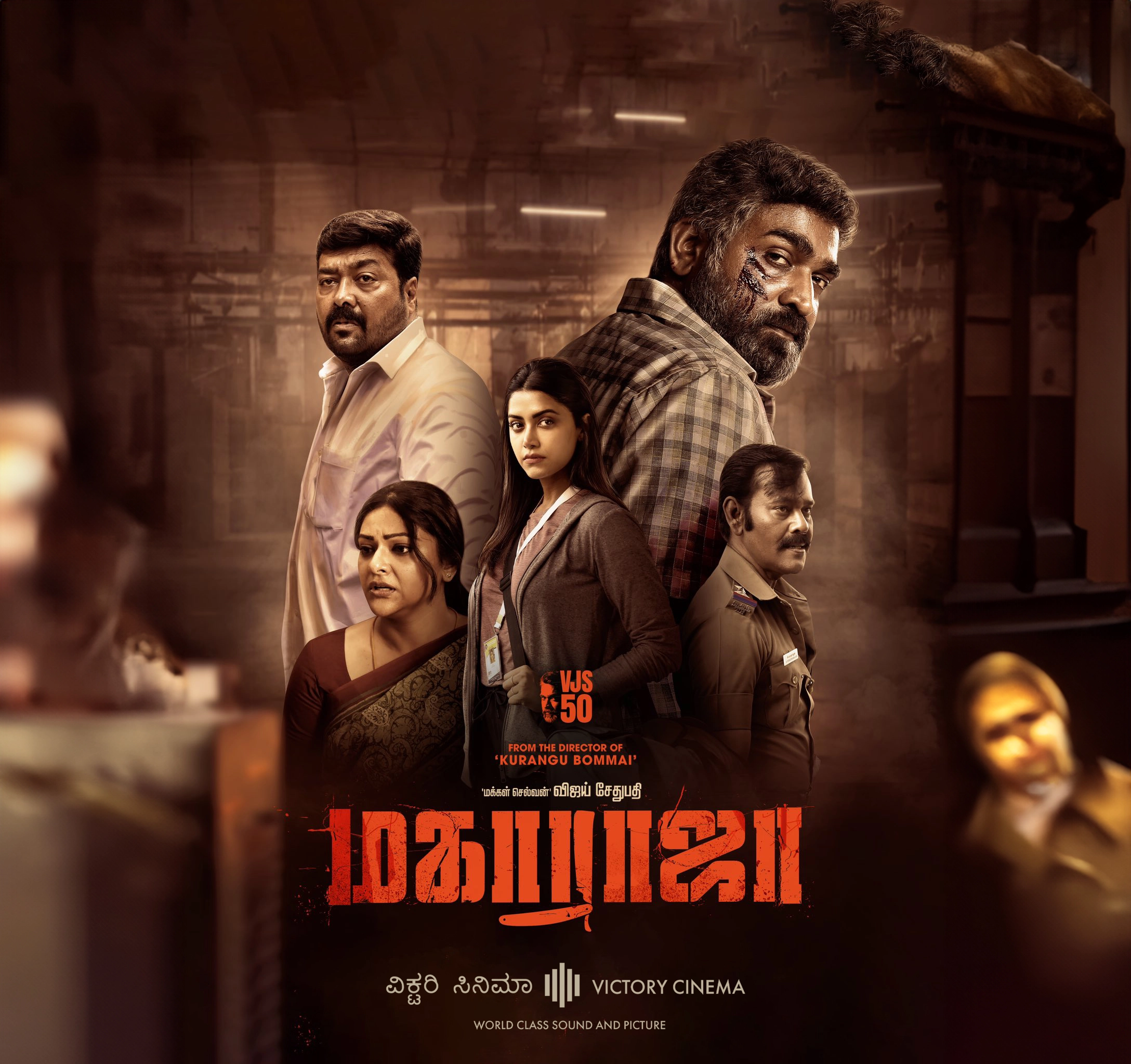
Maharaja at Victory Cinema Maharaja is a Tamil action thriller centred on an ordinary barber who walks into a police station with an apparently unusual complaint. He tells the officers that Lakshmi, an old metal dustbin carrying enormous sentimental value for him and his daughter, has disappeared from their home. The police initially struggle to understand why Maharaja is so determined to recover such an inexpensive object. He refuses to leave, repeatedly explains its importance and even offers information that makes his request appear increasingly mysterious. The official theatrical synopsis introduces Maharaja as a barber whose life revolves around his profession and his daughter, a young athlete. His police complaint regarding the stolen dustbin becomes the starting point for a much darker and more complicated investigation. Written and directed by Nithilan Saminathan, Maharaja stars Vijay Sethupathi, Anurag Kashyap, Sachana Namidass, Mamta Mohandas, Natty Subramaniam, Abhirami, Singampuli, Bharathiraja, Munishkanth, Aruldoss and Manikandan. The film releases theatrically on 14 June 2024 with a U/A certificate and a running time of approximately two hours and twenty-two minutes. Victory Cinema presents Maharaja in Tamil with English subtitles for audiences from across Bengaluru. Check the latest showtimes, select your preferred seats and book directly on victorycinema.in without booking fees. Vijay Sethupathi as Maharaja Vijay Sethupathi plays Maharaja, a quiet barber whose restrained behaviour conceals considerable determination. Maharaja does not initially resemble a conventional action hero. He spends his days cutting hair, maintaining a modest home and looking after his daughter. His appearance, occupation and limited manner of speaking encourage other people to underestimate him. That underestimation becomes important when he enters the police station. The officers assume that the disappearance of a dustbin cannot justify the urgency he displays. Maharaja, however, remains calm and refuses to abandon his complaint. Vijay Sethupathi’s performance is built around silence, pauses and controlled expressions. Maharaja rarely explains more than he believes is necessary, leaving the police—and the audience—to decide whether he is confused, hiding something or carefully leading the investigation towards a particular destination. The film was developed as Vijay Sethupathi’s fiftieth appearance as a lead actor, although director Nithilan Saminathan explained before release that the screenplay had not originally been written around that milestone. A barber devoted to his daughter Maharaja’s strongest relationship is with his daughter, Jothi, played by Sachana Namidass. Jothi is a promising young athlete whose training and education provide the focus of her father’s daily life. Maharaja’s routines may appear simple, but they are organised around ensuring that she has opportunities, safety and encouragement. Their relationship gives emotional meaning to the missing dustbin. Lakshmi is not valuable because of its material cost. It has become part of the family’s shared history, and Maharaja believes that dismissing its disappearance would mean dismissing something important to his daughter. The theatrical synopsis deliberately places Maharaja’s work and his daughter at the centre of his life before introducing the police complaint. Sachana Namidass brings youthful confidence and affection to Jothi. Her scenes with Vijay Sethupathi establish a believable father-daughter bond without requiring excessive explanation. That bond also allows the thriller to explore how ordinary household objects acquire meaning. An item that appears worthless to an outsider may represent memory, protection and survival to the people who lived through the event connected to it. Why is Lakshmi so important? Lakshmi functions as the central mystery presented by the film’s promotional campaign. The police hear that a dustbin has been stolen and naturally assume that Maharaja is wasting their time. He insists that Lakshmi is irreplaceable, but his explanation raises more questions than it answers. The object becomes a puzzle around which several characters begin moving. Is Maharaja genuinely searching for a dustbin? Is “Lakshmi” a person, a coded reference or a clue intended to draw attention towards another crime? The film’s official international synopsis describes a barber seeking vengeance after a burglary while cryptically telling the police that Lakshmi has been taken. Nithilan Saminathan discussed his recurring interest in building stories around inanimate objects before the film’s release. His earlier film Kurangu Bommai also used an object as a narrative centre, although he indicated that Maharaja approaches the device differently. The dustbin therefore serves several dramatic purposes. It creates dark humour inside the police station, provides a tangible focus for Maharaja’s persistence and allows the screenplay to conceal the complete nature of his objective. A police station filled with suspicion A substantial part of Maharaja’s initial journey takes place within a police station where officers respond to his complaint with disbelief, irritation and curiosity. Natty Subramaniam plays Inspector Varadharajan, while Aruldoss appears as Sub-Inspector Perumalsamy and Munishkanth plays Constable Kuzhandhaivelu. Their different reactions give the police-station scenes a mixture of tension, humour and uncertainty. The officers are accustomed to complaints involving money, violence and property of obvious value. A missing dustbin does not immediately appear to require serious investigation. Maharaja gradually changes that assumption. His willingness to remain inside the station, repeat his story and pursue every possible route suggests that the complaint may not be as simple as it appears. The police also begin examining Maharaja himself. His injuries, his behaviour and the unusual way he describes Lakshmi invite suspicion. These scenes allow the film to build intrigue through dialogue and observation rather than revealing the entire conflict immediately. Every question asked by an officer becomes an opportunity to discover what Maharaja is saying—and what he continues to withhold. Anurag Kashyap in an important role Anurag Kashyap plays Selvam, a character whose presence introduces another layer to the film’s mystery. The promotional material positions Kashyap as a major figure opposite Vijay Sethupathi without explaining the complete relationship between the two men. His casting brings a different intensity to the ensemble and encourages viewers to examine how his story may connect with Maharaja’s search. Selvam is presented through a different environment and emotional rhythm from Maharaja. The contrast between their personalities allows the screenplay to build apparently separate strands before suggesting that each may contain part of the larger answer. Anurag Kashyap’s controlled screen presence suits a thriller where information must remain incomplete. A smile, pause or ordinary family interaction may carry meaning that becomes clear only after additional details emerge. The film avoids reducing its conflict to an immediate confrontation between two obvious opponents. Instead, characters are introduced through their own routines, relationships and choices, allowing the audience to question how they may eventually intersect. Mamta Mohandas and the supporting ensemble Mamta Mohandas plays Aasifa, a physical-education teacher connected to Jothi’s athletic training. Her role extends Jothi’s world beyond the family home and shows the discipline required of a young student pursuing competitive sport. Aasifa also represents another responsible adult who understands Jothi’s abilities and ambitions. Abhirami, Divyabharathi, Singampuli, Bharathiraja, Manikandan, Munishkanth and Aruldoss contribute to the wider ensemble. The supporting characters belong to different portions of the narrative, including family spaces, the police station and the hidden circumstances Maharaja is attempting to uncover. Singampuli appears in a role that moves away from the purely comic image familiar to many Tamil audiences. Nithilan Saminathan explained before release that he enjoys identifying unexpected emotional qualities in performers and casting familiar faces in different shades. This approach strengthens the thriller because audiences cannot rely entirely upon an actor’s usual screen personality to predict how a character will behave. A screenplay built around withheld information Maharaja is designed as a mystery in which the order and timing of information matter. The audience understands that the disappearance of Lakshmi cannot be the entire story, but the screenplay does not immediately reveal what Maharaja ultimately wants from the police. Nithilan Saminathan has described himself as a filmmaker who does not deliberately force commercial elements into a story. He explained that Maharaja became a larger commercial production through the needs of the screenplay rather than through the addition of unrelated formulaic sequences. That approach allows humour, action and emotion to emerge from the mystery itself. A police officer’s sarcastic reaction can be funny while also revealing institutional indifference. A violent confrontation can provide action while supplying information about Maharaja’s abilities or purpose. A domestic moment can carry emotion while adding another piece to the timeline. Viewers are encouraged to pay attention to small objects, injuries, repeated phrases and apparently casual meetings. Details that seem unimportant may later influence how an earlier scene is understood. Nithilan Saminathan’s second feature Maharaja marks Nithilan Saminathan’s second feature-film direction after Kurangu Bommai. The filmmaker returns to thriller territory while working with a broader cast and larger production scale. He wrote the story and screenplay, with Raam Murali also credited for screenplay work. Nithilan explained before release that he develops characters using faces and personalities observed in ordinary life. Rather than beginning with the star image of Vijay Sethupathi, he completed the screenplay and then shaped the role around the actor. This method suits Maharaja’s central character. The barber is not introduced through grand declarations or an artificial heroic lifestyle. His power emerges gradually through behaviour. Sudhan Sundaram and Jagadish Palanisamy produce the film, with Passion Studios, The Route and Think Studios associated with the production. Dinesh Purushothaman’s cinematography Dinesh Purushothaman handles the cinematography, creating a visual world built from ordinary Chennai locations, modest interiors and increasingly threatening spaces. Maharaja’s barber shop and home establish a practical, lived-in environment. The police station carries its own institutional rhythm, with crowded desks, corridors and waiting areas reflecting the daily movement of complaints and investigations. The cinematography keeps Vijay Sethupathi physically grounded. His injuries, clothing and deliberate movement remain visible without turning him into a polished action figure. As the mystery expands, shadows, narrow spaces and carefully selected camera angles can conceal information while preserving clarity. The viewer is shown enough to remain engaged without being given every answer before the screenplay intends it. Dinesh Purushothaman is credited as cinematographer, with V. Selvakumar responsible for art direction. Philomin Raj’s editing Philomin Raj serves as editor, an especially important role in a thriller whose tension depends upon structure, chronology and revelation. The editing controls when the audience receives each fragment of Maharaja’s story. Scenes may initially appear unrelated, but their placement encourages viewers to search for connections. An ordinary transition can hide a change in time, while a repeated image can establish that two events are closer than they first appear. The film’s trailer uses rapid shifts between the police complaint, Maharaja’s domestic life, moments of violence and characters whose relationship remains uncertain. The feature can expand that technique through longer dramatic passages while maintaining the larger puzzle. Philomin Raj is officially credited as editor in the theatrical listings and production information. Action choreographed by Anl Arasu Anl Arasu handles the stunt choreography, supporting action that grows from Maharaja’s circumstances rather than functioning as separate spectacle. Vijay Sethupathi’s character is not presented as invulnerable. He carries injuries, experiences pain and often appears physically exhausted. That vulnerability gives weight to his confrontations. Maharaja’s strength comes from determination and his refusal to stop rather than from an absence of fear or physical limitation. The action can therefore remain intense while preserving the grounded tone established by the barber-shop and police-station settings. Anl Arasu is credited with the film’s stunt work, while the trailer highlights close combat, pursuit and physical danger without disclosing the complete reasons behind them. B. Ajaneesh Loknath’s music B. Ajaneesh Loknath composes the songs and background score, reuniting with Nithilan Saminathan after Kurangu Bommai. The song “Thaaye Thaaye,” performed by Sid Sriram, was released before the film and carries a tender father-daughter emotion. The track is composed by Ajaneesh Loknath with lyrics credited to Vairamuthu. Its emotional character reflects Maharaja’s devotion to Jothi and provides a melodic contrast to the darker investigation. The score supports the film’s changing tone through restrained themes, percussion and suspenseful textures. Police-station humour requires a different musical approach from moments where Maharaja’s real urgency begins emerging. “Raja Paya Onnu,” performed by Jithin Raj and Harshika Devanath, forms another part of the soundtrack associated with the central character. Inside a cinema, Ajaneesh Loknath’s background score works with silence, dialogue and sudden action to increase the tension surrounding each new discovery. Tamil with English subtitles Victory Cinema presents Maharaja in its original Tamil-language version with English subtitles. Audiences can experience Vijay Sethupathi, Sachana Namidass, Anurag Kashyap, Mamta Mohandas, Natty Subramaniam and the supporting cast in their original voices while clearly following the developing mystery. The subtitles are particularly valuable during rapid police-station exchanges, understated conversations and scenes where the exact wording of Maharaja’s complaint may carry additional significance. They make the film accessible to Bengaluru viewers from different linguistic backgrounds while preserving the humour, emotion and performance rhythm of the Tamil dialogue. A Tamil mystery thriller for Bengaluru Maharaja is created for audiences who enjoy action thrillers, police investigations, father-daughter stories and mysteries in which ordinary objects conceal unexpected meaning. Vijay Sethupathi leads the film through a character who appears simple but refuses to be dismissed. Sachana Namidass gives his journey emotional purpose, while Anurag Kashyap, Mamta Mohandas, Natty Subramaniam and the wider ensemble add uncertainty to the unfolding investigation. Nithilan Saminathan’s screenplay, Dinesh Purushothaman’s cinematography, Philomin Raj’s editing, Anl Arasu’s action and B. Ajaneesh Loknath’s music combine to create a theatrical thriller designed to reward attentive viewing. Victory Cinema welcomes Vijay Sethupathi fans and Tamil movie lovers from every part of Bengaluru. Ranked #1 on Google for movie theatres in Bengaluru, Victory Cinema offers an engaging big-screen destination for major Tamil releases. Check the latest Maharaja showtimes, choose your preferred seats and book directly on victorycinema.in without booking fees. What is Maharaja really searching for? A barber walks into a police station and asks the officers to recover an old dustbin. They laugh at the complaint, question his judgement and attempt to send him home. Maharaja refuses to leave. Every hour he remains inside the station makes one fact clearer: Lakshmi is not an ordinary missing object, and Maharaja has not revealed everything he knows. Watch Maharaja in Tamil with English subtitles at Victory Cinema, Bengaluru. Experience Vijay Sethupathi’s restrained performance, Sachana Namidass’s emotional role, Anurag Kashyap’s intense presence and Nithilan Saminathan’s carefully constructed mystery about a father, a daughter and the hidden truth behind one unusual police complaint.