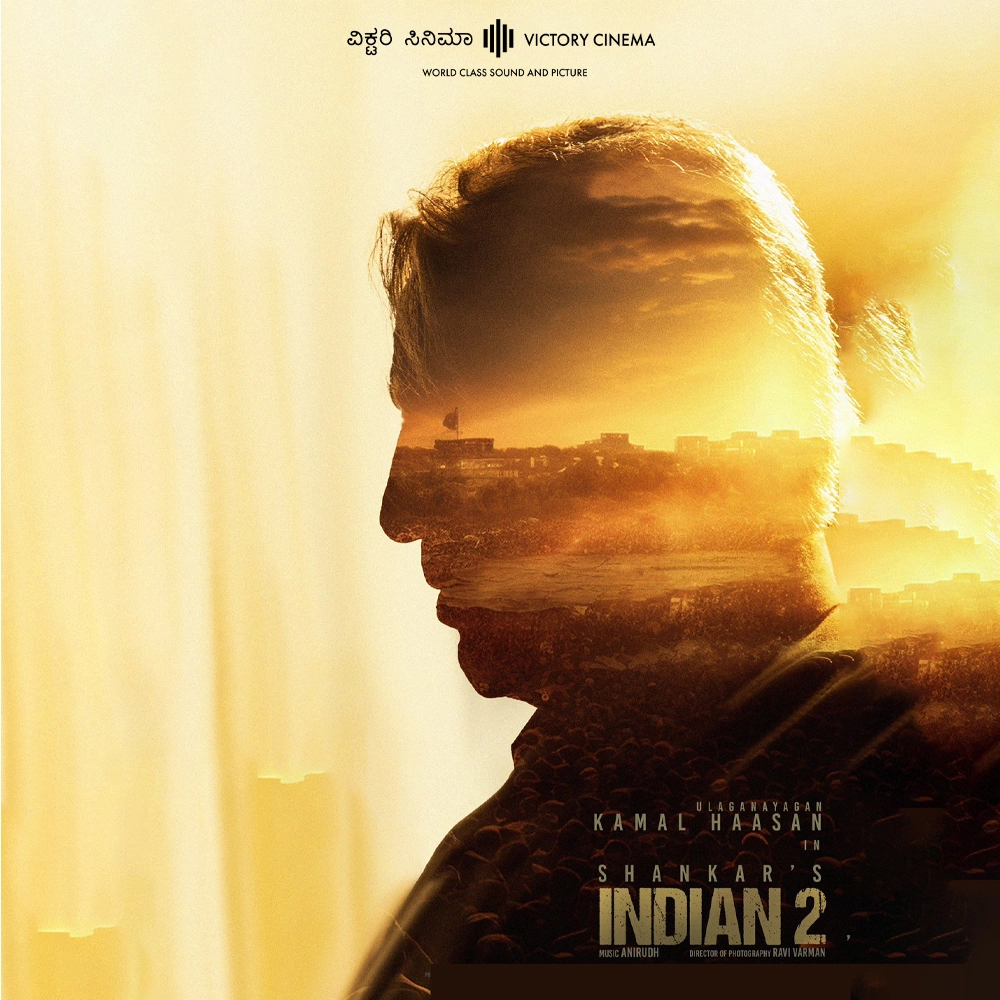
Indian 2 (Tamil with English Subtitles)
- Director: S. Shankar
- Writers: S. Shankar
- Stars:
- Kamal Haasan
- Siddharth
- Rakul Preet Singh
- S. J. Suryah
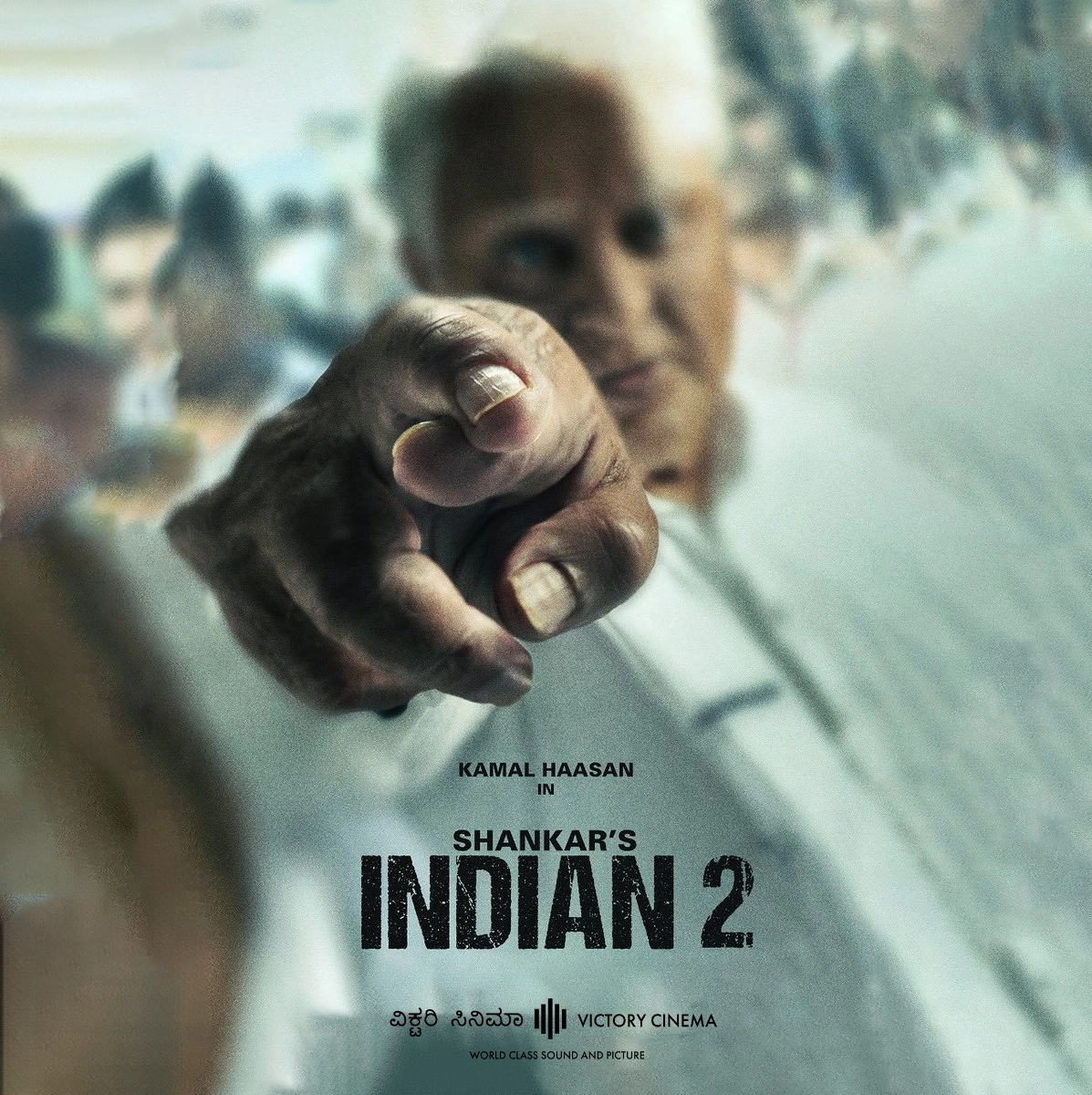
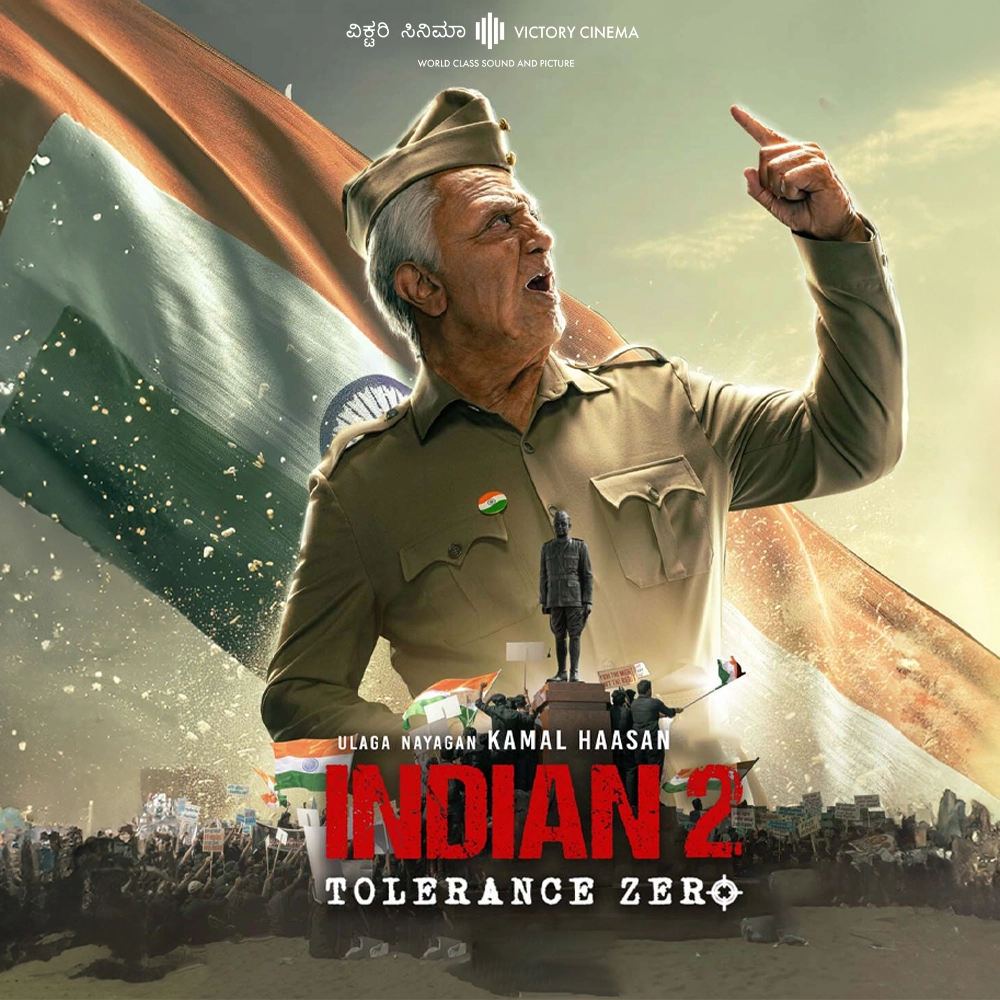
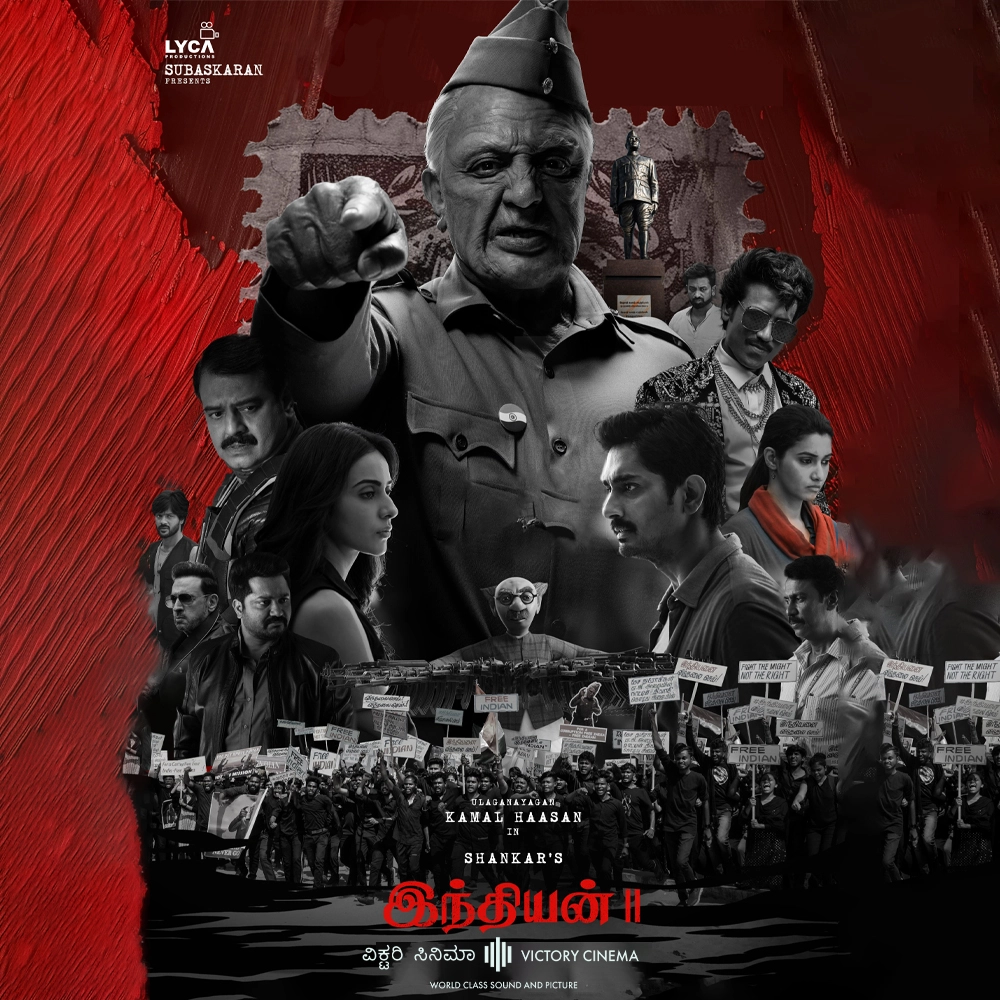
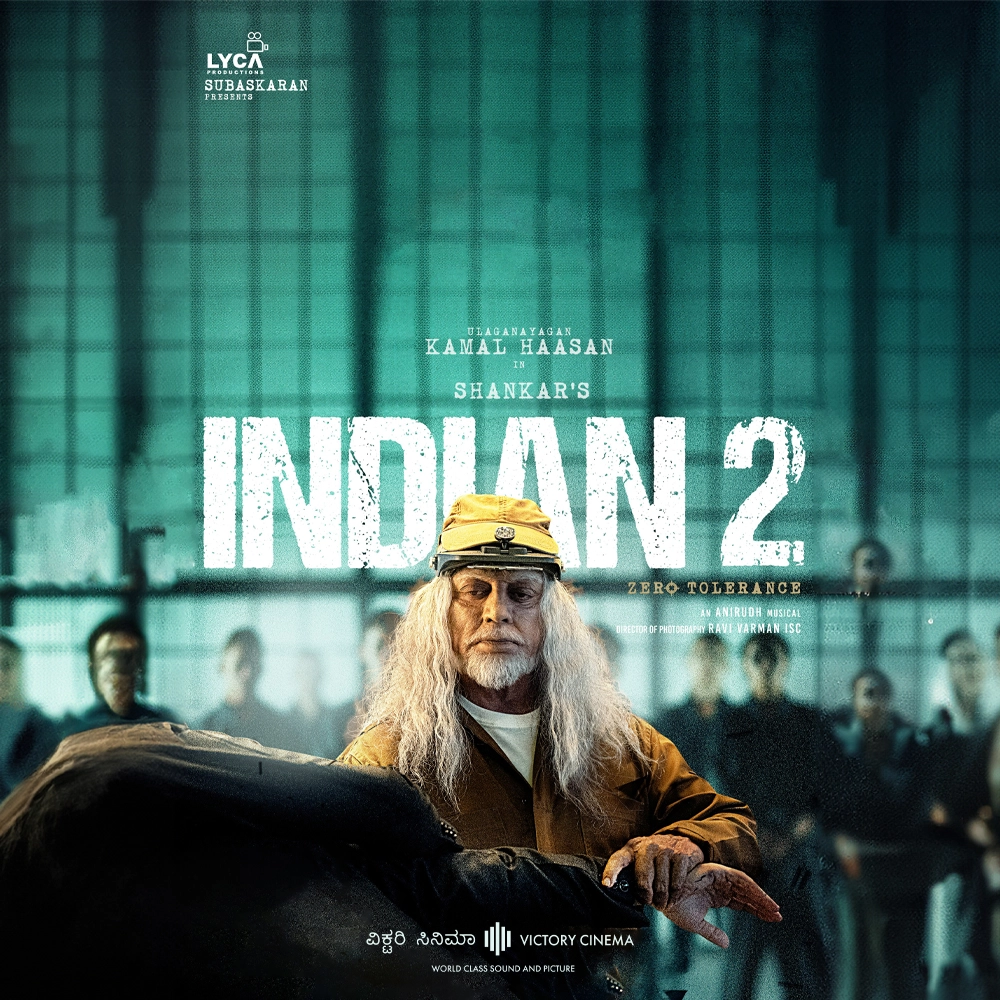
Indian 2 at Victory Cinema Indian 2 brings Kamal Haasan and director Shankar together again for the return of Senapathy, the freedom fighter and vigilante whose uncompromising campaign against corruption defined the original Indian. Years after Senapathy disappeared from the country, a younger generation discovers that corruption remains deeply embedded within public institutions and everyday life. Social-media activists begin demanding the return of “Indian Thatha,” believing that his courage and strict sense of accountability can inspire people who feel powerless against the system. Indian 2 releases theatrically on 12 July 2024. The Tamil action, drama and thriller has an initial theatrical running time of approximately 180 minutes and is produced by Lyca Productions and Red Giant Movies. Victory Cinema presents Indian 2 in Tamil with English subtitles for Kamal Haasan fans and movie lovers from across Bengaluru. Check the latest showtimes, select your preferred seats and book directly on victorycinema.in without booking fees. Senapathy returns Kamal Haasan reprises his role as Senapathy, an ageing freedom fighter whose belief in national responsibility has not weakened with time. Senapathy fought against colonial rule when he was young and later turned his attention towards corruption within independent India. He believes that public freedom becomes meaningless when officials sell their duties, citizens tolerate bribery and families excuse dishonesty committed by their own members. His return is triggered by young people who openly call for him through the “Come Back Indian” campaign. Their appeal convinces him that a new generation still wants change, even if it has not yet discovered how difficult meaningful reform can become. Kamal Haasan once again combines extensive physical transformation with Senapathy’s controlled speech, distinctive posture and knowledge of varma kalai. The role presents him not merely as an action figure, but as a symbol whose ideas can inspire admiration, fear and disagreement. The official trailer places Senapathy’s return at the centre of a nationwide fight against corruption and reunites Kamal Haasan with Shankar’s large-scale social storytelling. Siddharth as Chitra Aravindhan Siddharth plays Chitra Aravindhan, a socially conscious young man who uses online media, political satire and public campaigns to expose wrongdoing. Chitra and his friends create content that questions officials and draws attention to corruption. Their work can attract views and public discussion, but digital popularity does not automatically produce justice for people harmed by administrative failure. When the group encounters a case whose consequences become impossible to dismiss, their frustration grows into the “Come Back Indian” campaign. They believe Senapathy possesses the courage and authority required to confront people whom ordinary citizens cannot challenge. Chitra represents a generation equipped with mobile phones, online platforms and immediate access to public opinion. Senapathy belongs to a generation shaped by physical struggle, sacrifice and direct confrontation. Their partnership allows the film to compare two different forms of activism. The story therefore asks whether online exposure is enough, whether change must begin through personal sacrifice and what happens when the hero invited to fight corruption demands accountability from his own supporters as well. A campaign powered by social media The “Come Back Indian” campaign begins as an expression of public frustration. Chitra and his friends understand that corruption is not limited to one department or one powerful villain. It appears through bribery, fraudulent qualifications, exploitation, institutional neglect and people using positions of trust for private gain. Social media allows the campaign to travel beyond their immediate circle. A message created by a few young activists can reach people across the country who have experienced similar injustice. Senapathy responds by offering a more difficult challenge than the campaigners expect. He encourages citizens to identify corruption within their own homes and families before demanding moral purity from strangers. This idea places personal relationships under pressure. It is easy to condemn an unknown official taking a bribe. It becomes much harder to expose a parent, relative or friend whose dishonest income has supported the household. Indian 2 develops its conflict from that uncomfortable question: can people demand a clean country while protecting corruption when it benefits someone they love? Rakul Preet Singh as Disha Rakul Preet Singh plays Disha, Chitra’s partner and an important voice within his personal and public journey. Disha understands Chitra’s desire to create change, but she is also aware that enthusiasm and online attention cannot protect him from legal consequences or powerful opponents. Her presence gives the story a perspective that questions impulsive activism without dismissing its purpose. She sees the emotional pressure created when Chitra’s campaign moves beyond videos and slogans into decisions affecting his family and closest relationships. Disha also helps establish the ordinary life that Chitra risks when he calls Senapathy back. The movement may begin through idealism, but its consequences enter homes, careers and relationships. Rakul Preet Singh forms part of the principal ensemble announced by Lyca Productions alongside Kamal Haasan, Siddharth, S. J. Suryah, Bobby Simha, Vivek and Priya Bhavani Shankar. Priya Bhavani Shankar and the activist team Priya Bhavani Shankar plays Aarthi, one of Chitra’s close collaborators in the online group campaigning against corruption. Aarthi helps create satire, collect information and communicate the team’s message to a wider audience. Her participation demonstrates that the movement is built through a group rather than one individual hero. The friends initially possess the confidence of people who believe exposing wrongdoing will naturally produce reform. Senapathy’s return forces them to confront the personal price of applying the same standards everywhere. Their unity can become difficult to preserve once the campaign affects their families. Each person must decide whether loyalty means protecting relatives or refusing to conceal misconduct. The activist group provides humour, energy and a contemporary viewpoint while carrying an increasingly serious responsibility. Their phones and cameras can record evidence, but evidence alone cannot decide whether they possess the courage to act upon what they discover. Bobby Simha pursues Senapathy Bobby Simha appears as Pramod, an investigating officer assigned to track Senapathy. The authorities view Senapathy differently from the young people celebrating his return. To his supporters, he is a national hero willing to punish the corrupt. To investigators, he remains a wanted vigilante who acts outside the judicial process. Pramod must anticipate the movements of a man who combines age, intelligence, disguise and varma kalai. Senapathy understands how officials operate and has survived earlier attempts to capture him. This pursuit preserves a central tension within the Indian story. Corrupt individuals may deserve investigation and punishment, but a democratic system cannot simply permit one person to determine guilt and impose a sentence. The confrontation between Senapathy and the officers following him therefore extends beyond an ordinary police chase. It raises questions about justice, due process and why citizens may begin celebrating vigilantism when institutions fail to earn their trust. Corruption begins at home Senapathy’s most provocative message is that national reform cannot succeed if people excuse dishonesty within their own families. A corrupt official is also someone’s parent, spouse, sibling or friend. Illegal wealth may finance education, property, weddings and comfortable lifestyles enjoyed by relatives who prefer not to question where the money came from. Indian 2 turns this observation into an emotional challenge for its younger characters. Reporting an unknown wrongdoer may earn praise. Exposing someone close can result in anger, broken trust and social isolation. Senapathy believes that selective morality allows corruption to survive. Citizens cannot demand honesty from everyone else while creating exceptions for the people they love. The film’s anti-corruption theme therefore expands beyond spectacular punishment. It asks audiences to consider how wrongdoing is normalised through silence, convenience and the belief that one family’s benefit causes no wider harm. Shankar’s large-scale social cinema Shankar writes and directs Indian 2, returning to the combination of social anger, action, elaborate visuals and public-message storytelling associated with the original film. The screenplay is supported by dialogue contributions from B. Jeyamohan, Kabilan Vairamuthu and Lakshmi Saravana Kumar. Subaskaran produces through Lyca Productions, with Red Giant Movies associated with the production. Shankar uses Senapathy’s return to compare India across generations. Technology has changed, online communication has expanded and young citizens can reach millions instantly, yet bribery and institutional wrongdoing continue finding new forms. The director builds the film around multiple characters and regions rather than limiting the conflict to one office or one criminal network. This broad canvas allows corruption to be examined through different professions, social classes and family structures. Indian 2 is designed as a commercial theatrical experience containing action, emotion, satire, songs and large visual sequences while retaining an argument about individual responsibility. An ensemble across generations The supporting cast includes S. J. Suryah, Samuthirakani, Vivek, Nedumudi Venu, Gulshan Grover, Jagan, Manobala and other experienced performers. Their presence gives the story several institutional and personal layers. Officials, investigators, activists, parents and influential individuals all respond differently to Senapathy’s return. Vivek’s appearance carries particular importance as part of one of his final major film projects. His familiar combination of intelligence and humour suits a Shankar film using entertainment to address social behaviour. Nedumudi Venu returns to the world of Indian, while Samuthirakani and S. J. Suryah add further authority and intensity to the large ensemble. Lyca Productions’ official film page lists Kamal Haasan, Siddharth, Rakul Preet Singh, S. J. Suryah, Bobby Simha, Vivek and Priya Bhavani Shankar among the principal cast. Varma kalai and action Senapathy’s knowledge of varma kalai remains central to his ability to confront younger and physically stronger opponents. The martial discipline focuses on vulnerable points within the human body, allowing Senapathy to disable attackers through precision rather than conventional force alone. Indian 2 expands the action through pursuits, crowded public spaces, elaborate disguises and confrontations staged across different locations. Senapathy’s age creates an unusual action presence: opponents may underestimate him until his technique and preparation become visible. Anl Arasu handles the stunt choreography, while the action supports Senapathy’s identity as a strategic vigilante rather than a fighter relying only upon speed or weapons. The physical sequences also contrast with the digital methods used by Chitra’s team. The activists create public pressure through online communication, while Senapathy enters dangerous situations personally and accepts the immediate consequences of his decisions. Ravi Varman’s cinematography Ravi Varman serves as director of photography, creating the visual scale required for Senapathy’s return and Shankar’s nationwide anti-corruption narrative. The film moves between contemporary urban environments, online-media spaces, government institutions, international locations and action sequences involving crowds, vehicles and detailed production design. Ravi Varman’s cinematography must also preserve the effectiveness of Kamal Haasan’s prosthetic transformation. Lighting and framing help establish Senapathy as an elderly man while allowing his physical authority to remain convincing. A. Sreekar Prasad handles editing, while T. Muthuraj leads the production design. The official technical credits also identify Anirudh Ravichander as music director. The combination gives Indian 2 a visually expansive identity suited to a major theatrical continuation of the 1996 film. Anirudh Ravichander’s soundtrack Anirudh Ravichander composes the songs and background score, marking his first collaboration with Shankar. The six-song Tamil album includes “Paaraa,” “Calendar Song,” “Neelorpam,” “ZagaZaga,” “Come Back Indian” and “Kadharalz.” The soundtrack was released on 1 June 2024 through Sony Music India. “Come Back Indian” gives musical form to the public campaign demanding Senapathy’s return. “Paaraa” carries a historical and patriotic character, while “Calendar Song” brings a colourful contemporary presentation. “Neelorpam” provides melody and romance, “ZagaZaga” adds rhythmic intensity and “Kadharalz” contributes another forceful musical identity to the film. Anirudh’s background score must connect Senapathy’s established legacy with the faster energy of the younger generation. Percussion, electronic textures and recurring themes support action, satire and emotional confrontation. Tamil with English subtitles Victory Cinema presents Indian 2 in its original Tamil-language version with English subtitles. Audiences can experience Kamal Haasan’s transformed performance, Siddharth’s energetic portrayal of Chitra, Rakul Preet Singh, Priya Bhavani Shankar, Bobby Simha and the supporting cast in their original voices. English subtitles help viewers follow political discussions, social-media dialogue, investigative terminology and Senapathy’s arguments about corruption and personal responsibility. They are also useful during rapid exchanges and action sequences where music, crowds and environmental sounds may overlap with dialogue. The presentation makes Indian 2 accessible to Bengaluru audiences from different linguistic backgrounds while preserving the force, humour and cultural rhythm of the Tamil performances. A Tamil vigilante drama for Bengaluru Indian 2 is created for audiences who enjoy Kamal Haasan’s transformative roles, Shankar’s large-scale cinema, anti-corruption stories and action dramas built around social questions. Senapathy returns because young activists believe one fearless man can repair a system they no longer trust. His answer is more demanding: change cannot depend entirely upon a celebrated vigilante and must begin with citizens refusing to protect corruption near them. Siddharth, Rakul Preet Singh and Priya Bhavani Shankar represent a connected generation capable of creating public campaigns instantly. Kamal Haasan’s Senapathy represents sacrifice, discipline and uncompromising accountability. Victory Cinema welcomes Kamal Haasan fans and Tamil movie lovers from every part of Bengaluru. Ranked #1 on Google for movie theatres in Bengaluru, Victory Cinema offers an engaging big-screen destination for major Tamil releases. Check the latest Indian 2 showtimes, choose your preferred seats and book directly on victorycinema.in without booking fees. Indian Thatha is back Chitra and his friends call for Senapathy because they believe corruption has grown too powerful for ordinary people to confront. Senapathy returns, but he refuses to fight only the enemies chosen by his supporters. His campaign demands that every citizen examine the wrongdoing protected inside their own home. The result places idealism, family loyalty and personal courage against one another. Watch Indian 2 in Tamil with English subtitles at Victory Cinema, Bengaluru. Experience Kamal Haasan’s return as Senapathy, Siddharth’s contemporary activist, Shankar’s ambitious social-action presentation and Anirudh Ravichander’s energetic music in a vigilante drama about corruption, responsibility and the cost of demanding zero tolerance from an entire nation.