UI (2024) (Kannada with English Subtitles)
- Director: Upendra
- Writers: Upendra
- Stars:
- Upendra
- Reeshma Nanaiah
- Murali Sharma
- Sunny Leone
- Jisshu Sengupta
- Nidhi Subbaiah
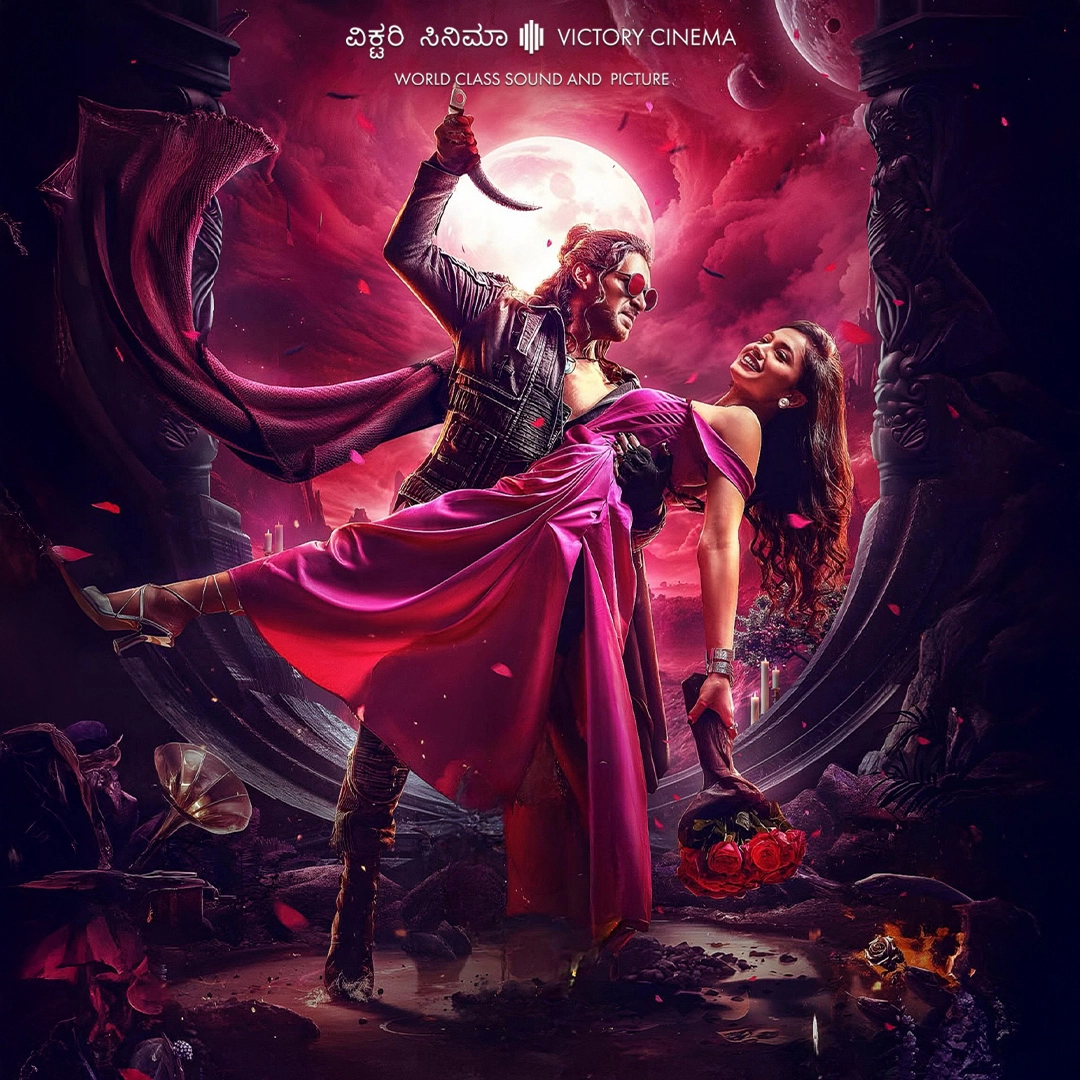
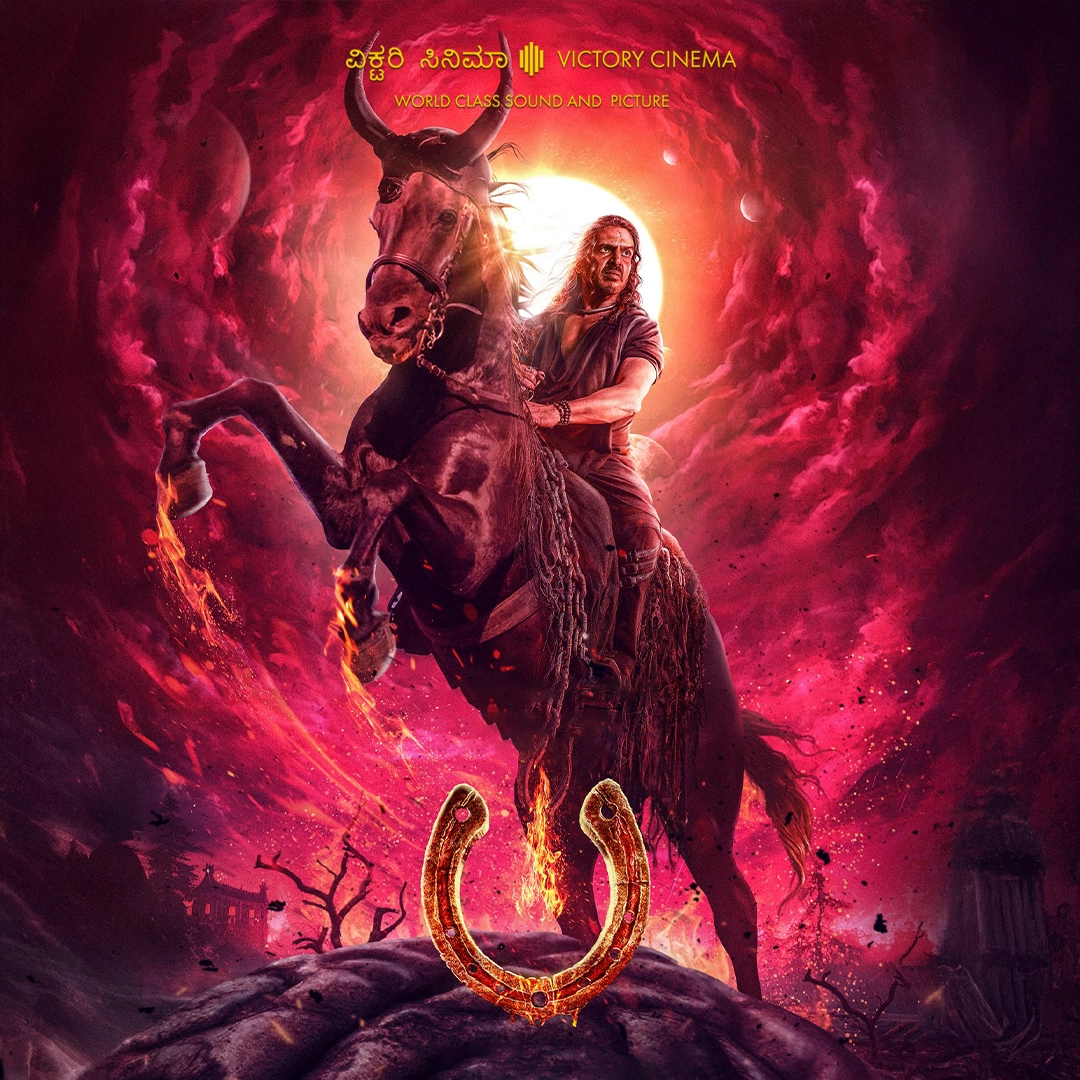
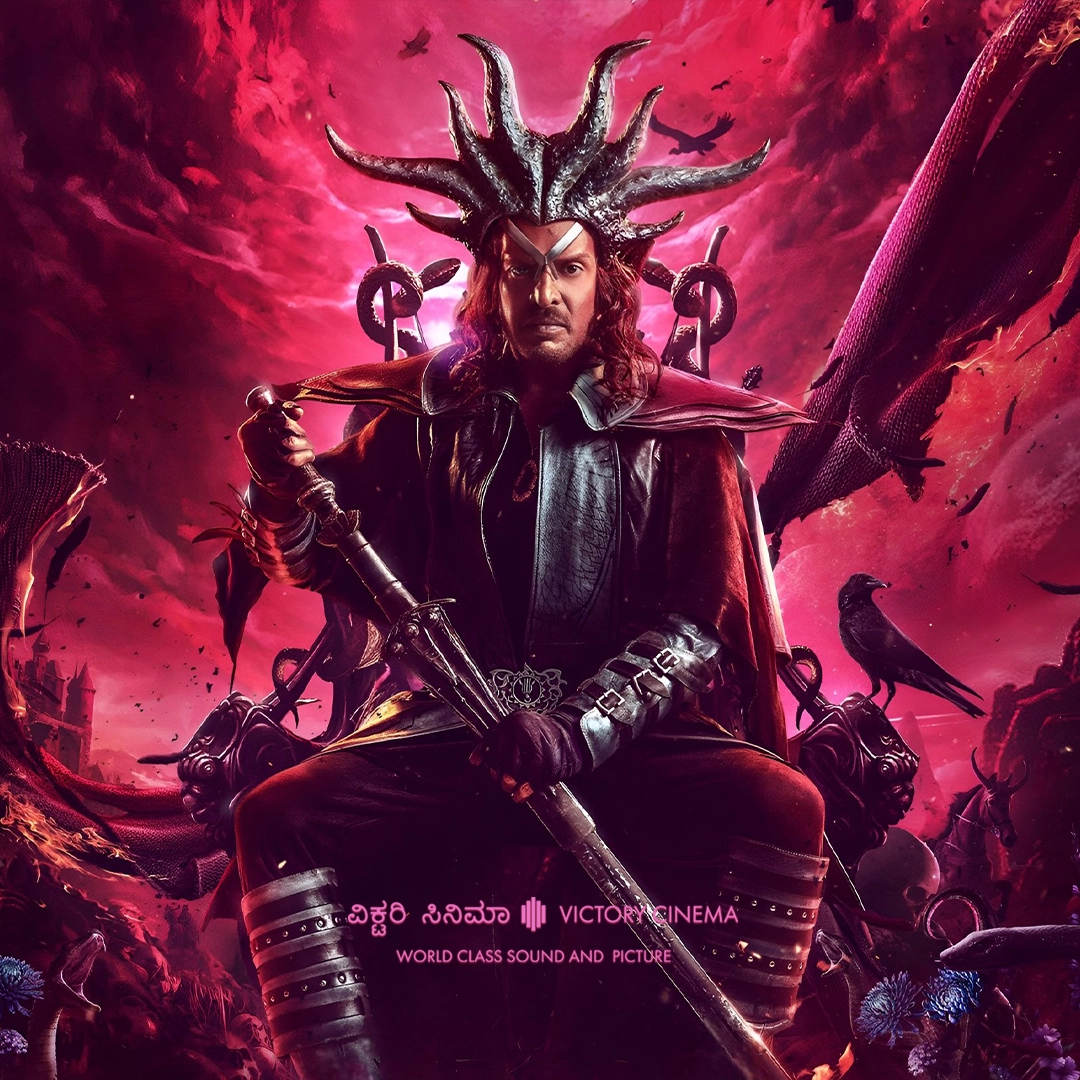
UI at Victory Cinema UI marks the return of Upendra to the director’s chair for another unconventional Kannada cinematic experience built around ideas, symbolism, spectacle and questions directed as much towards the audience as towards the characters on screen. Written and directed by Upendra, who also takes the central role, UI enters an imagined dystopian world where competing ideas about truth, power, human instinct and society begin colliding. Rather than revealing a conventional storyline through its promotional campaign, the filmmakers deliberately surrounded the project with mystery and repeatedly encouraged audiences to use their own intelligence while watching. The early teaser itself played with this idea through the message that this was not “AI” but “UI,” asking viewers to observe and interpret instead of expecting straightforward explanations. The film releases theatrically on 20 December 2024, with versions prepared in Kannada and other major Indian languages. Upendra leads a cast that includes Reeshma Nanaiah, Murali Sharma, P. Ravi Shankar, Achyuth Kumar, Sadhu Kokila and Nidhi Subbaiah. The principal technical team includes composer B. Ajaneesh Loknath, cinematographer H. C. Venugopal and editor Vijay Raj B. G. Victory Cinema presents UI in Kannada with English subtitles for Upendra fans and movie lovers from across Bengaluru. Check the latest showtimes, select your preferred seats and book directly on victorycinema.in without booking fees. Upendra returns to his distinctive world of cinema Few filmmakers approach a movie quite like Upendra. His directorial identity has long been associated with stories that challenge audiences, disrupt expectations and turn familiar social behaviour into material for satire, provocation and psychological examination. UI arrives with that same spirit of unpredictability. Even before release, Upendra resisted explaining the film through a simple one-line plot. During a promotional appearance, he described UI as a film that would not merely tell the audience something but would, in a sense, listen to what the audience had to say. That idea captures the unusual relationship the film seeks to establish with viewers. Instead of sitting back and waiting for every answer to be delivered, audiences are invited to participate mentally. What is real? What is imagined? Who should be trusted? Does society create its leaders, or do powerful individuals create the society that follows them? UI places questions like these inside a visually heightened cinematic world where entertainment and interpretation are designed to exist together. A dystopian world shaped by human behaviour The world glimpsed in UI’s promotional material is not presented as an ordinary extension of everyday reality. It is exaggerated, strange and deliberately unsettling. Crowds, rulers, weapons, spectacle, fear and conflicting ideas all appear to occupy the same imaginative landscape. The environment has the scale of science fiction, yet the subjects being examined remain recognisably human. Greed. Power. Blind following. Social division. The desire to control others. The willingness to surrender independent thought. This is where UI’s dystopian setting becomes important. A futuristic or imaginary world gives Upendra the freedom to magnify behaviours that already exist around us. Instead of recreating one particular political system or moment in history, he can create his own environment and ask viewers to decide what parts of it feel familiar. The promotional material identifies the film as an action and science-fiction thriller, but its unusual presentation suggests that genre is only the outer layer of a much more philosophical experiment. Upendra at the centre of the mystery Upendra does not simply direct UI from behind the camera. He also places himself at the centre of its mysterious cinematic world. The trailers and promotional imagery present sharply contrasting versions of his screen persona, moving between controlled intensity, aggression and symbolic characterisation. That makes his performance particularly interesting because audiences cannot immediately assume that every appearance represents the same idea. UI uses identity as part of its mystery. A face can represent a character. It can also represent an idea. A powerful figure may appear to be a hero from one perspective and something entirely different from another. This uncertainty allows Upendra the actor and Upendra the filmmaker to work together in a way especially suited to his style of cinema. The performance is not merely about following one protagonist from beginning to end. It becomes another instrument through which the film questions perception itself. Reeshma Nanaiah enters Upendra’s cinematic universe Reeshma Nanaiah plays the principal female role and appears prominently throughout the film’s promotional campaign alongside Upendra. Her presence introduces energy, glamour and another perspective within the deliberately unpredictable narrative. For an actor entering a film directed by Upendra, the challenge is unusual. Characters may function simultaneously as individuals within the story and as pieces within a larger thematic puzzle. Reeshma features prominently in the widely seen “Troll Song,” whose playful presentation became one of the film’s most recognisable musical promotions. The song itself reflects UI’s willingness to engage with contemporary internet culture and the constant cycle of online judgement, commentary and mockery. Her character therefore enters a world where appearances can be deceptive and where even entertainment may contain another layer waiting to be interpreted. Murali Sharma and an ensemble of familiar performers Murali Sharma, P. Ravi Shankar, Achyuth Kumar, Sadhu Kokila, Nidhi Subbaiah and other familiar performers form part of UI’s large ensemble. BookMyShow lists Upendra, Reeshma Nanaiah, Murali Sharma, Achyuth Kumar, P. Ravi Shankar, Sadhu Kokila, Nidhi Subbaiah and Cockroach Sudhir among the principal cast. The range of performers suits a film built around different shades of society. Some characters can represent authority. Others can provide comedy. Some may appear trustworthy. Others may deliberately confuse the audience. Upendra’s cinema often places very different emotional tones beside one another. A comic situation can suddenly become disturbing. A serious speech can contain satire. A character who initially appears ridiculous can later reveal another purpose. The ensemble gives UI enough personalities to populate its strange world while preserving uncertainty about how every individual fits into the complete picture. A film that asks audiences to use their intelligence The phrase surrounding UI’s early promotion could hardly be clearer: “Use your intelligence.” That invitation is also a warning. This may not be a film designed to explain every symbol immediately. The first-look teaser itself avoided conventional visual revelation and instead used sound, darkness and cryptic dialogue to create curiosity. The campaign continued presenting UI as something audiences were expected to decode rather than simply consume. That approach makes the theatrical experience especially interesting. Different viewers may notice different things. One person may focus on politics. Another may see a psychological conflict. Someone else may interpret the film as a satire about society, social media or humanity’s tendency to follow powerful personalities. UI invites conversation because its meaning does not need to stop when the screen goes dark. The title itself becomes part of the puzzle. Is UI simply a name? Does it refer to the viewer? Does it refer to intelligence? Or is the film deliberately encouraging every audience member to construct a personal answer? An imaginary world with substantial visual ambition UI was promoted from the beginning as a visually ambitious production requiring significant work on sets, visual effects and an invented cinematic environment. H. C. Venugopal handles the cinematography, while the film’s design combines futuristic imagery with deliberately exaggerated environments and symbolic compositions. Vijay Raj B. G. is credited with the editing. The visual approach is important because a film like UI cannot depend only upon dialogue to communicate its ideas. Colour, costume, architecture and scale can all become part of the message. An enormous structure may represent power. A crowd can communicate conformity. A costume can transform a character into a symbol rather than merely a person. The larger theatrical screen allows audiences to examine those details while the film moves through its unpredictable world. For Upendra, visual excess can itself become commentary. A strange environment may appear entertaining at first before viewers begin asking why it has been designed that way. B. Ajaneesh Loknath creates the sound of UI B. Ajaneesh Loknath composes the music for UI, bringing a distinctive sonic identity to Upendra’s unusual visual world. The film’s musical campaign includes the energetic “Troll Song,” the intentionally provocative “Cheap Song,” “Fan India Song” and the atmospheric “Sound of UI.” Official Lahari releases credit B. Ajaneesh Loknath across the project’s musical presentation. The titles themselves suggest that the music is connected to the film’s social commentary. “Troll Song” enters the world of online reactions and instant judgement. “Cheap Song” deliberately plays with ideas about commercial entertainment and public taste. “Fan India Song” engages with celebrity culture and mass following. The background score has an even larger responsibility. UI moves through psychological tension, satire, action and surreal imagery. The music must therefore support both spectacle and discomfort. Ajaneesh Loknath’s score helps make the imaginary world feel larger while giving Upendra space to shift rapidly between entertainment and provocation. Entertainment on the surface, questions underneath UI may carry philosophical ideas, but it is still designed as a theatrical film. The promotional material contains action, colourful songs, unusual costumes, large sets, comedy and powerful character entrances. That combination is important. Upendra does not separate entertainment from social commentary. Instead, spectacle itself can become part of what he is examining. Why do audiences cheer for certain personalities? Why do people accept ideas when they are presented confidently? Why does society turn individuals into heroes and then attack the same people? Why are people so easily entertained by conflict? UI can raise these questions while simultaneously participating in the very forms of cinema it examines. That contradiction is part of the attraction. Audiences can enjoy the music, visual imagination and confrontations while also deciding whether the film is quietly asking them to question their own reactions. Kannada with English subtitles Victory Cinema presents UI in its original Kannada-language version with English subtitles. Audiences can experience Upendra, Reeshma Nanaiah, Murali Sharma, P. Ravi Shankar, Achyuth Kumar, Sadhu Kokila and the wider ensemble in the original Kannada performances while following every important line clearly. English subtitles are particularly useful for a film built around ideas, layered dialogue, satire and rapid exchanges. A single sentence may carry more than one meaning. A joke may contain a larger observation. A seemingly casual statement may become important later. The subtitled presentation makes UI accessible to Bengaluru audiences from different linguistic backgrounds without losing the distinctive delivery and personality of Upendra’s original Kannada version. An Upendra film for audiences who enjoy being challenged UI is created for moviegoers who enjoy films that refuse to behave predictably. It brings Upendra back as writer, director and lead actor in a project deliberately surrounded by questions. Reeshma Nanaiah joins him in the central cast, while Murali Sharma, P. Ravi Shankar, Achyuth Kumar, Sadhu Kokila and Nidhi Subbaiah populate the film’s unusual world. B. Ajaneesh Loknath provides the music, with H. C. Venugopal behind the camera. The result promises a combination of science fiction, dystopian imagery, action, satire and psychological storytelling. Victory Cinema welcomes Upendra fans and Kannada movie lovers from every part of Bengaluru to experience UI on the big screen. Check the latest UI showtimes, select your preferred seats and book directly on victorycinema.in without booking fees. Do not simply watch — observe UI arrives without asking audiences to switch off their minds. It asks the opposite. Enter the world. Watch the characters. Listen carefully. Question what appears obvious. Do not assume that the loudest person is right. Do not assume that what looks like fiction has nothing to do with reality. And do not expect every viewer to leave with exactly the same interpretation. Watch UI (2024) in Kannada with English subtitles at Victory Cinema, Bengaluru. Experience Upendra’s return to unconventional filmmaking through a provocative science-fiction thriller filled with surreal imagery, social questions, action, music and a cinematic world designed to make audiences think beyond what they immediately see.