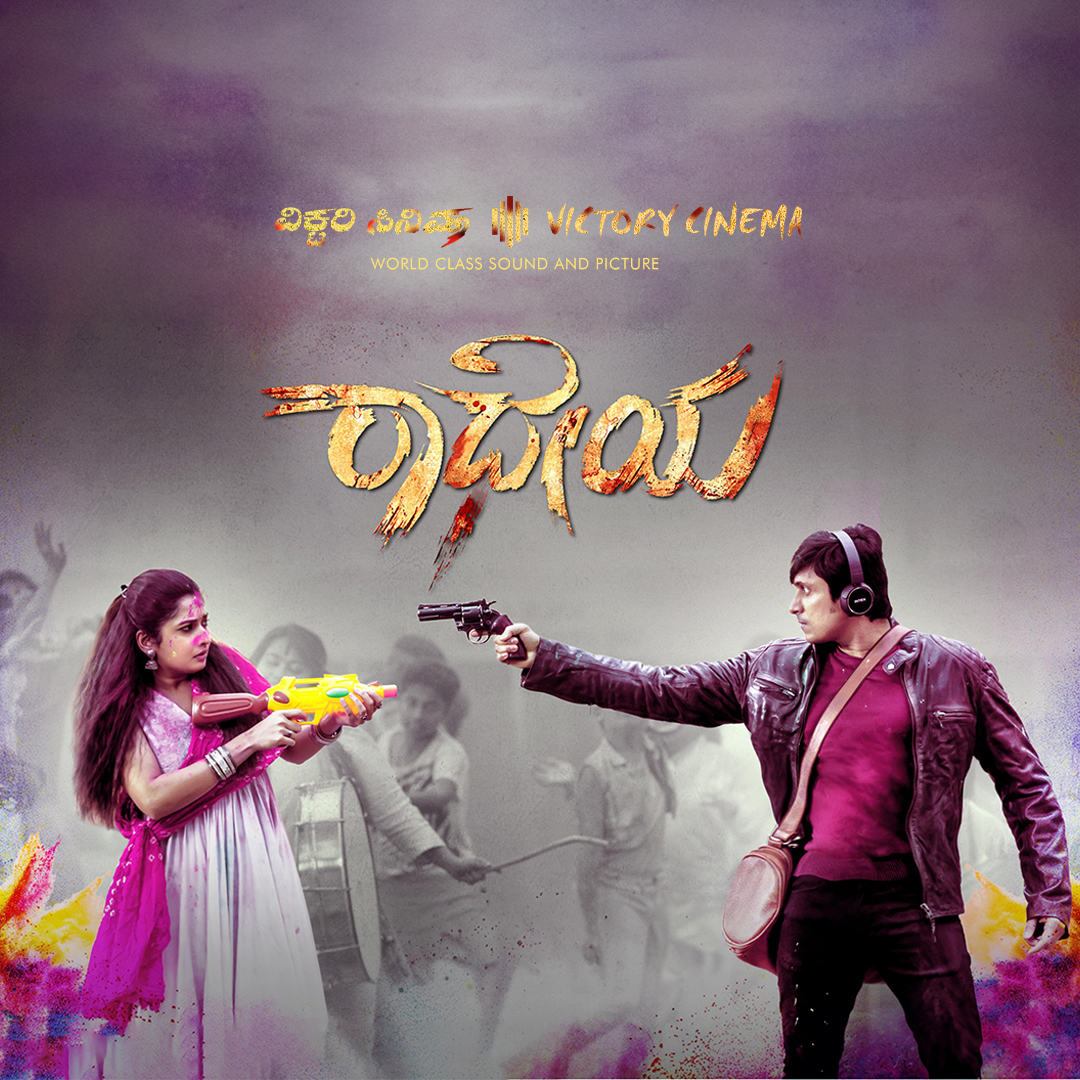
Radheyaa (Kannada with English Subtitles)
- Director: VedaGuru
- Writers: VedaGuru
- Stars:
- Ajai Rao
- Sonal Monteiro
- Dhanya Balakrishna
- Girish Shivanna
Radheyaa emerges as one of the most uncompromising Kannada crime dramas of recent years — a film that does not chase spectacle, but instead chooses psychological depth, moral discomfort, and character-driven tension as its primary cinematic tools. Directed by Veda Guru, the film steps firmly into the territory of serious adult cinema, where crimes are not reduced to thrills, and confessions are not framed as redemption. Instead, Radheyaa examines crime as a psychological event — one that unfolds slowly, leaving emotional debris long after the act itself is committed. At the centre of Radheyaa is a narrative structured around confession rather than investigation alone. Unlike conventional thrillers that rely on the “whodunit” mechanism, this film begins by questioning why and how far human psychology can fracture before morality collapses. The story revolves around a series of crimes that gradually reveal themselves through interrogation, memory, and fragmented recollection, placing the audience inside the mental space of both the accused and those attempting to understand him. Ajai Rao, in one of his most restrained and intense performances, anchors the film with a portrayal that avoids theatricality. His character is not designed to be likeable, nor overtly villainous. Instead, he exists in a grey psychological zone — articulate, introspective, and disturbingly calm. This controlled performance allows Radheyaa to explore the unsettling reality that violence does not always announce itself loudly; sometimes it arrives quietly, rationally, and with chilling clarity. Ajai Rao’s screen presence carries the weight of the film, especially during prolonged interrogation sequences where silence becomes more powerful than dialogue. Opposite him, Sonal Monteiro and Dhanya Balakrishna bring emotional counterweights that prevent the narrative from collapsing into bleakness. Their characters are not ornamental; they function as emotional mirrors through which the audience experiences fear, doubt, and moral conflict. Their interactions with Ajai Rao’s character introduce layers of empathy, resistance, and unresolved tension, reinforcing the idea that crime is never an isolated act — it ripples outward, affecting lives far removed from the original moment. Veteran performers Girish Shivanna and Aravind Rao provide gravitas to the institutional world of the film — law enforcement, interrogation rooms, and procedural spaces where truth is sought but rarely found in clean lines. Their performances ground Radheyaa in realism, ensuring that authority figures are neither heroic caricatures nor incompetent foils, but professionals navigating moral fatigue in a system where answers come at a psychological cost. Director Veda Guru approaches the screenplay with deliberate restraint. The film refuses to hurry its revelations, allowing scenes to breathe, discomfort to linger, and silence to speak. This pacing may feel demanding, but it is precisely what gives Radheyaa its power. Each confession, each flashback, and each pause contributes to a cumulative emotional pressure that builds steadily rather than explosively. The technical craft supports this vision seamlessly. Rammy’s cinematography favours muted palettes, controlled lighting, and tightly framed compositions that trap characters within their emotional and physical confines. Prison interiors, interrogation rooms, and closed spaces dominate the visual language, reinforcing the claustrophobic nature of guilt and accountability. Suresh Armugam’s editing avoids flashy transitions, opting instead for continuity that respects psychological realism over cinematic flourish. Music by Sandy Addanki functions less as melody and more as atmosphere. The background score subtly amplifies tension without dictating emotional response, allowing scenes to unfold organically. In many moments, the absence of music becomes as significant as its presence, reminding the audience that Radheyaa is not designed to comfort, but to confront. What sets Radheyaa apart within contemporary Kannada cinema is its refusal to offer easy moral resolutions. The film does not ask the audience to forgive, condemn, or sympathise blindly. Instead, it presents human behaviour in its raw, uncomfortable complexity. Crime here is not stylised; it is interrogated. Violence is not glorified; it is examined. This is precisely why Radheyaa is a film that demands a theatrical viewing, and why Victory Cinema becomes an essential part of the experience. The film’s reliance on silence, subtle performance, and sound design requires an environment free from distraction. Victory Cinema’s immersive sound system ensures that every breath, pause, and tonal shift reaches the audience with clarity. The large screen magnifies micro-expressions and restrained acting choices that would be lost on smaller devices. Watching Radheyaa at Victory Cinema also restores the collective gravity of serious cinema. This is not a film meant to be half-watched; it benefits from audience stillness, shared tension, and the palpable silence that only a theatre can provide. Each revelation lands heavier when experienced collectively, each moral question resonates deeper when absorbed without interruption. Tickets for Radheyaa are available at victorycinema.in, offering a seamless booking experience without convenience fees. With real-time seat selection, OTP-based ticketing, and secure Razorpay payments, the process remains frictionless — allowing the audience to focus entirely on the cinematic experience that awaits them. Radheyaa does not position itself as entertainment in the conventional sense. It positions itself as cinema with intent — a film that respects the intelligence of its audience and challenges them to engage emotionally and intellectually. In a cinematic landscape increasingly driven by noise and spectacle, Radheyaa stands apart as a reminder that intensity does not require excess — only honesty, discipline, and purpose. For audiences seeking meaningful Kannada cinema, Radheyaa is not merely a release — it is an event. And the place to experience its full psychological and cinematic weight is Victory Cinema, where serious storytelling is given the space, sound, and silence it deserves.