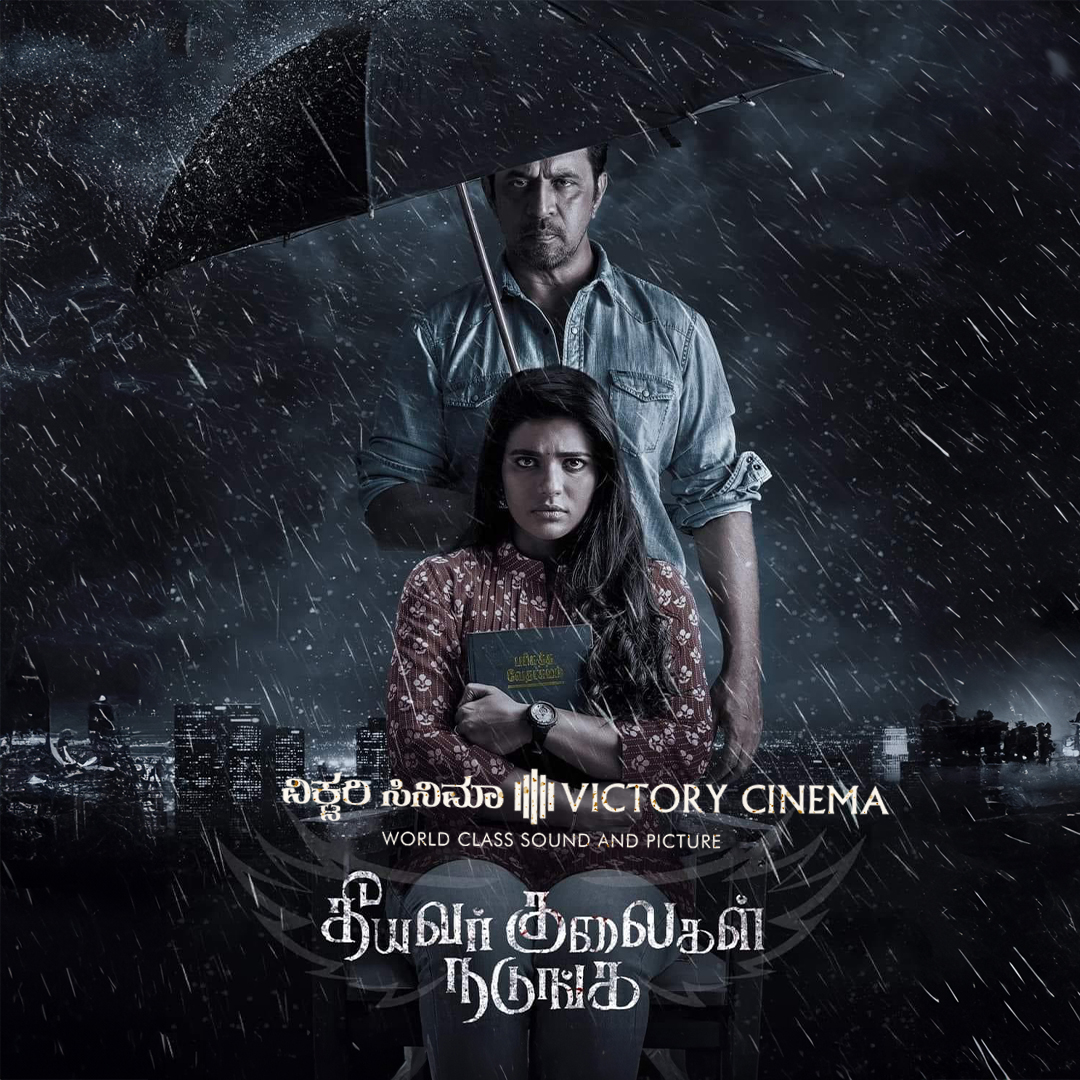
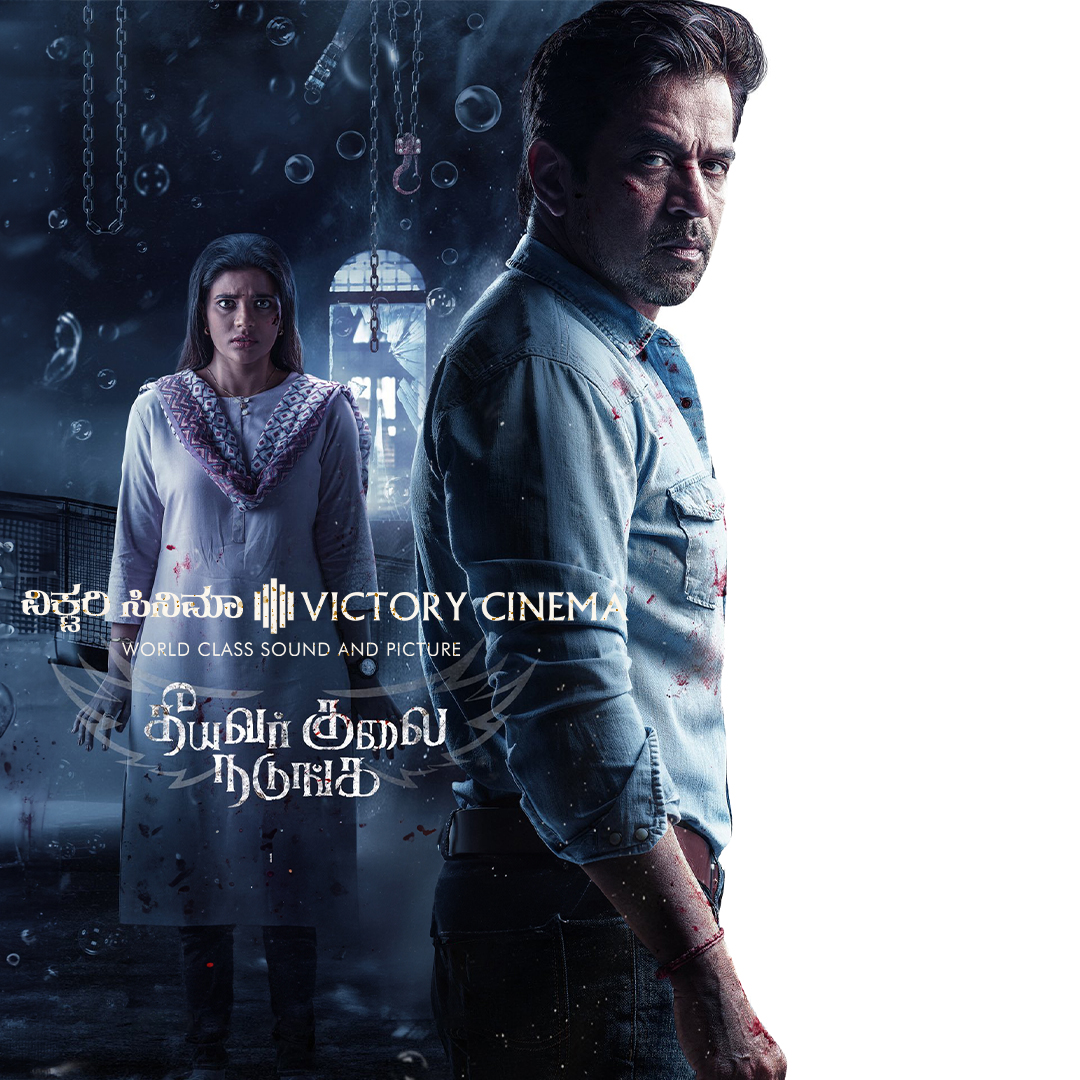
Theeyavar Kulai Nadunga (Tamil with English Subtitles)
- Director: Dinesh Lakshmanan
- Writers: Dinesh Lakshmanan
- Stars:
- Arjun & Aishwarya Rajesh
- Abhirami Venkatachalam
- Praveen Raja
Theeyavar Kulai Nadunga emerges as one of 2025’s most compelling Tamil investigative crime thrillers, anchored by the performance of veteran action star Arjun Sarja and critically acclaimed actress Aishwarya Rajesh. Released in theatres on 21 November 2025, the film is written and directed by Dinesh Lakshmanan in his debut feature and is presented in Tamil with English subtitles for wider accessibility. At its narrative heart, Theeyavar Kulai Nadunga begins with a strikingly understated yet chilling premise: a respected writer named Jeba is found murdered at midnight. The brutal killing takes place in the quiet confines of a modern apartment complex — a setting that initially evokes serenity but gradually reveals layers of intrigue, secrecy and suppressed tensions. This structural choice transforms the film from a simple murder mystery into a claustrophobic study of human psychology and suspicion, where every resident becomes both witness and possible suspect. Inspector Magudapathy, portrayed by Arjun Sarja, is the gritty investigative force at the centre of the story. Known for his unorthodox methods and unwavering dedication, Magudapathy brings a seasoned, no-nonsense intensity to the case. His presence on screen is both commanding and nuanced, offering audiences a protagonist who balances rational deduction with emotional intelligence. Parallel to the unfolding investigation is the story of Meera, played by Aishwarya Rajesh, a compassionate school teacher and social worker deeply involved with local community concerns. As the narrative evolves, her path intersects with that of Magudapathy, not only through the case but through a shared determination to uncover the truth even when it challenges social norms and personal safety. What distinguishes Theeyavar Kulai Nadunga from conventional crime thrillers is its integration of complex character dynamics and social subtext into the investigative framework. Inspector Magudapathy’s approach to the crime scene is rigorous, but the film doesn’t reduce him to a stereotype of police tropes; instead, it uses his perspective to explore how law, morality and empathy interlink within the procedural mechanics of justice. Meera’s role adds emotional gravity to the investigation, while supporting characters add unpredictable depth and nuance to the mystery. The ensemble cast includes Abhirami Venkatachalam, Praveen Raja, and Ramkumar Ganesan, each contributing to the dense web of possibilities surrounding the crime. Characters like the videographer Adhi and local influencers add narrative tension not through overt villainy but by complicating the already fragile web of testimony and motive. This layered cast structure elevates the film’s suspense because the movie doesn’t rely on a single antagonist — it creates a tapestry of potential culpability that keeps audiences guessing. Beyond performances, Theeyavar Kulai Nadunga benefits from a technical team that supports the storytelling in meaningful ways. Cinematographer Saravanan Abimanyu crafts visuals that balance realism with atmospheric tension. Close-quarters shots emphasize the eerie quiet of residential spaces, while wider frames capture the social fabric of the apartment complex and the subtle ways neighbors relate to one another. Editor Lawrence Kishore knits together scenes with measured pacing that respects the audience’s intelligence while maintaining a steady narrative drive. Music by Bharath Aaseevagan underscores key moments with subtle tension, never overwhelming the plot but reinforcing the emotional and psychological stakes at every turn. The film’s script — co-written by Dinesh Lakshmanan and Navaneethan Sunderrajan — is a study in careful escalation. Initiated by a solitary murder, the story unfolds in a series of revelations that expose hidden motives, fractured relationships and unanticipated alliances. The murder is not merely a plot device; it becomes a catalyst that fractures perceived normalcy and draws viewers into the moral ambiguities of justice, grief, and accountability. As the investigation deepens, flashbacks and layered storytelling weave in backstories that allow the audience to empathize with or distrust multiple characters in turn. One of the remarkable aspects of Theeyavar Kulai Nadunga is its willingness to engage with sensitive subjects with grounded restraint. The film touches upon the lives of autistic children and the educational ecosystem in which they reside, adding a social welfare perspective that intersects with the mystery at key junctures. These elements are not merely window dressing; they enrich the thematic texture of the film and make its resolution more than a standard procedural finish. The setting of the apartment complex — modern, tightly knit and bustling with everyday life — contrasts sharply with the darkness of the crime at its core. This juxtaposition heightens the suspense because the story doesn’t take place in a fictional crime lab or distant locale; it occurs in a recognizably human space where neighbours mix routine with hidden tensions. This setting becomes a character in its own right, with every hallway, living room and communal space doubling as evidence of fractured trust and concealed truths. In its narrative architecture, Theeyavar Kulai Nadunga embraces elements of traditional mystery while incorporating modern storytelling techniques: flashbacks, parallel character arcs and emotional counterpoints that deepen engagement. The film does not rush to answer every question early; it invites the audience to sit with uncertainty, gradually revealing connections while teasing out motives that — in classic mystery fashion — may implicate victims, witnesses, or even unlikely allies. Experiencing this film in a theatrical setting like Victory Cinema in Bengaluru amplifies its impact in ways home viewing cannot match. The controlled environment of a darkened theatre, with pristine projection and immersive Dolby Atmos audio, draws the audience into the mystery, making every whispered clue and sudden revelation feel immediate and urgent. Victory Cinema’s crisp visuals and surround sound enhance both narrative tension and emotional payoff, allowing viewers to absorb subtle clues and character moments with clarity. Moreover, the collective energy of a theatre audience creates an atmosphere of shared anticipation that elevates suspense and engagement. In stories like Theeyavar Kulai Nadunga, where every silence and reaction carries weight, the communal experience — gasps, murmurs and collective curiosity — makes the screening more thrilling than isolated viewing. Booking tickets at victorycinema.in ensures a seamless experience with no convenience fees, secure Razorpay payment and instant OTP confirmation, making it easy and exciting to plan your outing. Narratively, the film speaks to the broader cultural interest in crime thrillers grounded in reality — stories that don’t just entertain but invite reflection on justice, human fallibility and the complexities of social interaction. The inclusion of English subtitles opens this gripping thriller to audiences beyond Tamil speakers, allowing broader engagement with its layered storytelling. The anticipation around Theeyavar Kulai Nadunga before its release was fueled not just by the star presence of Arjun Sarja — a veteran actor with decades of genre work behind him — and Aishwarya Rajesh, known for her powerful dramatic roles, but by the way the film uses familiar thriller motifs to explore deeper questions of trust, motive and societal perception. Theeyavar Kulai Nadunga stands as a compelling entry in 2025’s slate of Tamil crime thrillers. By combining a strong ensemble cast, an atmospheric narrative, grounded social themes and intelligent procedural progression, it offers both emotional engagement and intellectual intrigue. And when watched on the big screen at Victory Cinema — with immersive sound and vivid visuals — it becomes an experience that reminds us why theatre remains the best place for stories that unravel in suspense, gravity and shared excitement.