Avatar: Fire and Ash (3D) (English with English Subtitles)
- Director: James Cameron
- Writers: James Cameron
- Stars:
- Sam Worthington
- Zoe Saldaña
- Sigourney Weaver
- Stephen Lang
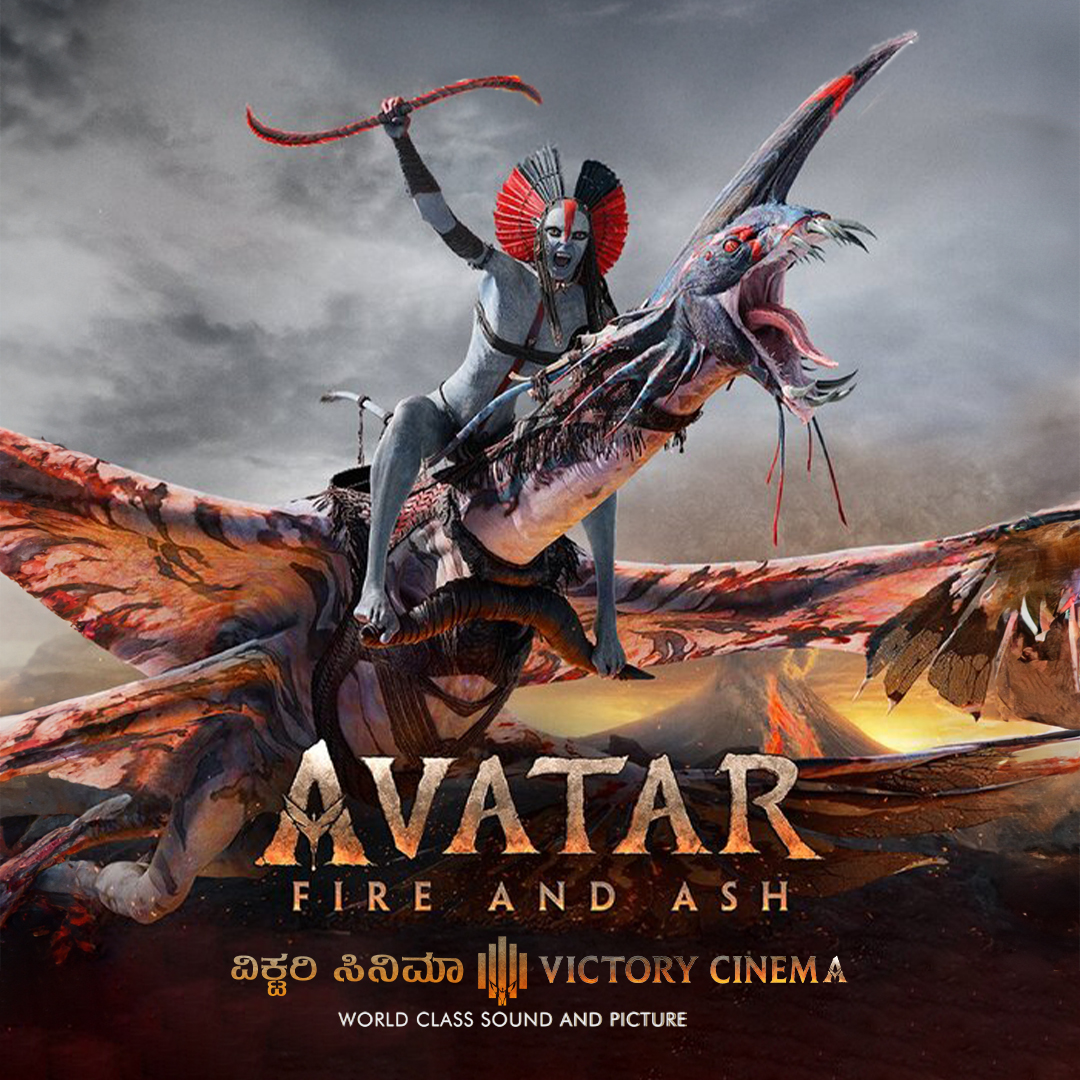
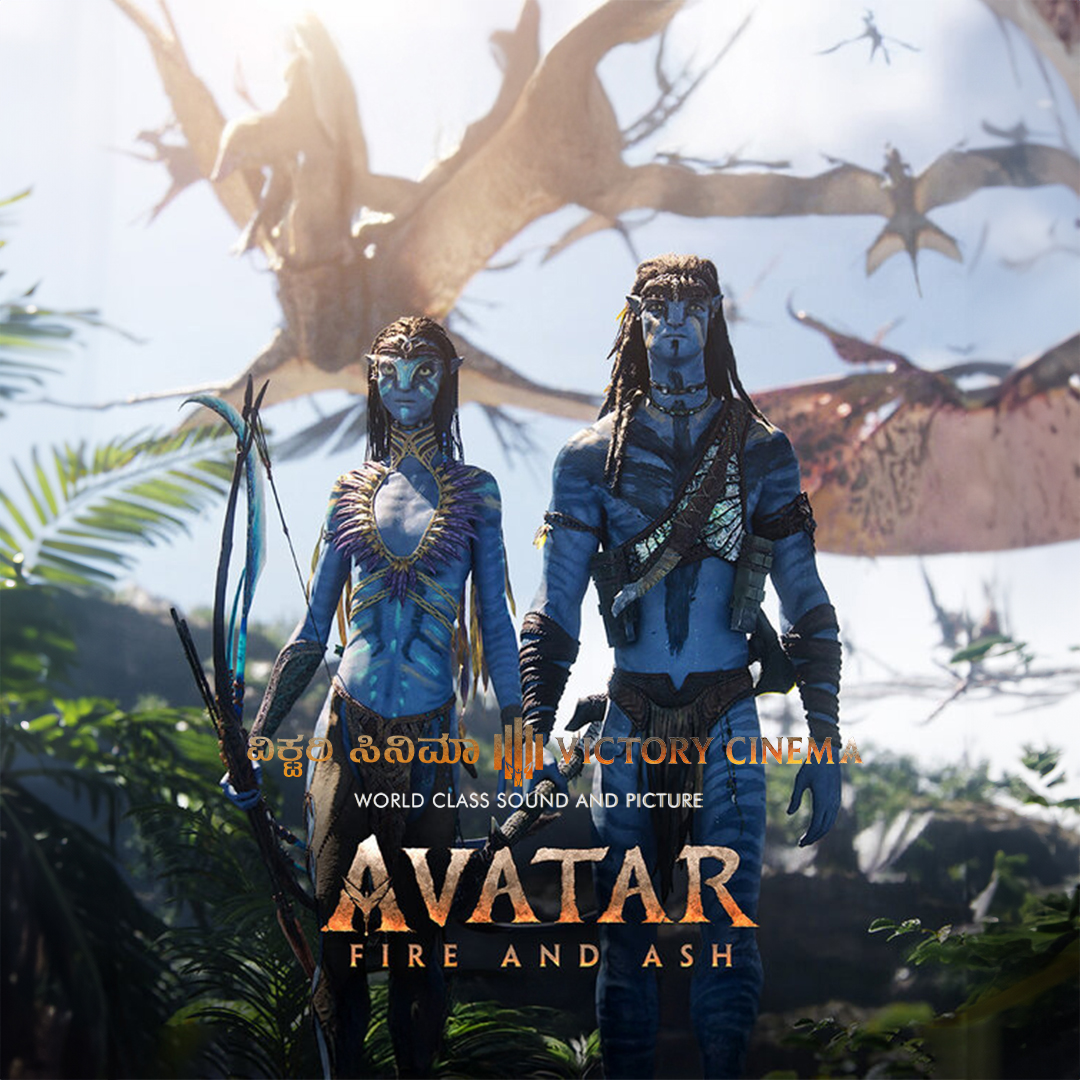
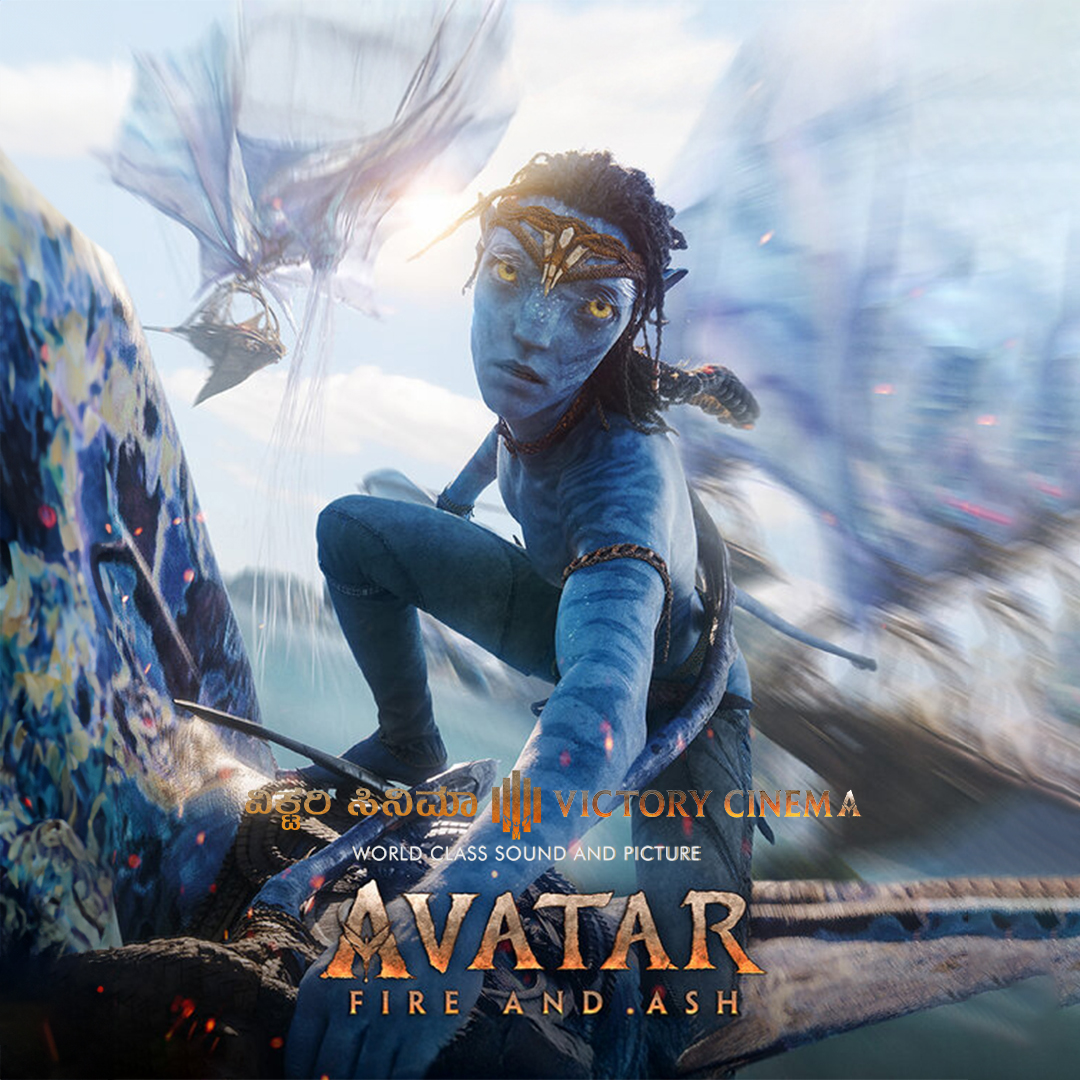
Avatar: Fire and Ash is the third chapter in James Cameron’s landmark Avatar saga and one of the most anticipated global theatrical releases of the decade. Positioned as the emotional and thematic bridge between Avatar: The Way of Water and the remaining sequels, this film expands the world of Pandora into darker, more volatile territory—both geographically and morally: Fire and Ash is conceived specifically for immersive 3D theatrical exhibition, making it a true big-screen event rather than a transitional sequel. Following the oceanic calm and familial themes of The Way of Water, Fire and Ash deliberately pivots into a more aggressive, conflict-driven narrative. James Cameron has described this chapter as one that explores the idea that not all Na’vi cultures are benevolent, challenging the simplistic moral binaries often associated with Pandora. For the first time in the franchise, audiences are introduced to a Na’vi clan aligned with destruction, conquest and fire—commonly referred to as the Ash People or Mangkwan Clan—who inhabit volcanic regions of Pandora shaped by lava fields, ash storms and scorched terrain. At the centre of the story remains Jake Sully, the former human marine who became Na’vi, portrayed by Sam Worthington, and Neytiri, played by Zoe Saldaña. Their journey in Fire and Ash is less about discovery and more about endurance—protecting family, preserving cultural identity and confronting ideological threats that come not only from humans but from within the Na’vi world itself. This internal conflict marks a significant evolution in the franchise’s narrative maturity. The Sully family continues to form the emotional core of the film. Lo’ak, Neteyam, Kiri, Tuk, and the adopted human boy Spider each play crucial roles as the story moves toward generational tension and identity conflict. Of particular importance is Kiri, portrayed by Sigourney Weaver, whose mysterious connection to Pandora deepens further in this chapter, hinting at spiritual and biological elements that may redefine the relationship between Eywa, the planet, and its inhabitants. A major addition to the cast is Oona Chaplin, who portrays Varang, the formidable leader of the Ash People. Varang is not written as a conventional villain but as a belief-driven antagonist whose worldview directly clashes with that of the forest and reef clans. Through her character, Avatar: Fire and Ash examines how ideology, survival and environment shape morality. This thematic complexity elevates the film beyond spectacle into philosophical territory, making it one of the franchise’s most ambitious entries. Stephen Lang returns as Colonel Miles Quaritch, now fully integrated into his recombinant Na’vi body. His arc continues to blur the lines between human militarism and Na’vi physicality, positioning him as a persistent force of destabilisation whose motivations are no longer purely institutional but deeply personal. Meanwhile, Kate Winslet reprises her role as Ronal, and Cliff Curtis returns as Tonowari, ensuring continuity with the Metkayina clan and reinforcing the interconnected nature of Pandora’s cultures. From a technical standpoint, Avatar: Fire and Ash represents another leap forward in cinematic innovation. Filmed using advanced performance-capture technology, high-frame-rate 3D, and custom underwater and environmental motion capture rigs, the film continues Cameron’s pursuit of immersive realism. The volcanic landscapes introduce entirely new visual challenges—glowing magma, airborne ash particles, heat distortion and dynamic lighting effects—all designed to be experienced in stereoscopic 3D on the largest possible screen. The film’s visual palette contrasts sharply with earlier instalments. Where Avatar emphasised bioluminescent forests and The Way of Water focused on fluid motion and aquatic serenity, Fire and Ash embraces harsher textures, deeper shadows and aggressive colour dynamics. This shift is intentional, mirroring the narrative’s descent into moral complexity and open conflict. Music once again plays a crucial role. Simon Franglen, continuing from The Way of Water, builds upon the musical legacy of James Horner, blending orchestral themes with indigenous tonal influences. The score is structured to support large-scale action sequences while preserving emotional intimacy during character-driven moments, ensuring the film’s length never feels mechanically indulgent. Narratively, Avatar: Fire and Ash is structured as a pressure cooker. The story escalates steadily rather than relying on constant spectacle, allowing tension to build through ideological confrontation, territorial disputes and the looming presence of human exploitation. The film explores themes of colonialism, extremism, ecological imbalance and generational responsibility, but does so through character choices rather than exposition, maintaining cinematic momentum. The decision to release the film in both 3D and non-3D formats reflects Cameron’s understanding of diverse audience preferences, yet Fire and Ash is unmistakably crafted for 3D theatrical viewing. The depth of field, spatial composition and motion design are engineered to envelop the viewer, making home viewing a fundamentally diminished experience. This is precisely where watching Avatar: Fire and Ash (3D) at Victory Cinema becomes significant. Victory Cinema’s large screen presentation, high-brightness projection and calibrated Dolby Atmos surround sound allow the film’s scale to fully unfold. Volcanic eruptions, aerial sequences and ground-level combat resonate with visceral intensity when experienced in a proper theatrical environment, preserving the filmmaker’s intended sensory impact. Victory Cinema’s single-screen format further enhances immersion by eliminating distractions common in multiplex settings. Audiences engage with Avatar: Fire and Ash as a collective journey—reacting together to moments of awe, tension and emotional release. This shared experience mirrors the communal themes central to the film itself. Booking tickets through victorycinema.in ensures a seamless and audience-friendly process. With real-time seat selection, secure OTP-based authentication, transparent pricing and zero convenience fees, the journey from anticipation to immersion is smooth and frictionless. Whether choosing a matinee or evening show, viewers enter the theatre ready to fully surrender to Pandora’s evolving saga. What distinguishes Avatar: Fire and Ash from many contemporary blockbusters is its patience. The film trusts its audience to engage with layered storytelling, long-form world-building and emotionally complex characters. It does not rush toward resolution, instead laying crucial narrative groundwork for the concluding chapters of the franchise. As such, this film is not merely a sequel but a structural pillar of the Avatar universe. The introduction of morally ambiguous Na’vi factions challenges the franchise’s foundational assumptions and signals Cameron’s refusal to stagnate creatively. Pandora is no longer a binary world of harmony versus exploitation; it is a living ecosystem of conflicting cultures, survival instincts and evolving belief systems. This evolution keeps the franchise relevant in a cinematic landscape crowded with formulaic spectacles. As a theatrical experience, Avatar: Fire and Ash represents cinema at its most ambitious—technically, emotionally and philosophically. It demands attention, rewards patience and justifies its runtime through narrative weight and visual mastery. Films of this scale are increasingly rare, making theatrical venues like Victory Cinema vital spaces where cinema can still be experienced as an event rather than content. In the larger context of global cinema, Avatar: Fire and Ash stands as a reminder of what the medium can achieve when storytelling, technology and vision align. It is a film designed not to be skimmed, paused or compressed, but to be entered, endured and felt—exactly as intended on the big screen. For audiences in Bengaluru, watching Avatar: Fire and Ash (3D) at Victory Cinema is not merely about seeing the next chapter of a popular franchise. It is about participating in a cinematic moment where scale, sound and story converge. Pandora’s fire, ash and evolving soul are best witnessed where cinema still breathes at full capacity—inside a darkened theatre, on a massive screen, surrounded by collective awe.