Avatar: Fire and Ash (3D) (Kannada with English Subtitles)
- Director: James Cameron
- Writers: James Cameron
- Stars:
- Sam Worthington
- Zoe Saldaña
- Sigourney Weaver
- Stephen Lang
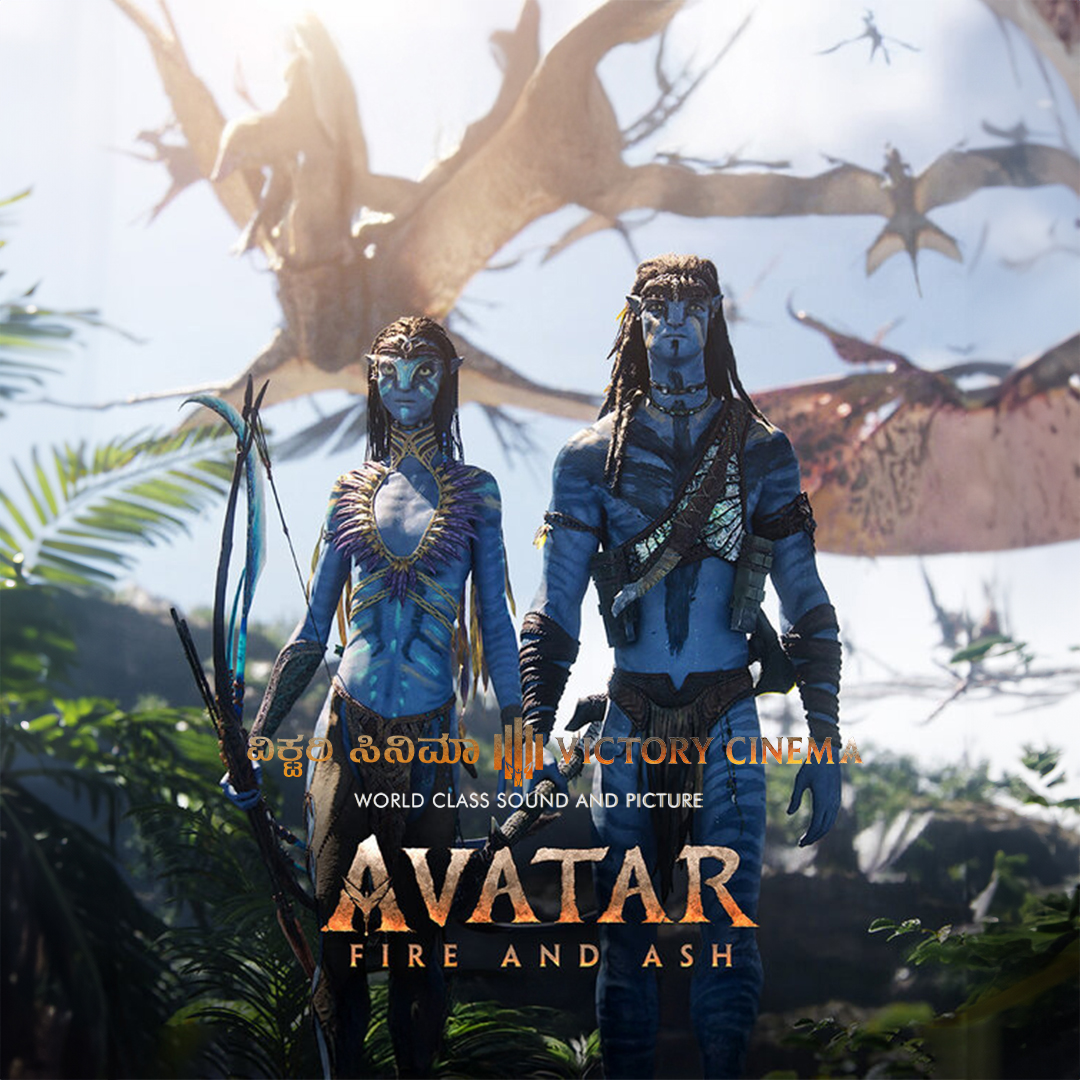
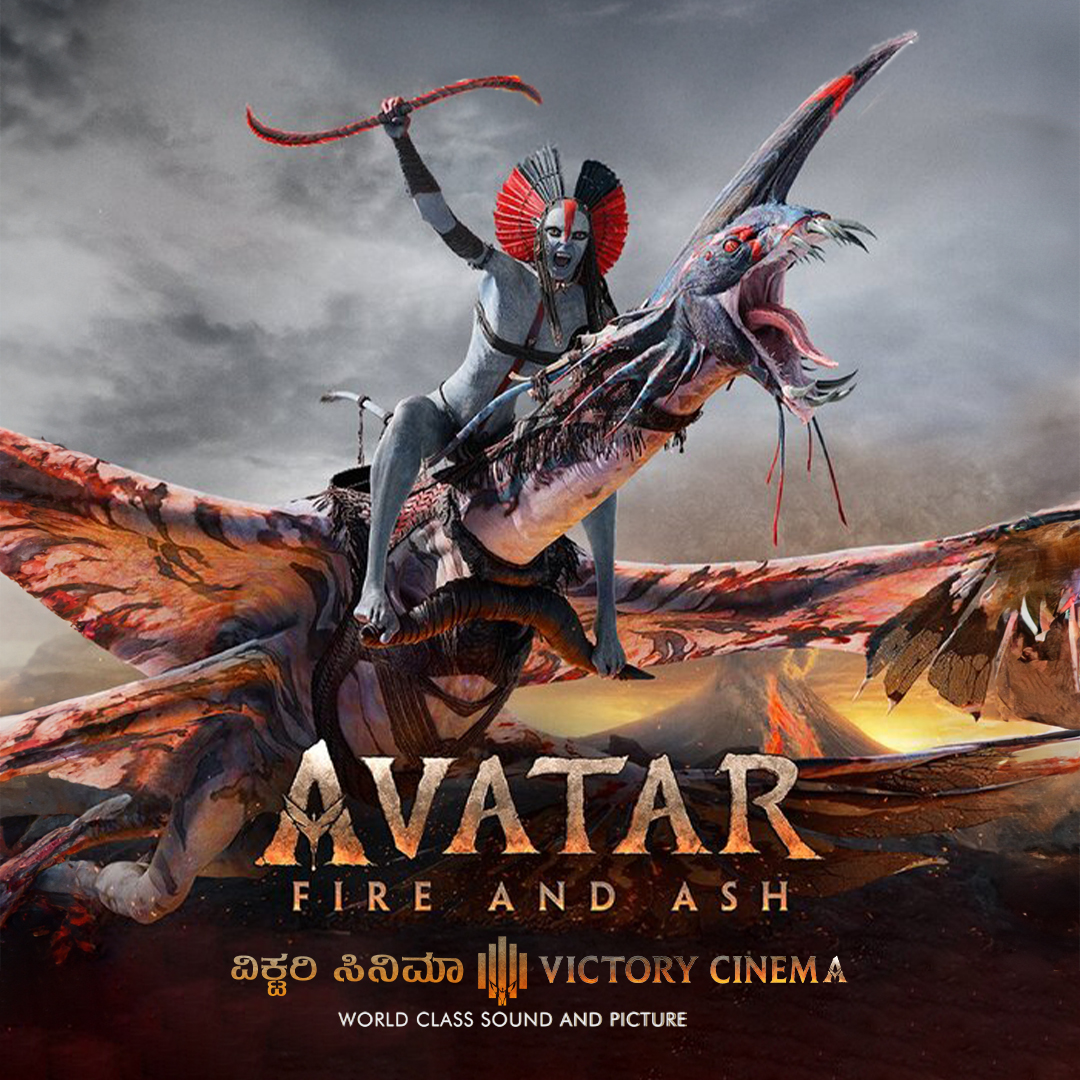
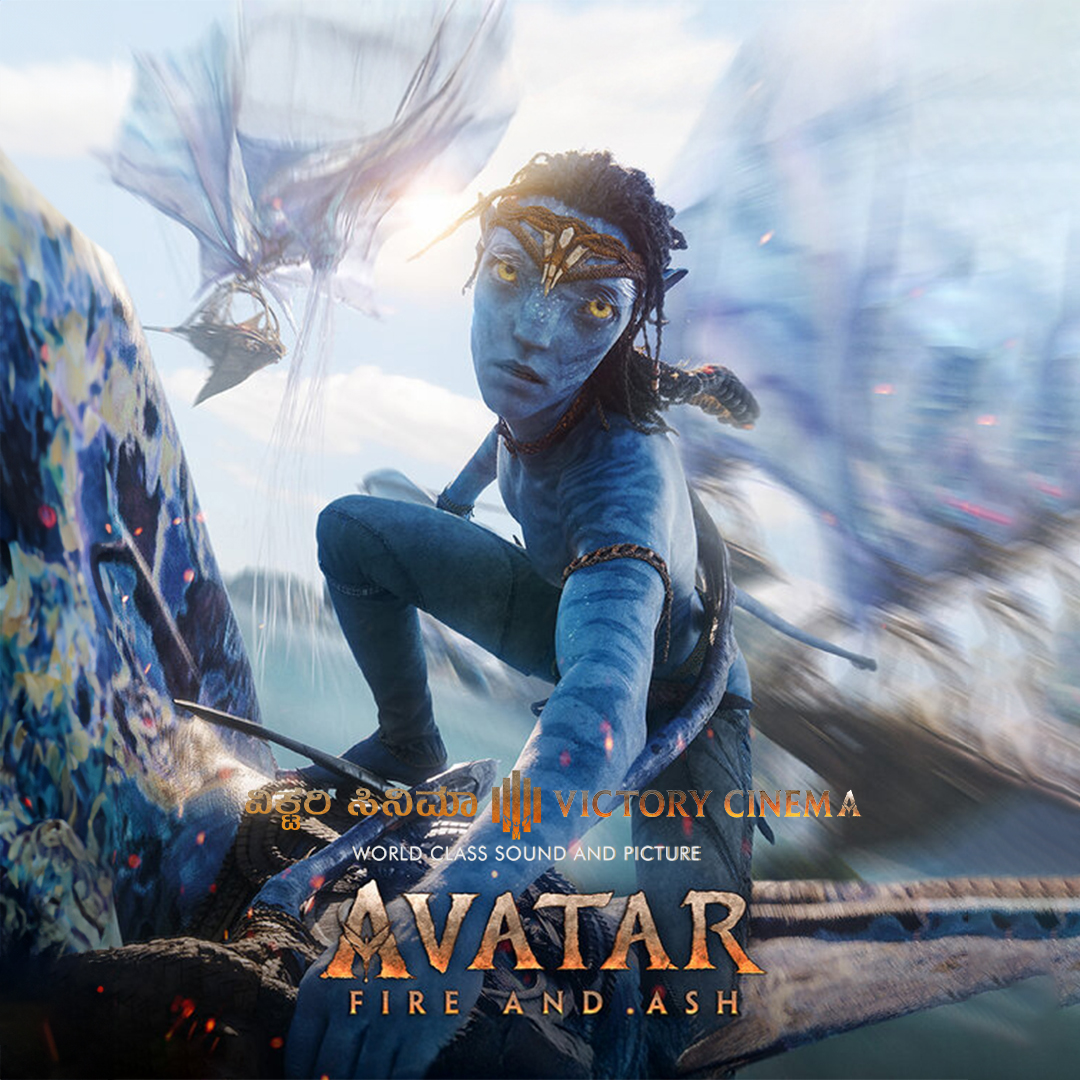
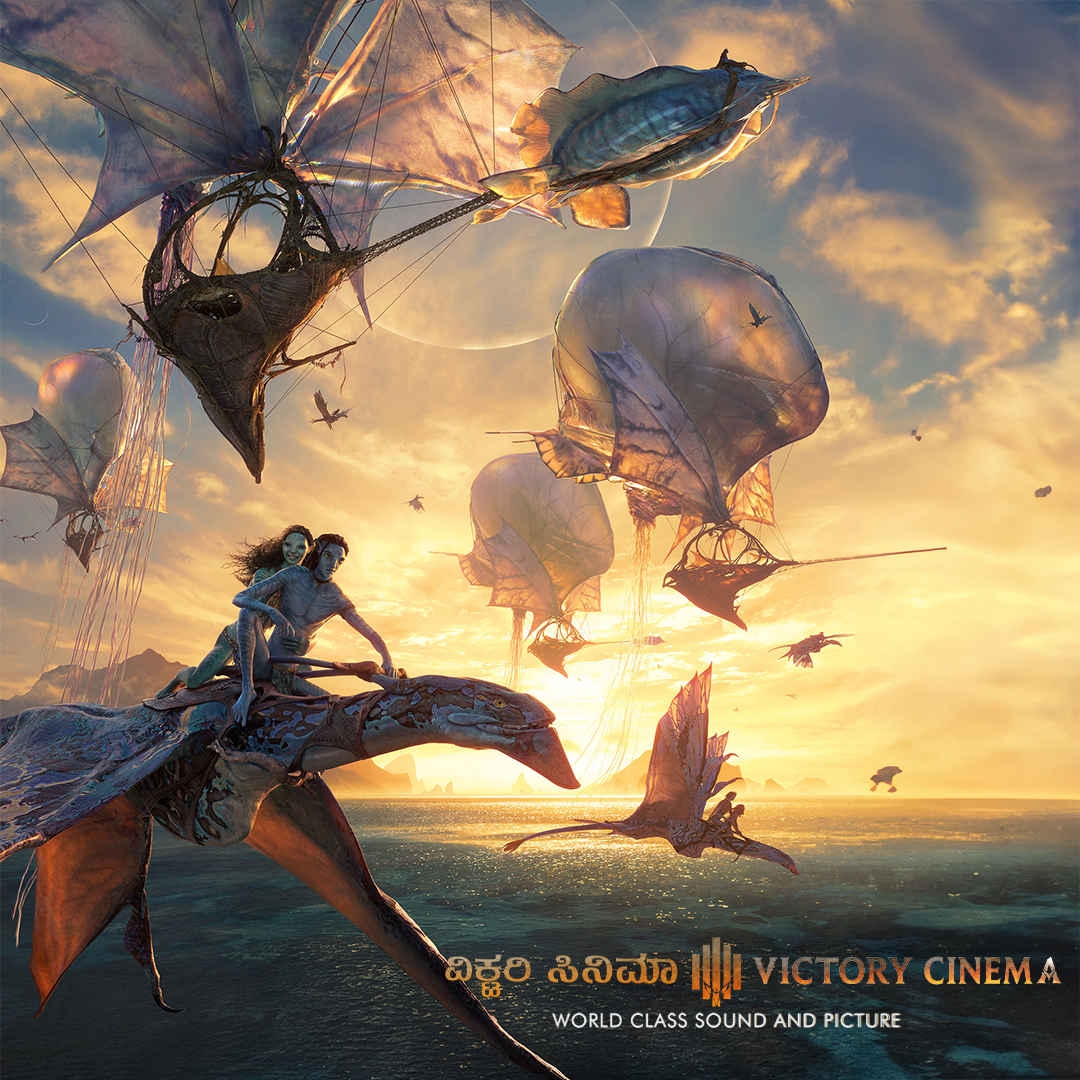
Avatar: Fire and Ash is positioned as one of the most ambitious cinematic events ever mounted, not just within the Avatar saga but in the history of global theatrical filmmaking. Conceived and directed by James Cameron, this film continues the expansive mythology that began with Avatar (2009) and deepened with Avatar: The Way of Water (2022). Fire and Ash represents a tonal and thematic shift within Pandora’s world, signalling a darker, more volatile chapter where elemental conflict, moral ambiguity, and internal fractures within the Na’vi culture come sharply into focus. Designed from inception as a large-format, immersive theatrical experience, this chapter is particularly impactful in 3D, where depth, scale and motion are intrinsic to the storytelling rather than optional enhancements. The narrative of Avatar: Fire and Ash expands the emotional and political geography of Pandora by introducing a previously unseen Na’vi culture associated with fire, ash and volcanic terrain. Unlike the ocean-aligned Metkayina clan or the forest-dwelling Omaticaya, this new group embodies aggression, survivalism and ideological extremity. James Cameron has described this film as deliberately challenging the binary morality established earlier in the franchise. The Na’vi are no longer portrayed as uniformly noble or harmonious; instead, Pandora becomes a contested world where belief systems clash, leadership is questioned, and survival often demands uncomfortable choices. This evolution adds narrative maturity to the franchise, making Fire and Ash less about spectacle alone and more about the consequences of power, resistance and identity. At the emotional core of the film remains Jake Sully, portrayed by Sam Worthington, whose journey from human marine to Na’vi leader now enters its most complex phase. Jake is no longer fighting merely to defend Pandora from external human threats; he is forced to navigate internal Na’vi conflicts that challenge his authority, his ideals, and his role as a bridge between worlds. Alongside him, Neytiri, played by Zoe Saldaña, emerges as a figure of raw emotional intensity. Having endured immense loss in earlier chapters, Neytiri’s arc in Fire and Ash is driven by grief, rage and an unyielding commitment to protecting her people, even when that path risks tearing alliances apart. The Sully family continues to anchor the narrative, with Sigourney Weaver returning as Kiri, whose spiritual connection to Pandora deepens in ways that hint at forces far older and more dangerous than those previously encountered. Stephen Lang reprises his role as Colonel Miles Quaritch, whose transformation into a Recom avatar blurs the line between human antagonist and Na’vi embodiment. In Fire and Ash, Quaritch is no longer simply a weapon of human colonisation; he becomes a wildcard whose evolving identity raises unsettling questions about loyalty, memory and redemption. Kate Winslet returns as Ronal, bringing gravitas and emotional restraint to the story, while Cliff Curtis, Britain Dalton, Trinity Bliss, Jack Champion and Bailey Bass further enrich the intergenerational dynamics that have become central to the Avatar saga. From a technical standpoint, Avatar: Fire and Ash represents the apex of James Cameron’s long-term commitment to advancing cinematic technology. Shot using cutting-edge performance capture systems and rendered through next-generation CGI pipelines, the film pushes 3D beyond visual novelty into narrative necessity. Volcanic landscapes, rivers of molten lava, ash-filled skies and bioluminescent fire ecosystems are designed to exist in layered depth, making 3D projection essential for fully experiencing spatial relationships and environmental scale. Cameron’s insistence on high-frame-rate clarity ensures that even the most frenetic action sequences retain visual precision, avoiding motion blur and preserving immersion. The sound design and score further elevate the theatrical experience. Composer Simon Franglen, continuing the musical lineage established by the late James Horner, crafts a score that blends tribal percussion, choral intensity and sweeping orchestration to reflect the film’s elemental themes. Fire is not merely visual in this chapter; it is sonic, emotional and rhythmic. Explosions, volcanic tremors and aerial combat sequences are engineered to resonate physically within a cinema auditorium, reinforcing why Fire and Ash is fundamentally a big-screen film rather than a home-viewing product. Thematically, Avatar: Fire and Ash explores cycles of destruction and rebirth. Fire, in the world of Pandora, is both a tool and a curse. It brings warmth and transformation, but also devastation and irreversible change. The introduction of the Ash People forces Jake and Neytiri to confront uncomfortable truths: that resistance movements can themselves become oppressive, that cultural purity can breed intolerance, and that survival sometimes demands compromise. These themes resonate strongly in a contemporary global context, giving the film relevance beyond its fantasy framework. James Cameron’s world-building philosophy remains rooted in ecological consciousness, but Fire and Ash complicates the message. Where earlier films positioned nature as an unequivocal moral compass, this chapter suggests that nature itself can be brutal, indifferent and divisive. Pandora is no longer a sanctuary; it is a living battlefield shaped by competing visions of coexistence and dominance. This shift marks a significant maturation of the franchise, appealing not only to long-time fans but also to audiences seeking deeper narrative stakes. Watching Avatar: Fire and Ash (3D) at Victory Cinema in Bengaluru transforms the film into a truly immersive event. Victory Cinema’s large-format screen allows Pandora’s volcanic landscapes and aerial sequences to unfold at their intended scale, while advanced digital projection preserves colour depth, contrast and 3D separation. The theatre’s Dolby Atmos sound system ensures that every roar, whisper and explosion carries emotional weight, pulling audiences directly into the heart of Pandora’s conflict. This is a film designed for collective awe, where shared gasps and silence amplify the experience in ways solitary viewing never can. Victory Cinema’s single-screen environment adds another layer to the experience. Unlike multiplex distractions, the focused auditorium ensures uninterrupted engagement with the film’s long-form narrative. Fire and Ash is not a film meant to be half-watched; its emotional arcs, visual motifs and thematic payoffs reward sustained attention. Booking tickets through victorycinema.in offers a seamless, audience-friendly process with real-time seat selection, secure OTP verification, reliable digital payments and the significant advantage of zero convenience fees. The journey into Pandora begins smoothly, well before the lights dim. For Kannada audiences, the availability of Kannada audio ensures accessibility without diluting performance authenticity. James Cameron’s films rely heavily on vocal nuance, emotional cadence and sound design. The film is dubbed into Kannada and allows the viewers to experience the film as intended while remaining fully immersed in the narrative. This balance is especially important in a film where dialogue often carries philosophical weight alongside action. Within the broader Avatar franchise, Fire and Ash serves as a narrative bridge. It sets the stage for even larger confrontations planned in future instalments while standing firmly as a complete, emotionally resonant chapter on its own. The decisions made here ripple forward, altering relationships, alliances and the moral landscape of Pandora. Cameron has repeatedly emphasised that each Avatar film is designed to feel both episodic and cumulative, and Fire and Ash exemplifies that philosophy. What makes Avatar: Fire and Ash particularly compelling is its confidence. The film does not rely on nostalgia alone; instead, it challenges audience expectations, risks alienation through darker themes, and trusts viewers to engage with complexity. This boldness is a testament to Cameron’s long-term vision, one that treats cinema as an evolving art form rather than a formulaic product. As a theatrical event, Avatar: Fire and Ash (3D) (Kannada with English Subtitles) is best experienced where scale, sound and shared emotion converge. Victory Cinema offers exactly that environment, making it the ideal destination for audiences who want to witness not just a movie, but a cinematic milestone. In an era increasingly dominated by streaming convenience, films like Fire and Ash reaffirm why theatres matter — why some stories demand darkness, silence, and a screen large enough to hold entire worlds. Ultimately, Avatar: Fire and Ash is about transformation — of characters, cultures, and cinema itself. It invites audiences to step once more into Pandora, not as tourists, but as witnesses to a world in upheaval. For those ready to feel the heat, the ash, and the emotional weight of this next chapter, the journey belongs on the big screen, at Victory Cinema, where spectacle meets storytelling at its most powerful.